
Quantum Memory Teleportation Systems and Instant Intercontinental Data Transfer Architectures

The global digital economy depends on the rapid movement of information across vast distances. Modern internet infrastructure relies on fiber-optic cables, satellites, data centers, and complex routing systems to transfer data between continents. While these technologies have enabled remarkable connectivity, they still face limitations related to latency, security vulnerabilities, bandwidth constraints, and energy consumption.
Quantum Memory Teleportation Systems are emerging as a revolutionary concept that could redefine how information moves around the world. Unlike conventional communication methods that physically transmit data packets through cables and wireless signals, quantum teleportation enables the transfer of quantum states between distant locations using entanglement and quantum communication channels.
Combined with advanced quantum memories capable of storing fragile quantum information for extended periods, these systems could form the foundation of Instant Intercontinental Data Transfer Architectures. Such architectures may support ultra-secure communications, real-time cloud computing, next-generation financial networks, and global scientific collaborations.
As quantum technologies continue to mature, researchers envision a future where data can be exchanged across continents with extraordinary precision and security, opening entirely new possibilities for global digital infrastructure.
Understanding Quantum Memory Teleportation Systems

The Concept of Quantum Teleportation
Quantum teleportation is a process that transfers the quantum state of a particle from one location to another without physically moving the particle itself. This process relies on quantum entanglement, a phenomenon where two particles become linked in such a way that the state of one instantly correlates with the state of another.
In quantum communication systems, teleportation allows information encoded in quantum bits (qubits) to be transferred between distant nodes. The original quantum state is reconstructed at the destination while preserving the integrity of the information.
The Role of Quantum Memories
Quantum memories serve as storage devices for quantum information. Because quantum states are highly fragile and susceptible to environmental interference, reliable storage mechanisms are essential for large-scale quantum communication networks.
Advanced quantum memories can temporarily hold quantum states while network operations occur, enabling synchronization between distant communication nodes. These memories act as critical components that make long-distance teleportation practical.
Building a Quantum Information Ecosystem
A complete quantum memory teleportation system integrates quantum processors, quantum repeaters, entanglement distribution networks, and quantum memories. Together, these components create a coordinated environment capable of transferring information across extremely large distances.
As research progresses, these systems may become foundational elements of future digital infrastructure, enabling secure and efficient global communication.
Core Technologies Behind Instant Intercontinental Data Transfer Architectures

Quantum Entanglement Networks
Entanglement forms the backbone of quantum teleportation systems. Establishing and maintaining entangled particle pairs across long distances is one of the most significant challenges in quantum networking.
Researchers are developing advanced entanglement distribution methods using fiber-optic networks, satellites, and hybrid communication systems. These technologies help create stable connections between distant quantum nodes.
Large-scale entanglement networks could eventually support communication channels spanning multiple continents, creating a truly global quantum internet.
Quantum Repeaters and Signal Preservation
Conventional communication signals weaken as they travel over long distances. Quantum signals face even greater challenges due to decoherence and environmental noise.
Quantum repeaters solve this problem by extending the range of quantum communication links. These devices preserve entanglement and regenerate quantum information without violating quantum mechanical principles.
By strategically deploying repeaters across global networks, communication distances can be expanded significantly while maintaining information integrity.
Advanced Quantum Storage Infrastructure
Reliable storage is essential for coordinating complex teleportation operations. Quantum memories must maintain coherence long enough for information to travel through large communication networks.
Scientists are exploring multiple storage technologies, including atomic ensembles, rare-earth crystals, and superconducting systems. Improvements in storage duration and retrieval accuracy continue to bring practical quantum networking closer to reality.
Architecture of Future Intercontinental Quantum Communication Networks

Distributed Quantum Data Centers
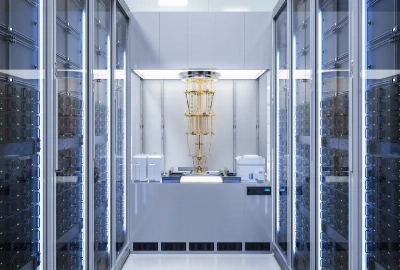
Future communication systems may rely on distributed quantum data centers positioned around the world. These facilities would manage quantum processing, storage, and teleportation operations simultaneously.
Unlike traditional data centers that primarily handle classical information, quantum facilities would support quantum computation and quantum state management, creating entirely new capabilities for global information exchange.
Global Quantum Backbone Infrastructure
A quantum backbone would function similarly to today's internet backbone but with significantly enhanced capabilities. High-capacity quantum communication links would connect major cities, research institutions, governments, and enterprises.
These backbones could support secure communications, distributed computing, and advanced cloud services that are impossible with conventional infrastructure.
The integration of terrestrial fiber networks and quantum satellites would further improve coverage and reliability on a planetary scale.
Intelligent Network Orchestration
Artificial intelligence will likely play a major role in managing future quantum communication systems. AI algorithms can optimize routing, monitor entanglement quality, and dynamically allocate resources throughout the network.
This intelligent orchestration ensures maximum efficiency while minimizing communication delays and operational costs.
Applications of Quantum Memory Teleportation Systems

Ultra-Secure Global Communications
Cybersecurity threats continue to grow as digital infrastructure becomes increasingly interconnected. Quantum teleportation networks offer unprecedented security because any attempt to intercept quantum information can be detected immediately.
Governments, financial institutions, defense organizations, and multinational corporations could benefit from highly secure communication channels resistant to conventional hacking techniques.
Such capabilities may fundamentally transform digital trust and information protection.
Next-Generation Cloud Computing
Future cloud platforms may incorporate distributed quantum computing resources connected through teleportation-based communication systems.
Users could access powerful quantum processors located anywhere in the world while experiencing seamless integration and minimal latency. This model would enable advanced simulations, optimization tasks, and artificial intelligence applications beyond current computational limits.
Quantum cloud ecosystems could accelerate innovation across numerous industries.
Scientific Collaboration and Research
Large-scale scientific projects often involve teams distributed across multiple continents. Quantum communication networks can facilitate secure data sharing, synchronized experiments, and collaborative quantum computing environments.
Researchers working in physics, medicine, climate science, and engineering could leverage these capabilities to solve complex global challenges more efficiently.
Enhanced collaboration may lead to faster discoveries and more effective international research partnerships.
Challenges Facing Quantum Data Transfer Architectures

Maintaining Quantum Coherence
One of the most difficult challenges in quantum communication is preserving coherence. Quantum states can easily degrade due to environmental interactions, temperature fluctuations, and electromagnetic disturbances.
Developing robust error correction methods and more resilient hardware remains a top priority for researchers worldwide.
Success in this area will determine the scalability of future quantum networks.
Infrastructure and Deployment Costs
Building a global quantum communication infrastructure requires substantial investment. Specialized hardware, quantum repeaters, secure facilities, and satellite systems represent significant financial commitments.
Governments and private organizations must collaborate to establish the necessary infrastructure for widespread adoption.
Over time, technological advances may reduce deployment costs and improve accessibility.
Standardization and Interoperability
As different organizations develop quantum technologies, ensuring compatibility becomes increasingly important. Standardized communication protocols, hardware interfaces, and security frameworks will be essential.
International cooperation can help establish common standards that support seamless interaction between diverse quantum systems and networks.


Kate McCulley, the voice behind "Adventurous Kate," provides travel advice tailored for women. Her blog encourages safe and adventurous travel for female readers.
Kate McCulley
Prev Post

Next Post