
Quantum Time Synchronization Systems and Planetary-Scale Precision Coordination Networks
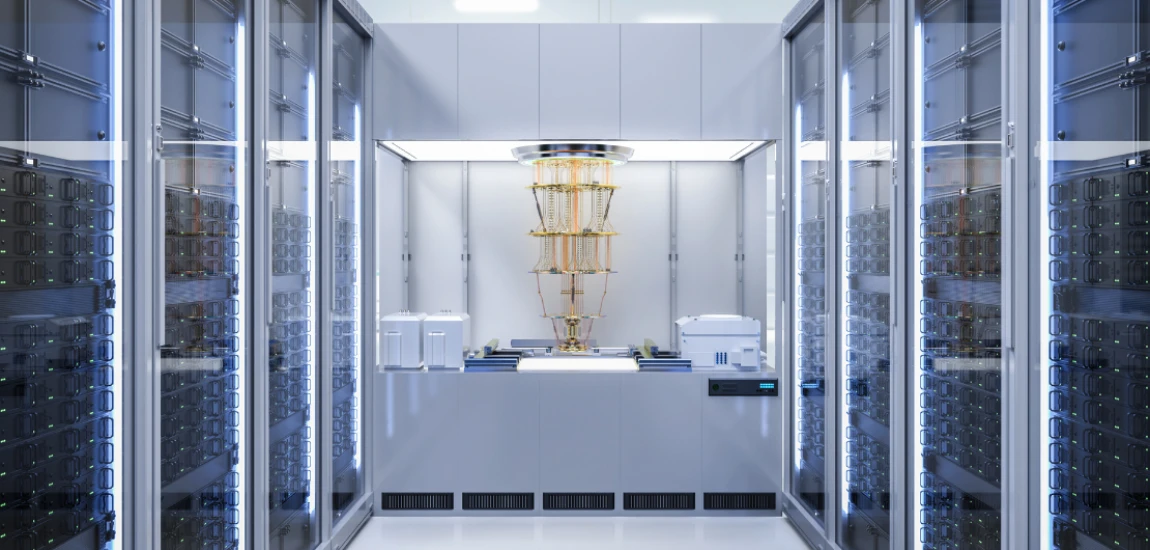
Time is one of the most fundamental elements of modern digital infrastructure. Every communication system, financial transaction, GPS signal, and distributed computing network depends on precise time synchronization. As global systems become more complex and interconnected, even nanosecond-level timing errors can lead to system failures, data corruption, or security vulnerabilities.
Quantum Time Synchronization Systems and Planetary-Scale Precision Coordination Networks represent a revolutionary advancement in global time management. These systems use quantum physics, atomic clock technology, satellite constellations, and artificial intelligence to synchronize time with extreme precision across the entire planet—and potentially beyond.
Unlike traditional synchronization methods that rely on classical atomic clocks and network-based timing signals, quantum synchronization systems leverage entangled particles and quantum communication channels to achieve near-perfect time alignment across vast distances.
These technologies are essential for future infrastructures such as autonomous transportation systems, global financial networks, space exploration missions, and distributed AI computing ecosystems.
As humanity transitions toward a fully interconnected digital civilization, ultra-precise time synchronization will become a foundational requirement for global technological stability.
Understanding Quantum Time Synchronization Systems

Evolution of Time Measurement Technologies
Time measurement has evolved from simple mechanical clocks to highly advanced atomic clock systems. Atomic clocks use the vibrations of atoms, such as cesium or rubidium, to measure time with extreme accuracy.
However, even atomic clocks face limitations when applied across global distributed systems. Network delays, signal interference, and environmental variations can introduce small but significant timing errors.
Quantum Time Synchronization Systems aim to overcome these limitations by using quantum entanglement and advanced photonic communication methods.
This allows multiple systems to maintain perfectly aligned time states regardless of physical distance.
Quantum Mechanics and Time Alignment
Quantum synchronization relies on the principles of quantum entanglement, where two or more particles become interconnected in such a way that the state of one instantly influences the state of another.
When applied to time systems, entangled particles can be used to synchronize clocks across different locations without relying on traditional signal transmission delays.
This creates a fundamentally new approach to timekeeping that is not limited by the speed of light in the same way classical systems are.
Quantum timing systems ensure that distributed devices remain synchronized at a sub-nanosecond level of precision.
Importance of Ultra-Precise Timing
Modern technologies depend heavily on synchronized time. Financial markets require accurate timestamps for transactions, GPS systems rely on precise timing to calculate location, and cloud computing systems depend on synchronized data processing.
Even microsecond errors can lead to system inefficiencies or vulnerabilities.
Quantum synchronization ensures that all systems operate in perfect temporal harmony, reducing errors and improving performance across global networks.
Core Technologies Behind Planetary-Scale Coordination Networks

Optical Atomic Clocks and Quantum Frequency Standards
Optical atomic clocks are among the most accurate timekeeping devices ever created. They measure time based on the oscillation of light interacting with atoms.
These clocks are significantly more precise than traditional cesium-based atomic clocks.
When integrated into quantum networks, they serve as foundational reference points for global time synchronization.
Quantum frequency standards ensure that all connected systems maintain identical time references regardless of location.
Satellite-Based Quantum Communication Networks
Satellite systems play a crucial role in distributing synchronized time signals across the planet.
Quantum satellites use entangled photons to transmit secure timing information between ground stations and orbital systems.
These satellite networks enable real-time global synchronization with extremely low latency.
They also enhance security by preventing signal tampering or interference.
AI-Driven Temporal Data Processing
Artificial intelligence is used to analyze timing data across multiple systems and correct synchronization errors in real time.
Machine learning algorithms detect drift patterns in clocks and automatically adjust timing signals to maintain precision.
AI also predicts potential synchronization failures before they occur, ensuring continuous system stability.
Applications of Quantum Synchronization Systems

Global Financial and Trading Systems
Financial markets rely heavily on precise time stamping for transactions, trading algorithms, and blockchain systems.
Quantum synchronization ensures that financial data is processed in perfect temporal order, reducing discrepancies and preventing fraud.
This improves transparency and efficiency in global economic systems.
Autonomous Transportation and Smart Mobility
Autonomous vehicles, drones, and air traffic systems require synchronized timing to operate safely and efficiently.
Quantum time systems ensure that all transportation nodes share identical timing references, reducing collision risks and improving coordination.
Smart mobility systems depend on precise timing for navigation, routing, and traffic optimization.
Space Exploration and Satellite Coordination
Space missions rely on extremely accurate timing for navigation, communication, and orbital calculations.
Quantum synchronization allows spacecraft, satellites, and planetary probes to maintain coordinated operations across vast distances.
This improves mission accuracy and communication reliability in deep space environments.
AI Automation in Global Time Networks

Real-Time Clock Drift Correction Systems
All physical clocks naturally drift over time due to environmental factors and hardware limitations.
AI systems continuously monitor clock behavior and correct drift in real time.
This ensures long-term synchronization stability across global networks.
Predictive Synchronization Maintenance
AI models analyze historical timing data to predict future synchronization issues.
This allows systems to proactively adjust timing configurations before errors occur.
Predictive maintenance improves reliability in mission-critical systems.
Autonomous Global Timing Coordination
Future systems may operate fully autonomously, coordinating time across billions of devices worldwide.
These systems will dynamically adjust timing signals based on network load, environmental conditions, and system requirements.
This creates a fully self-regulating global time infrastructure.


Anil Polat, behind the blog "FoxNomad," combines technology and travel. A computer security engineer by profession, he focuses on the tech aspects of travel.
Anil Polat

Prev Post

Next Post