
Quantum Holographic Computing Systems and Ultra-Dimensional Information Processing Frameworks
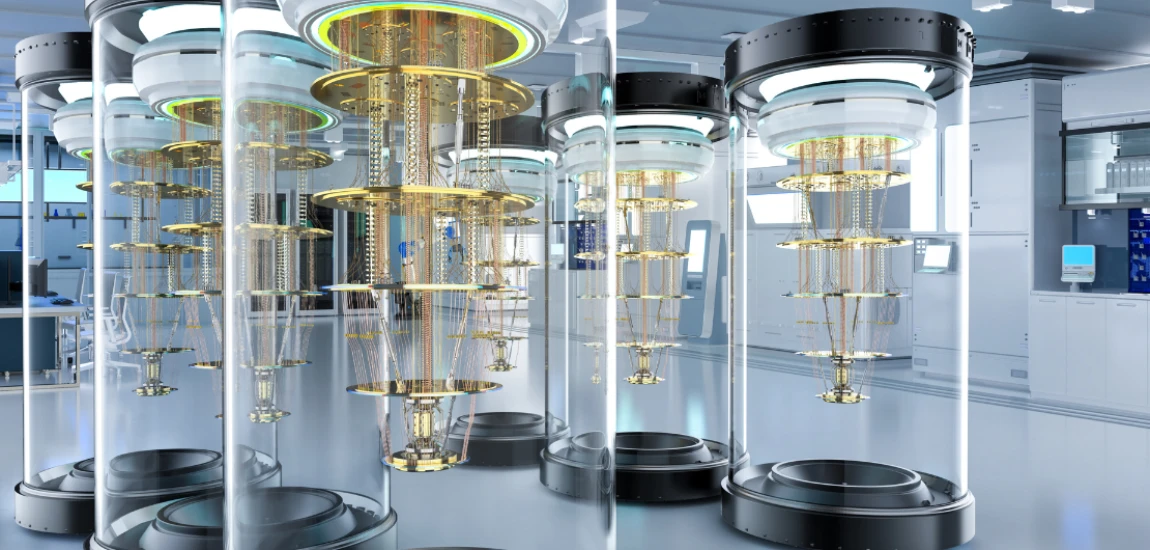
The digital world is generating unprecedented amounts of information. From artificial intelligence and scientific research to smart cities and global communication networks, modern society depends on the ability to process, analyze, and store massive datasets efficiently. Traditional computing systems have driven technological progress for decades, but they are increasingly approaching physical and architectural limitations that restrict future growth.
As computational challenges become more complex, researchers are exploring entirely new paradigms capable of surpassing the capabilities of classical computing. Among the most fascinating concepts are Quantum Holographic Computing Systems and Ultra-Dimensional Information Processing Frameworks. These futuristic technologies combine principles from quantum mechanics, holography, multidimensional mathematics, advanced memory architectures, and intelligent computing systems to create revolutionary approaches to information processing.
Quantum holographic computing envisions data being stored and processed within holographic structures that utilize quantum properties for massively parallel operations. Instead of relying on conventional binary architectures, these systems may manipulate information across multiple dimensions simultaneously, dramatically increasing computational efficiency and storage capacity.
Ultra-dimensional information processing frameworks further expand these possibilities by enabling complex relationships, patterns, and datasets to be analyzed within multidimensional computational environments. Together, these innovations could transform fields such as artificial intelligence, scientific modeling, cybersecurity, healthcare, climate prediction, and advanced engineering.
As humanity enters an era defined by data-intensive applications and intelligent systems, quantum holographic computing may represent one of the most significant technological breakthroughs of the coming century.
Understanding Quantum Holographic Computing Systems

The Evolution Beyond Classical Computing
For decades, classical computers have relied on binary logic, where information is represented through zeros and ones. While this model has enabled extraordinary advancements, it faces limitations related to processing speed, energy efficiency, and scalability.
Quantum holographic computing introduces an entirely different approach. By combining quantum information processing with holographic data storage principles, these systems aim to transcend conventional computational boundaries.
Rather than processing information sequentially, quantum holographic systems may perform vast numbers of calculations simultaneously, dramatically increasing computational power.
The Science of Holographic Information Storage
Holography enables information to be distributed throughout an entire storage medium rather than being confined to specific physical locations. This characteristic offers remarkable storage density and resilience.
In holographic computing environments, data can be encoded within light interference patterns and retrieved with exceptional efficiency. When combined with quantum technologies, holographic storage may enable unprecedented levels of information accessibility and redundancy.
This approach could significantly outperform traditional memory architectures.
Integrating Quantum Mechanics and Holography
Quantum mechanics introduces unique phenomena such as superposition and entanglement. These properties allow quantum systems to represent and process multiple states simultaneously.
By integrating holographic storage with quantum processing capabilities, future computing systems may achieve extraordinary levels of performance and scalability.
This combination forms the foundation of quantum holographic computing architectures.
Ultra-Dimensional Information Processing Frameworks

Moving Beyond Three-Dimensional Data Models
Traditional computing systems often process information within relatively simple structures. As datasets become increasingly complex, conventional approaches may struggle to represent intricate relationships effectively.
Ultra-dimensional frameworks provide alternative methods for organizing and processing information. These systems can represent data across multiple dimensions simultaneously, enabling deeper analytical capabilities.
Multidimensional processing improves the ability to model complex systems and interactions.
Managing Massive Data Complexity
Modern applications generate enormous amounts of interconnected information. Artificial intelligence systems, scientific simulations, and global infrastructure networks require sophisticated methods for managing complexity.
Ultra-dimensional architectures enable computational environments capable of representing millions of variables and relationships efficiently.
This capability supports more accurate analysis and decision-making.
New Paradigms for Knowledge Representation
Future information systems may utilize multidimensional structures to represent knowledge in ways that more closely resemble human cognition.
Rather than relying solely on hierarchical databases and linear relationships, ultra-dimensional frameworks could capture complex associations and contextual dependencies.
These capabilities may significantly enhance intelligent computing systems.
Artificial Intelligence and Cognitive Computing Integration

Enhancing AI Learning Capabilities
Artificial intelligence relies heavily on computational resources to train models, process data, and generate insights. Quantum holographic computing could dramatically accelerate these processes.
Advanced computational architectures enable AI systems to analyze larger datasets and identify more sophisticated patterns than current technologies allow.
Improved processing capabilities contribute to more powerful and adaptive AI solutions.
Supporting Real-Time Intelligence
Many emerging applications require immediate responses to rapidly changing conditions. Autonomous vehicles, smart cities, healthcare systems, and industrial operations depend on real-time decision-making capabilities.
Quantum holographic platforms could provide the computational speed necessary for these demanding environments.
Real-time intelligence enhances efficiency, safety, and operational effectiveness.
Simulating Human-Like Cognitive Processes
Researchers continue pursuing computing systems capable of mimicking aspects of human cognition. Ultra-dimensional information processing frameworks may support more advanced reasoning, contextual understanding, and adaptive learning.
These developments could contribute to the emergence of highly sophisticated cognitive computing platforms.
Applications Across Science, Industry, and Society

Revolutionizing Scientific Research
Scientific discovery increasingly depends on computational modeling and simulation. Quantum holographic computing could transform fields such as physics, chemistry, biology, and climate science.
Researchers may analyze complex systems with unprecedented precision and speed.
This capability accelerates innovation and expands scientific understanding.
Advancing Healthcare and Biotechnology
Healthcare generates enormous quantities of data related to genetics, diagnostics, treatment planning, and medical research.
Advanced computing frameworks could improve disease modeling, drug discovery, personalized medicine, and predictive healthcare analytics.
These improvements contribute to better patient outcomes and healthcare efficiency.
Transforming Industrial Innovation
Manufacturing, logistics, energy systems, and infrastructure management all require sophisticated computational tools.
Quantum holographic systems could optimize operations, improve forecasting accuracy, and enhance automation capabilities across industries.
Industrial productivity benefits from smarter decision-making and resource allocation.


Derek Baron, also known as "Wandering Earl," offers an authentic look at long-term travel. His blog contains travel stories, tips, and the realities of a nomadic lifestyle.
Derek Baron

Prev Post

Next Post