
Autonomous Deep-Sea Research Swarm Systems and Intelligent Ocean Discovery Frameworks
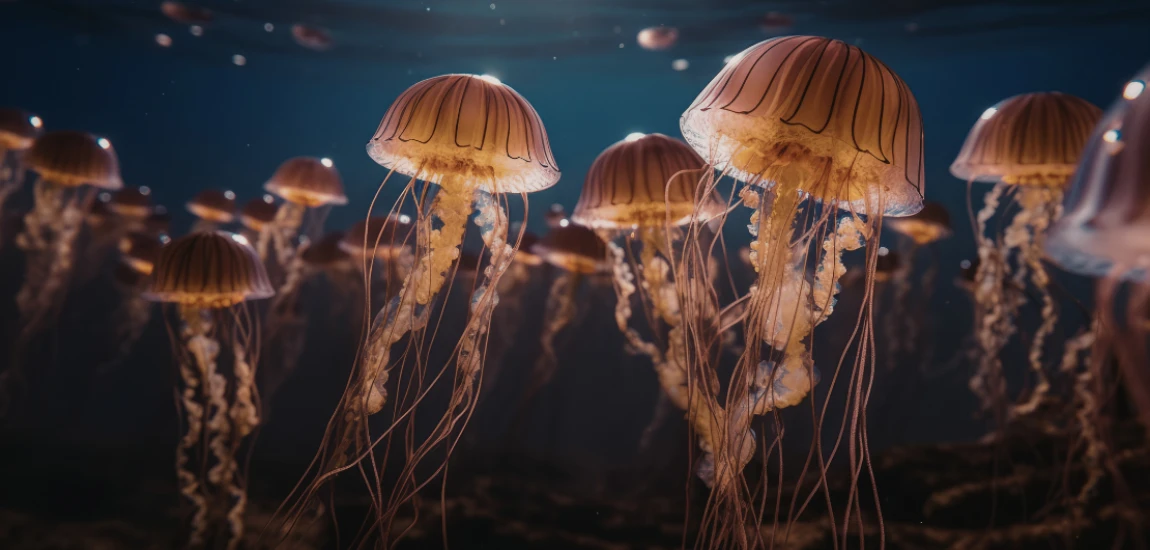
The world's oceans cover more than 70% of Earth's surface, yet vast portions of the deep sea remain unexplored. Extreme pressures, darkness, unpredictable currents, and immense depths have historically limited humanity's ability to fully understand underwater ecosystems. However, technological advancements are creating new opportunities for exploration through Autonomous Deep-Sea Research Swarm Systems and Intelligent Ocean Discovery Frameworks.
These next-generation systems combine artificial intelligence, autonomous underwater vehicles (AUVs), advanced sensors, machine learning, and swarm intelligence to conduct coordinated exploration missions without continuous human intervention. Instead of relying on a single research vessel or submarine, scientists can deploy entire fleets of intelligent underwater robots that collaborate, communicate, and adapt to changing conditions in real time.
As climate change, resource management, biodiversity conservation, and scientific discovery become increasingly important, these technologies are emerging as critical tools for understanding Earth's final frontier. Intelligent ocean discovery frameworks have the potential to uncover new marine species, map unexplored ocean floors, monitor environmental changes, and support sustainable management of ocean resources.
Understanding Autonomous Deep-Sea Research Swarm Systems

The Evolution of Ocean Exploration Technologies
Ocean exploration has progressed significantly from traditional diving expeditions and manually operated submersibles. Early marine research depended heavily on ships equipped with sonar systems and remotely operated vehicles. While effective, these methods often required extensive human supervision and significant operational costs.
Autonomous Deep-Sea Research Swarm Systems represent the next stage in this evolution. Instead of deploying one large vehicle, researchers can launch multiple autonomous units capable of working together. These robotic swarms can distribute tasks, cover larger areas, and continue operations even if individual units experience technical difficulties.
The shift from centralized exploration to distributed swarm intelligence allows scientists to gather more comprehensive data while reducing mission costs and improving operational efficiency.
How Swarm Intelligence Works Underwater
Swarm intelligence draws inspiration from natural systems such as schools of fish, flocks of birds, and colonies of ants. Each autonomous underwater vehicle operates independently while contributing to collective mission objectives.
Through advanced communication networks and AI algorithms, swarm members share environmental data, coordinate navigation routes, and dynamically adjust mission priorities. This collaborative behavior allows the entire swarm to function as a highly adaptive exploration system.
When one vehicle detects an area of scientific interest, nearby units can automatically assist with detailed mapping, sampling, or environmental monitoring. This cooperative capability significantly enhances research effectiveness.
Core Components of Swarm Research Architectures
Modern swarm systems rely on several interconnected technologies. Autonomous navigation platforms guide individual vehicles through challenging underwater environments. Advanced sensors collect biological, geological, and chemical data. Artificial intelligence systems process information and support decision-making.
Together, these components create flexible exploration networks capable of operating in some of Earth's most extreme and inaccessible environments.
Intelligent Ocean Discovery Frameworks and Their Architecture

Building Comprehensive Ocean Intelligence Networks
Intelligent Ocean Discovery Frameworks serve as the digital backbone supporting autonomous exploration missions. These frameworks integrate data collection, communication, analysis, and decision-making processes into a unified ecosystem.
The architecture enables seamless interaction between underwater vehicles, surface stations, satellites, and research centers. Data gathered by autonomous swarms is continuously transmitted, analyzed, and incorporated into evolving mission objectives.
This integrated approach improves scientific accuracy and allows researchers to respond rapidly to new discoveries.
Real-Time Data Processing and Analysis
Traditional marine research often requires months of data processing after missions conclude. Intelligent frameworks dramatically accelerate this process through real-time analytics and machine learning.
As data streams arrive from swarm units, AI systems identify patterns, detect anomalies, and prioritize important findings. Researchers receive actionable insights while missions remain active, enabling immediate adjustments to exploration strategies.
This capability improves efficiency and increases the likelihood of significant scientific discoveries.
Adaptive Mission Management Systems
One of the most powerful features of intelligent discovery frameworks is adaptability. Environmental conditions in deep-sea environments can change rapidly. Strong currents, geological activity, and biological events may require mission modifications.
AI-driven mission management systems continuously evaluate conditions and optimize swarm behavior. Vehicles can reroute, alter sampling priorities, or investigate emerging points of interest without direct human commands.
This adaptability significantly enhances mission success rates.
Artificial Intelligence and Machine Learning in Ocean Discovery

AI-Powered Navigation and Decision-Making
Artificial intelligence plays a central role in enabling autonomous underwater operations. Deep-sea environments often lack GPS signals, requiring sophisticated navigation systems capable of operating independently.
AI algorithms analyze sensor data, underwater terrain features, and environmental conditions to determine optimal routes. These systems help vehicles avoid obstacles, conserve energy, and maintain mission objectives.
As AI models improve, underwater robots become increasingly capable of making complex decisions without human oversight.
Machine Learning for Marine Species Identification
The ocean contains millions of organisms, many of which remain undiscovered. Machine learning technologies help researchers identify and classify marine life more efficiently.
Underwater cameras and imaging systems capture vast amounts of visual data. AI-powered recognition systems analyze these images and compare them with existing biological databases.
This process accelerates species identification and may contribute to the discovery of entirely new forms of marine life.
Predictive Ocean Analytics
Predictive analytics represents another transformative application of AI in ocean research. Machine learning models can forecast environmental changes, biological migrations, and oceanographic events.
These predictive capabilities support conservation efforts, fisheries management, and climate research. Scientists can anticipate changes before they occur and develop proactive response strategies.
The result is a more comprehensive understanding of marine ecosystems and their long-term dynamics.
Scientific Applications and Ocean Research Opportunities

Deep-Sea Biodiversity Exploration
Many deep-sea ecosystems remain largely unexplored. Autonomous swarm systems allow researchers to investigate remote habitats with unprecedented detail and efficiency.
Large-scale surveys can identify previously unknown species, document ecosystem interactions, and improve understanding of marine biodiversity. These discoveries contribute valuable knowledge to biological sciences and conservation efforts.
Expanded exploration capabilities may reveal entirely new ecosystems hidden beneath the ocean surface.
Geological and Seafloor Mapping
Detailed mapping of the ocean floor is essential for understanding Earth's geological history. Autonomous swarms equipped with sonar and imaging technologies can create highly accurate seafloor maps.
These maps support scientific research, hazard assessment, and resource management initiatives. Researchers can identify underwater volcanoes, tectonic features, hydrothermal vents, and other geological structures.
Improved mapping also enhances navigation safety and marine infrastructure planning.
Climate and Environmental Monitoring
Oceans play a crucial role in regulating global climate systems. Swarm research platforms continuously monitor temperature, salinity, carbon levels, and other environmental indicators.
This data helps scientists track climate change impacts, understand ocean circulation patterns, and assess ecosystem health. Long-term monitoring programs provide valuable insights for environmental policy and sustainability planning.
As climate challenges intensify, these monitoring capabilities become increasingly important.


Derek Baron, also known as "Wandering Earl," offers an authentic look at long-term travel. His blog contains travel stories, tips, and the realities of a nomadic lifestyle.
Derek Baron

Prev Post
Next Post