
Quantum Neural Interfaces and the Future of Human–Machine Cognitive Integration
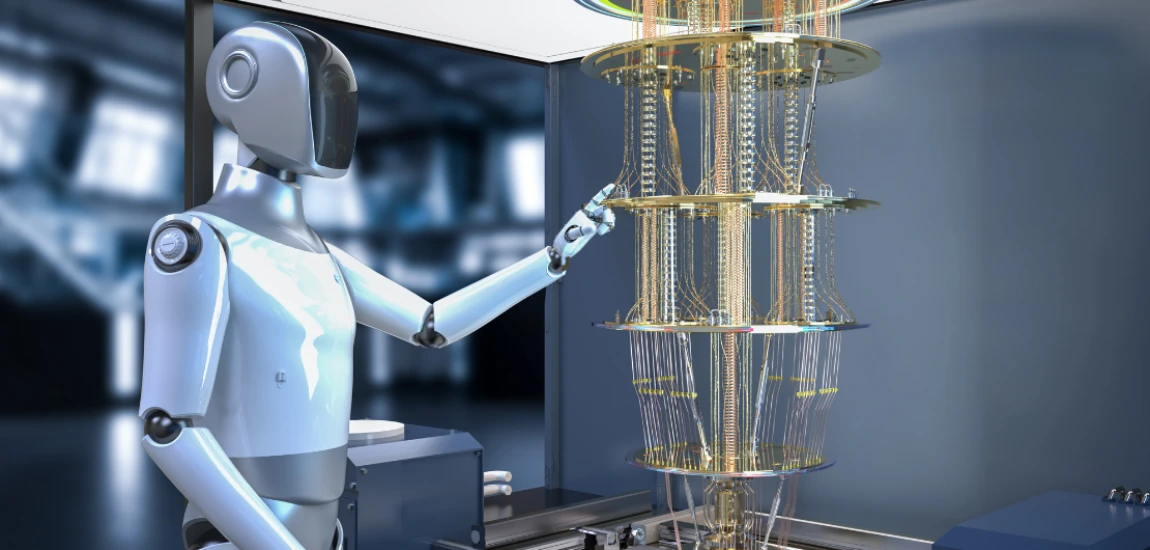
The convergence of neuroscience, quantum computing, artificial intelligence, and advanced bioengineering is creating one of the most transformative technological frontiers of the twenty-first century. At the center of this evolution are quantum neural interfaces, revolutionary systems designed to establish seamless communication between the human brain and advanced computational networks. While traditional brain-computer interfaces have already demonstrated remarkable capabilities, the integration of quantum technologies promises to dramatically expand the speed, efficiency, and sophistication of human-machine interactions.
Human-machine cognitive integration refers to the process of connecting biological intelligence with digital systems in ways that enhance communication, learning, decision-making, and problem-solving. Quantum neural interfaces aim to move beyond conventional neural technologies by leveraging quantum principles such as superposition, entanglement, and ultra-fast information processing to interpret and transmit neural signals with unprecedented precision.
Researchers envision future systems capable of enabling real-time brain-to-computer communication, enhanced memory retrieval, accelerated learning, advanced medical treatments, and collaborative intelligence networks that connect humans and artificial intelligence systems more effectively than ever before. These technologies may fundamentally reshape healthcare, education, scientific research, business operations, and even human consciousness itself.
Although many aspects of quantum neural interface technology remain in experimental stages, rapid advances in quantum computing, neuroengineering, machine learning, and neural mapping are bringing these possibilities closer to reality. Understanding the potential of quantum neural interfaces offers valuable insight into the future of cognitive enhancement and the next era of human-machine collaboration.
Understanding Quantum Neural Interfaces

The Evolution of Brain-Computer Interfaces
Brain-computer interfaces (BCIs) have evolved significantly over the past several decades. Early systems focused primarily on translating neural activity into simple digital commands, allowing users to control external devices through thought alone. These technologies demonstrated the possibility of direct communication between the brain and computers, particularly for individuals with physical disabilities.
As neuroscience and computing technologies advanced, BCIs became more sophisticated. Modern systems can interpret increasingly complex neural signals, enabling improved communication, robotic control, and neurological rehabilitation.
Quantum neural interfaces represent the next stage of this evolution. By incorporating quantum information processing capabilities, these systems seek to overcome many limitations associated with conventional neural technologies.
The transition from traditional interfaces to quantum-enhanced systems could significantly expand the scope and effectiveness of cognitive integration technologies.
Core Components of Quantum Neural Systems
Quantum neural interfaces combine several advanced technological domains. Neural sensors capture brain activity, while quantum processors analyze and interpret complex neural patterns. Artificial intelligence algorithms translate this information into meaningful outputs and adaptive responses.
These systems may also include quantum communication networks, advanced neuroimaging technologies, and bioelectronic components capable of interacting directly with neural tissue.
The integration of these elements creates a powerful framework for high-speed brain-computer communication.
As hardware and software capabilities improve, quantum neural systems are expected to become increasingly precise and efficient.
Why Quantum Technology Matters
Traditional computing systems process information using binary logic. Quantum computers operate differently by utilizing quantum bits, or qubits, which can represent multiple states simultaneously.
This capability enables significantly greater computational power for certain tasks, particularly those involving complex pattern recognition and optimization problems.
The human brain generates extraordinarily complex neural activity. Quantum computing may provide the processing capabilities necessary to analyze these signals more effectively than conventional systems.
This advantage positions quantum technologies as a promising foundation for future cognitive integration platforms.
The Science Behind Human–Machine Cognitive Integration

Neural Signal Interpretation
The brain contains billions of neurons communicating through electrical and chemical signals. Interpreting this activity requires advanced sensing and computational technologies capable of identifying meaningful patterns within vast amounts of data.
Quantum neural interfaces aim to enhance signal interpretation through sophisticated analytical techniques and quantum processing capabilities.
Improved interpretation accuracy supports more reliable communication between humans and machines.
These capabilities form the foundation of effective cognitive integration systems.
Quantum Information Processing
Quantum information processing enables parallel analysis of complex datasets. Rather than evaluating neural signals sequentially, quantum systems may analyze multiple possibilities simultaneously.
This approach accelerates pattern recognition and improves the efficiency of neural decoding processes.
Researchers believe quantum computing could dramatically improve the ability to understand and model brain activity.
Enhanced processing capabilities may unlock entirely new forms of human-machine interaction.
Adaptive Learning Systems
Artificial intelligence plays a critical role in cognitive integration. Machine learning algorithms continuously adapt to individual neural patterns and behavioral preferences.
Quantum-enhanced AI systems may learn more efficiently and respond more accurately to user intentions.
Adaptive learning improves usability, personalization, and long-term system performance.
These capabilities support increasingly seamless interactions between biological and digital intelligence.
Healthcare Applications and Neurological Innovation

Restoring Communication and Mobility
One of the most promising applications of quantum neural interfaces involves assisting individuals with neurological impairments.
Advanced brain-computer communication systems may help restore communication abilities for patients affected by paralysis, stroke, or neurodegenerative diseases.
Users could potentially control assistive technologies directly through neural activity.
These capabilities offer significant improvements in independence and quality of life.
Precision Neurological Treatments
Quantum neural technologies may support highly personalized neurological therapies.
Real-time monitoring of brain activity enables clinicians to identify abnormalities with greater accuracy and precision.
Targeted interventions could be delivered directly to affected neural regions, improving treatment outcomes while minimizing side effects.
Personalized neurotechnology may transform future healthcare delivery.
Mental Health and Cognitive Rehabilitation
Emerging neural interface systems may also support mental health treatment and cognitive rehabilitation programs.
Advanced monitoring technologies can provide deeper insights into cognitive performance, emotional regulation, and neurological function.
These capabilities support more effective therapeutic strategies and rehabilitation protocols.
Improved understanding of brain activity enhances clinical decision-making and patient care.
Cognitive Enhancement and Human Intelligence Expansion

Accelerated Learning and Knowledge Acquisition
Quantum neural interfaces could dramatically enhance educational experiences and professional training programs.
Direct interaction between neural systems and digital knowledge platforms may enable faster information processing and improved learning efficiency.
Individuals could potentially access educational resources through highly intuitive cognitive interfaces.
These innovations may redefine traditional approaches to education and skill development.
Memory Enhancement Technologies
Researchers are exploring methods for supporting memory formation, retrieval, and organization through advanced neurotechnology.
Quantum processing capabilities may improve the ability to identify and reinforce neural pathways associated with memory retention.
Enhanced memory systems could benefit students, professionals, researchers, and individuals experiencing cognitive decline.
The potential impact on productivity and knowledge management is substantial.
Human-AI Collaborative Intelligence
Future cognitive integration platforms may enable closer collaboration between humans and artificial intelligence systems.
Rather than replacing human decision-making, AI could function as an intelligent cognitive partner providing insights, analysis, and recommendations in real time.
This collaborative model combines human creativity and intuition with computational power and data analysis capabilities.
The result may be a new form of augmented intelligence that enhances human potential.


Anil Polat, behind the blog "FoxNomad," combines technology and travel. A computer security engineer by profession, he focuses on the tech aspects of travel.
Anil Polat

Prev Post

Next Post