
Autonomous Asteroid Mining Networks and Space Resource Extraction Technologies
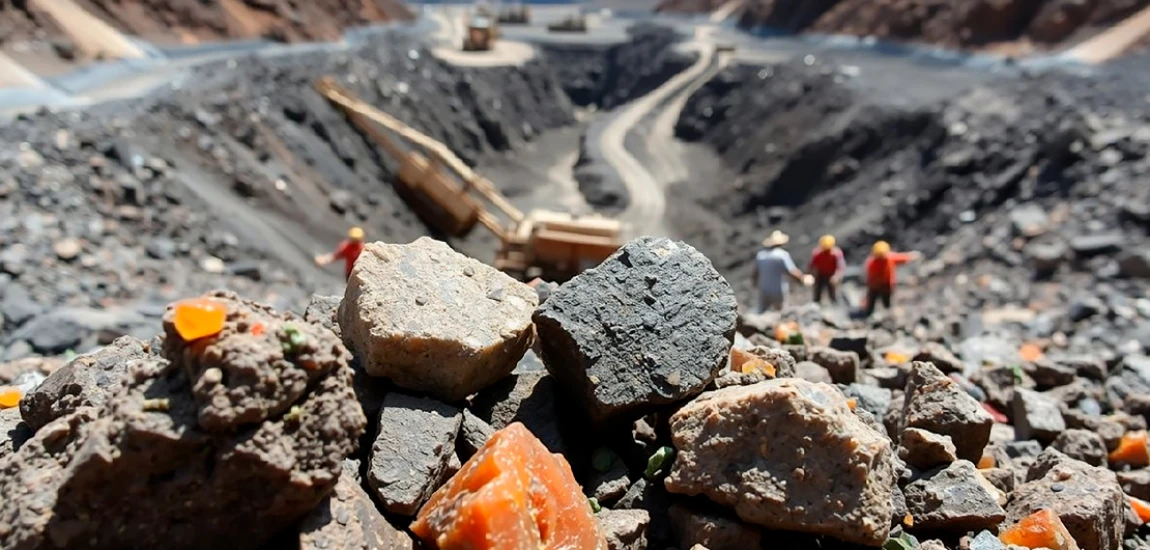
Humanity is entering a new era of space exploration where the focus is shifting from simply reaching distant destinations to utilizing the vast resources available beyond Earth. As global demand for critical minerals, rare metals, and sustainable energy resources continues to rise, scientists and engineers are exploring innovative methods to access materials located throughout the solar system. Among the most promising opportunities is asteroid mining, a concept that could fundamentally transform the future of industry, economics, and space exploration.
Asteroids contain enormous quantities of valuable resources, including platinum-group metals, nickel, cobalt, iron, water ice, and rare earth elements. Some estimates suggest that a single resource-rich asteroid could contain materials worth billions or even trillions of dollars. However, extracting these resources requires advanced technologies capable of operating autonomously in the harsh conditions of space.
Autonomous asteroid mining networks combine robotics, artificial intelligence, machine learning, autonomous navigation, advanced sensors, and space-based industrial systems to identify, extract, process, and transport extraterrestrial resources. These technologies minimize human involvement while maximizing operational efficiency and safety.
As governments, private space companies, and international organizations invest in space infrastructure, asteroid mining is increasingly viewed as a critical component of the future space economy. The development of autonomous extraction systems may not only support Earth's industrial needs but also provide essential resources for lunar bases, Mars missions, and long-term space habitation.
Understanding Autonomous Asteroid Mining Networks

The Evolution of Space Resource Utilization
For decades, space missions focused primarily on scientific exploration and technological demonstration. While these efforts significantly expanded humanity's understanding of the cosmos, they relied heavily on supplies transported from Earth.
As launch costs remained high and mission complexity increased, researchers began exploring ways to utilize resources available in space. This concept, known as In-Situ Resource Utilization (ISRU), aims to reduce dependence on Earth-based supply chains.
Asteroid mining represents one of the most ambitious forms of ISRU. Rather than transporting vast quantities of materials from Earth, future space industries could extract and process resources directly from asteroids.
This shift has the potential to create self-sustaining space economies and support long-term exploration initiatives.
What Makes Asteroids Valuable
Asteroids contain diverse materials formed during the early history of the solar system. Metallic asteroids often contain iron, nickel, cobalt, platinum, and rare metals valuable for industrial applications.
Carbonaceous asteroids may contain water, organic compounds, and volatile materials essential for life support systems and fuel production. Water can be separated into hydrogen and oxygen for rocket propellants, making it one of the most strategically important resources in space.
The abundance of these materials creates significant economic and scientific opportunities.
Future mining operations could unlock resource reserves far exceeding those available on Earth.
Networked Autonomous Mining Systems
Autonomous asteroid mining networks consist of multiple interconnected robotic systems working collaboratively across space environments.
These networks may include prospecting spacecraft, extraction robots, processing facilities, transportation vehicles, and communication platforms.
Artificial intelligence coordinates operations while continuously adapting to changing conditions.
The distributed nature of these networks enhances efficiency, scalability, and operational resilience.
Core Technologies Driving Space Resource Extraction

Advanced Robotic Mining Systems
Human miners cannot easily operate in asteroid environments due to radiation exposure, microgravity conditions, and extreme distances from Earth.
Robotic systems therefore play a central role in space resource extraction. These machines are designed to perform drilling, excavation, material collection, and infrastructure deployment autonomously.
Advanced robotic platforms utilize adaptive control systems that enable operation across diverse asteroid surfaces.
As robotics technology advances, these systems will become increasingly capable and efficient.
Artificial Intelligence and Autonomous Decision-Making
Communication delays between Earth and distant space operations make real-time human control impractical.
Artificial intelligence enables mining systems to make decisions independently. AI algorithms analyze environmental data, optimize extraction strategies, and coordinate activities across multiple robotic units.
Machine learning allows systems to improve performance through operational experience.
Autonomous decision-making significantly enhances productivity and reduces mission complexity.
Space-Based Processing Technologies
Transporting raw asteroid materials back to Earth may not always be economically viable. Space-based processing technologies address this challenge by converting resources into usable products directly in orbit.
Processing facilities can refine metals, manufacture components, and produce fuel from extracted materials.
These capabilities support the development of self-sustaining space industries.
In-space processing reduces transportation costs while increasing overall mission efficiency.
Resource Identification and Prospecting Strategies

Asteroid Detection and Classification
Before mining operations can begin, suitable asteroids must be identified and analyzed.
Astronomical observations, spectroscopy, radar imaging, and satellite surveys provide valuable information regarding asteroid composition and structure.
Scientists classify asteroids based on mineral content, orbital characteristics, and resource potential.
This information helps prioritize targets for future extraction missions.
AI-Powered Resource Assessment
Artificial intelligence is transforming asteroid prospecting by enabling rapid analysis of large datasets.
Machine learning systems evaluate observational data to identify promising resource deposits and estimate extraction feasibility.
Predictive models help determine which asteroids offer the greatest economic and operational value.
These capabilities improve planning efficiency and reduce mission risks.
Autonomous Exploration Missions
Prospecting spacecraft equipped with advanced sensors can conduct detailed surveys of asteroid surfaces.
Autonomous exploration systems collect geological samples, map terrain features, and assess resource concentrations.
These missions provide critical data required for successful mining operations.
Future prospecting fleets may continuously monitor thousands of asteroids across the solar system.
Applications of Space Resource Extraction Technologies

Supporting Deep Space Exploration
One of the most important applications of asteroid mining is supporting long-duration exploration missions.
Resources extracted from asteroids can provide fuel, water, oxygen, and construction materials for spacecraft and space habitats.
This capability reduces dependence on Earth-based supply chains and enables more ambitious missions.
Sustainable resource access is essential for expanding humanity's presence throughout the solar system.
Space Manufacturing and Industrial Development
Space-based manufacturing may become a major industry supported by asteroid-derived resources.
Refined metals and other materials can be used to construct satellites, habitats, solar power systems, and transportation infrastructure.
Manufacturing in space eliminates the need to launch many heavy materials from Earth.
This approach significantly reduces costs and expands industrial capabilities.
Economic Opportunities and New Markets
Asteroid mining could create entirely new economic sectors focused on extraterrestrial resource development.
Emerging industries may include space logistics, orbital manufacturing, resource trading, and infrastructure construction.
The growth of a space economy has the potential to generate significant investment and innovation.
Long-term economic benefits could extend far beyond the aerospace sector.


Gary Arndt operates "Everything Everywhere," a blog focusing on worldwide travel. An award-winning photographer, Gary shares stunning visuals alongside his travel tales.
Gary Arndt

Prev Post

Next Post