
Quantum Memory Computing Systems and the Future of Infinite Intelligent Data Storage
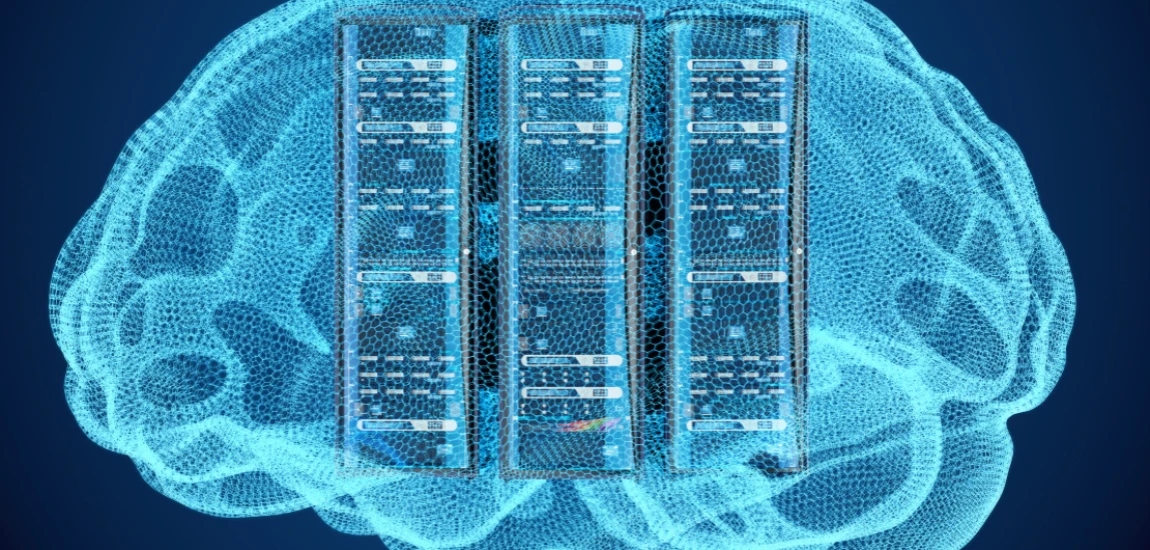
The world is generating more digital information than ever before. From artificial intelligence and cloud computing to the Internet of Things (IoT), autonomous vehicles, and scientific research, organizations require storage technologies capable of handling enormous amounts of data efficiently. Traditional memory systems have evolved significantly over the past few decades, but they still face limitations in speed, scalability, energy efficiency, and long-term storage capacity.
Quantum Memory Computing Systems are emerging as one of the most exciting innovations in computing technology. Instead of relying solely on classical bits, these systems utilize the principles of quantum mechanics to store and process information in quantum states. Although still under active research and development, quantum memory promises unprecedented storage density, ultra-fast data retrieval, and intelligent information management that could redefine the future of computing.
As industries increasingly depend on intelligent automation and real-time analytics, quantum memory could become the backbone of next-generation computing infrastructures. This article explores how quantum memory computing systems work, their advantages, industrial applications, technical challenges, and the future of infinite intelligent data storage.
Understanding Quantum Memory Computing Systems

What Is Quantum Memory?
Quantum memory is a specialized technology designed to store quantum information while preserving delicate quantum states. Unlike conventional memory devices that store binary values of 0s and 1s, quantum memory stores quantum bits, or qubits, which can exist in multiple states simultaneously through superposition. This revolutionary capability enables significantly greater storage potential and computational efficiency.
A reliable quantum memory system allows quantum information to be stored, transferred, and retrieved without losing its quantum properties. Researchers are developing various approaches using atoms, ions, superconducting circuits, and photons to achieve long-lasting and highly accurate quantum storage. These systems form an essential building block for future quantum computers and communication networks.
How Quantum Memory Differs from Traditional Storage
Traditional hard drives, SSDs, and RAM rely on electrical signals to store digital information. While these technologies continue to improve, they are approaching physical limitations regarding speed, miniaturization, and energy consumption.
Quantum memory introduces a completely different paradigm. Instead of storing information as electrical charges, it stores quantum states capable of representing multiple possibilities simultaneously. This allows massive amounts of information to be processed more efficiently while reducing computational bottlenecks. The ability to maintain quantum coherence is one of the defining characteristics that separates quantum memory from classical storage systems.
Why It Matters for Future Computing
As artificial intelligence models become increasingly complex and organizations generate petabytes of information daily, existing storage infrastructures struggle to keep pace. Quantum memory offers the possibility of storing and retrieving enormous datasets almost instantly while enabling sophisticated machine learning models to operate far more efficiently.
Future intelligent computing systems will likely integrate quantum memory with classical processors, creating hybrid infrastructures capable of solving scientific, medical, financial, and industrial problems that are currently beyond the reach of conventional computers.
Core Technologies Behind Quantum Memory Systems

Quantum Superposition and Entanglement
The foundation of quantum memory lies in two remarkable quantum phenomena: superposition and entanglement. Superposition enables qubits to exist in multiple computational states simultaneously, dramatically increasing processing efficiency. Entanglement allows multiple qubits to remain interconnected regardless of physical distance, enabling highly synchronized information storage and communication.
These principles allow quantum memory systems to store highly complex information structures while supporting parallel computations that traditional systems cannot efficiently perform.
Advanced Materials and Quantum Hardware
Developing stable quantum memory requires highly specialized materials capable of preserving quantum states for extended periods. Scientists are investigating rare-earth crystals, trapped ions, diamond nitrogen-vacancy centers, superconducting circuits, and photonic devices as potential quantum memory platforms.
Each technology offers unique advantages in terms of stability, scalability, storage duration, and error resistance. Continuous improvements in fabrication techniques are making quantum hardware increasingly reliable for future commercial deployment.
Intelligent Memory Management
Artificial intelligence is expected to play a major role in managing future quantum memory systems. Intelligent algorithms can monitor quantum states, detect potential errors, optimize resource allocation, and improve storage efficiency automatically.
Machine learning techniques may also assist in reducing quantum noise, improving system calibration, and maximizing memory performance without extensive human intervention. The combination of AI and quantum memory creates a highly adaptive computing environment capable of supporting future intelligent applications.
Benefits of Quantum Memory for Infinite Intelligent Data Storage

Exceptional Storage Capacity
One of the most promising advantages of Quantum Memory Computing Systems is their potential to dramatically increase data storage capacity. As organizations continue generating massive volumes of digital information through artificial intelligence, cloud computing, smart devices, and scientific research, conventional storage technologies face significant limitations. Quantum memory introduces an entirely new approach by utilizing quantum states to represent and store information more efficiently than classical memory systems.
Future quantum memory devices may allow data centers to store enormous datasets within much smaller physical infrastructures. This increased storage density can reduce hardware requirements while improving overall system performance. Businesses handling large-scale analytics, genomic research, financial modeling, and global communication networks could benefit from this revolutionary storage capability.
Faster Data Access and Processing
Modern applications demand real-time access to enormous datasets. Traditional storage systems often experience delays when processing complex workloads, especially when handling AI training models or high-performance simulations. Quantum memory has the potential to retrieve and process information at unprecedented speeds by leveraging quantum mechanical principles.
The combination of high-speed storage and quantum computing could dramatically reduce processing times for scientific calculations, weather forecasting, pharmaceutical research, and advanced engineering simulations. Faster data retrieval also enables artificial intelligence systems to make more accurate decisions using larger datasets without significant latency.
Improved Energy Efficiency
Today's massive cloud data centers consume tremendous amounts of electricity for storage, cooling, and computation. Quantum memory technologies aim to improve computational efficiency while reducing overall energy consumption. Although practical implementations are still evolving, future quantum storage architectures may require fewer physical resources to manage significantly larger volumes of information.
Lower energy requirements would not only reduce operational costs but also contribute to environmentally sustainable computing infrastructures. As organizations pursue greener technologies, energy-efficient quantum memory could become an essential component of next-generation digital ecosystems.
Real-World Applications of Quantum Memory Computing Systems

Artificial Intelligence and Machine Learning
Artificial intelligence continues to generate increasingly large datasets that require rapid storage and retrieval. Quantum memory could enable AI models to access training data much faster while supporting more sophisticated algorithms capable of solving complex problems. This improved performance may accelerate advancements in natural language processing, robotics, computer vision, and autonomous decision-making.
Researchers also expect quantum-enhanced AI systems to optimize business operations, improve customer experiences, and automate scientific discoveries that currently require extensive computational resources.
Healthcare and Scientific Research
Medical research produces enormous amounts of genomic, imaging, and clinical data every day. Quantum memory systems could help researchers securely store these datasets while enabling faster analysis for disease detection, personalized medicine, and drug discovery.
Scientific institutions studying climate change, particle physics, astronomy, and molecular biology also require massive computational resources. Quantum memory may significantly reduce processing times for simulations that currently take weeks or months on classical supercomputers.
Cloud Computing and Cybersecurity
Future cloud computing platforms may combine classical infrastructure with quantum memory to deliver faster, more secure, and highly scalable storage services. Businesses could access intelligent cloud environments capable of handling enormous workloads while maintaining exceptional reliability.
Quantum memory also supports advances in quantum communication and encryption technologies. Secure storage combined with quantum cryptography may provide stronger protection against cyber threats, helping organizations safeguard sensitive financial, healthcare, and government information.


Kate McCulley, the voice behind "Adventurous Kate," provides travel advice tailored for women. Her blog encourages safe and adventurous travel for female readers.
Kate McCulley

Prev Post

Next Post