
Quantum Machine Learning Frameworks and the Future of Exponential Computational Intelligence
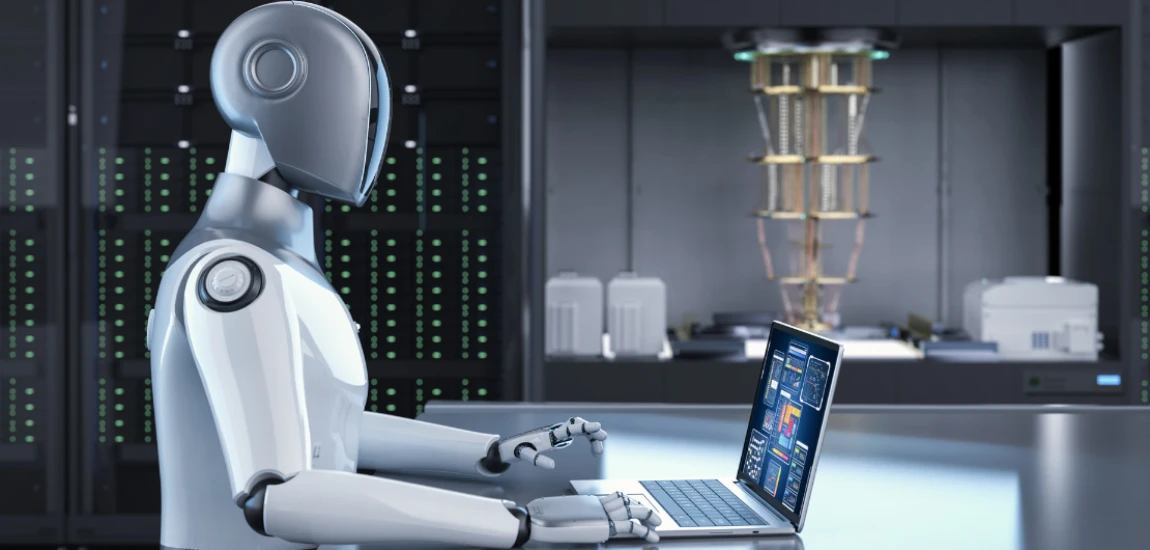
The convergence of quantum computing and artificial intelligence has opened a new frontier in computational science known as Quantum Machine Learning Frameworks. These frameworks combine the principles of quantum mechanics with machine learning algorithms to create systems capable of processing information in fundamentally new ways. Unlike classical computers that rely on binary bits, quantum computers use qubits, which can exist in multiple states simultaneously due to superposition and entanglement. This allows quantum systems to perform certain computations exponentially faster than traditional systems.
As data volumes continue to grow and AI models become increasingly complex, classical computing systems are approaching their physical and computational limits. Quantum Machine Learning (QML) offers a potential solution by enabling exponential scaling of computational power for specific problem classes. These frameworks are designed to enhance pattern recognition, optimization, simulation, and decision-making processes in ways that were previously impossible.
Quantum Machine Learning Frameworks are still in their early stages of development, but rapid progress in quantum hardware, hybrid algorithms, and cloud-based quantum platforms is accelerating their adoption. As research continues, these systems are expected to play a major role in shaping the future of artificial intelligence and high-performance computing.
Foundations of Quantum Machine Learning Frameworks

The Intersection of Quantum Computing and Machine Learning
Quantum Machine Learning Frameworks are built on the integration of quantum computing principles with classical machine learning techniques. At their core, these frameworks aim to leverage quantum phenomena such as superposition, entanglement, and quantum interference to enhance computational efficiency.
In classical machine learning, data is processed sequentially or in parallel using binary logic. However, quantum systems can evaluate multiple possibilities simultaneously, allowing for parallel exploration of complex solution spaces. This capability significantly improves performance in tasks such as optimization, classification, and pattern recognition.
Quantum Bits and Information Representation
The fundamental unit of quantum computation is the qubit. Unlike classical bits that exist in either 0 or 1 states, qubits can exist in a combination of both states simultaneously. This property allows quantum systems to represent and process exponentially more information than classical systems.
When multiple qubits become entangled, their states become interdependent, enabling highly complex computations that are impossible for classical systems to simulate efficiently. This property is essential for quantum machine learning algorithms that rely on high-dimensional data representation.
Evolution of Hybrid Computational Models
Because fully functional quantum computers are still emerging, most current Quantum Machine Learning Frameworks operate as hybrid systems. These systems combine classical computing resources with quantum processors to perform specialized tasks.
Hybrid models allow quantum algorithms to handle computationally intensive operations while classical systems manage data preprocessing and result interpretation. This approach enables practical experimentation and application development in the current technological landscape.
Core Architectures of Quantum Machine Learning Systems

Variational Quantum Circuits and Parameterized Models
One of the most widely used architectures in quantum machine learning is the variational quantum circuit. These circuits use parameterized quantum gates that can be optimized using classical feedback loops. The system iteratively adjusts parameters to minimize error functions, similar to neural network training.
Variational models are particularly useful for classification, regression, and optimization tasks. They form the backbone of many experimental QML applications due to their adaptability and compatibility with noisy quantum hardware.
Quantum Neural Networks and Cognitive Simulation
Quantum Neural Networks (QNNs) extend classical neural network architectures into the quantum domain. These networks use qubits instead of traditional neurons and leverage quantum interactions to process information.
QNNs have the potential to simulate highly complex cognitive processes and improve learning efficiency for specific types of data. However, they remain an active area of research due to challenges in scalability and hardware limitations.
Quantum Kernel Methods for Data Analysis
Quantum kernel methods use quantum circuits to map data into high-dimensional feature spaces. This allows for improved classification performance in machine learning tasks. By leveraging quantum transformations, these methods can identify patterns that are difficult or impossible to detect using classical kernels.
Applications of Quantum Machine Learning

Optimization and Complex Problem Solving
Quantum Machine Learning Frameworks are particularly effective in solving complex optimization problems. These include logistics planning, financial modeling, supply chain optimization, and energy distribution systems.
Quantum algorithms can evaluate multiple potential solutions simultaneously, significantly reducing computation time for large-scale optimization tasks.
Drug Discovery and Molecular Simulation
One of the most promising applications of QML is in molecular simulation and drug discovery. Quantum systems can accurately model molecular interactions at the atomic level, enabling faster identification of potential drug compounds.
This capability has the potential to revolutionize pharmaceutical research by reducing the time and cost required for drug development.
Financial Modeling and Risk Analysis
Quantum machine learning is also being explored in financial markets for portfolio optimization, risk assessment, and fraud detection. By analyzing large datasets with high-dimensional complexity, quantum systems can provide more accurate predictions and insights.
Challenges in Quantum Machine Learning Development

Quantum Hardware Limitations
One of the biggest challenges facing Quantum Machine Learning Frameworks is the current state of quantum hardware. Quantum processors are highly sensitive to environmental noise and require extremely low temperatures to operate.
These limitations result in errors and instability, making large-scale quantum computation difficult. Researchers are actively working on error correction techniques and more stable qubit designs.
Algorithm Complexity and Scalability
Developing scalable quantum algorithms is another major challenge. Many quantum machine learning models require complex mathematical formulations that are difficult to implement on current hardware.
Ensuring that these algorithms scale effectively with increasing qubit counts remains a critical area of research.
Integration with Classical Systems
Because quantum computing is still in development, integrating quantum systems with classical infrastructure is essential. Ensuring seamless communication between quantum and classical components is a technical challenge that requires advanced hybrid system design.


Operating "The Blonde Abroad," Kiersten Rich specializes in solo female travel. Her blog provides destination guides, packing tips, and travel resources.
Kiersten Rich

Prev Post

Next Post