
Quantum Gravitational Transportation Systems and Ultra-Fast Planetary Mobility Architectures
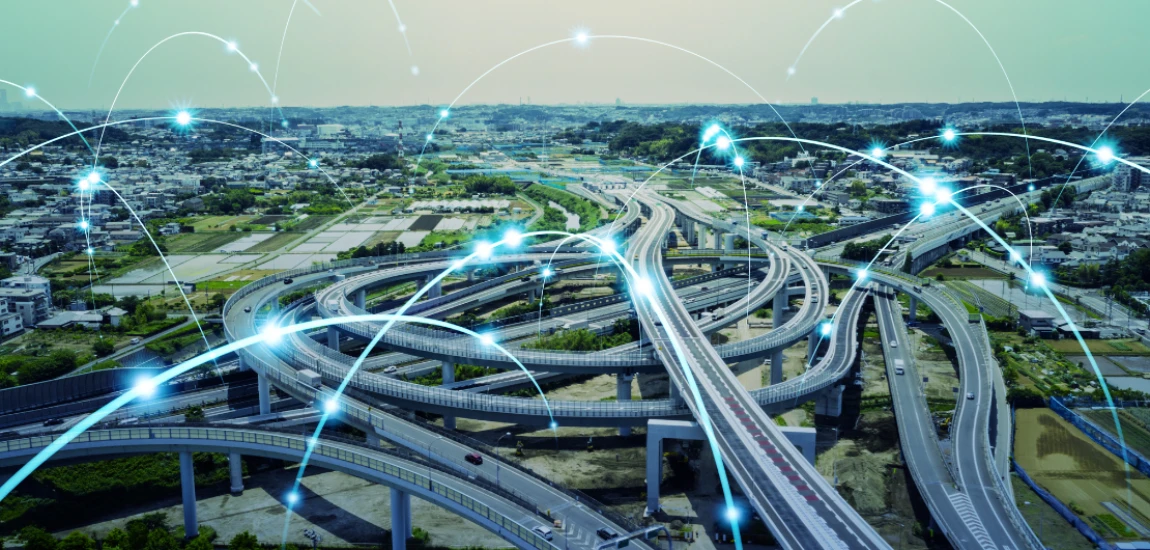
Human transportation has evolved from walking and animal-powered movement to automobiles, aircraft, high-speed rail, and space exploration vehicles. Each technological leap has significantly reduced travel time and expanded the boundaries of human mobility. However, even the most advanced spacecraft today are still limited by classical propulsion systems and the constraints of physics as we currently understand them. Interplanetary travel remains extremely time-consuming, and interstellar travel is still largely theoretical.
Quantum gravitational transportation systems represent a visionary concept that explores how future physics-based engineering might enable ultra-fast planetary and potentially interplanetary mobility. These systems are based on the idea of manipulating gravitational fields, spacetime curvature, and quantum-level energy interactions to reduce travel time dramatically across vast distances.
Ultra-fast planetary mobility architectures extend this idea into structured transportation ecosystems that integrate advanced propulsion systems, quantum navigation networks, gravitational control fields, and AI-driven trajectory optimization. Together, these technologies envision a future where travel between planets, moons, and potentially star systems could become significantly faster, safer, and more efficient.
While still theoretical, these concepts combine elements of quantum physics, astrophysics, and advanced engineering to redefine the possibilities of future mobility systems.
Understanding Quantum Gravitational Transportation Systems

The Science Behind Gravity Manipulation Concepts
Gravity is one of the fundamental forces of nature, governing the motion of planets, stars, galaxies, and even light under extreme conditions. Traditional transportation systems rely on overcoming gravity using mechanical propulsion. However, quantum gravitational transportation systems propose a radically different approach: instead of fighting gravity, they aim to manipulate it.
The idea involves controlling spacetime curvature at microscopic or quantum scales to create controlled gravitational gradients. If such manipulation becomes possible, vehicles could theoretically “ride” gravitational distortions rather than consume large amounts of fuel to escape them.
Advanced research in quantum field theory, general relativity, and theoretical physics suggests that spacetime is not static but dynamic and potentially modifiable under extreme energy conditions.
Quantum Physics and Spacetime Engineering
Quantum physics introduces the idea that particles and energy exist in probabilistic states rather than fixed positions. When combined with gravitational theory, this opens the possibility of quantum spacetime interactions where gravity itself may behave differently at extremely small scales.
Quantum gravitational transportation systems would rely on manipulating these interactions to create localized spacetime distortions. These distortions could, in theory, shorten travel distances by bending spacetime or creating controlled gravitational pathways.
Such concepts are still highly theoretical but form the foundation of advanced propulsion research and experimental physics models.
AI Role in Gravitational Navigation Systems
Artificial intelligence would play a critical role in managing quantum gravitational transportation systems. AI algorithms could calculate optimal spacetime trajectories, monitor gravitational field stability, and adjust propulsion parameters in real time.
Machine learning models trained on astrophysical data could help predict gravitational anomalies, space weather conditions, and quantum fluctuations that affect travel safety. AI-driven navigation systems would ensure precise control over ultra-complex mobility environments.
Ultra-Fast Planetary Mobility Architectures and Their Components

Advanced Propulsion Technologies
Ultra-fast planetary mobility architectures depend on next-generation propulsion systems capable of operating beyond conventional chemical or ion-based engines. These systems may include quantum field propulsion, antimatter energy systems, plasma acceleration engines, or gravity-based drive mechanisms.
Such propulsion systems aim to reduce travel time between planets by increasing velocity while minimizing energy consumption. Instead of relying solely on thrust, these systems may interact directly with spacetime geometry to enhance movement efficiency.
Research into high-energy physics and experimental propulsion continues to explore these possibilities for future space exploration.
Spacetime Corridor Networks
One of the most fascinating theoretical components of ultra-fast mobility systems is the concept of spacetime corridors. These corridors would function as optimized pathways through warped spacetime, allowing spacecraft to travel shorter effective distances between destinations.
Similar to “space highways,” these corridors would require precise gravitational control and advanced computational modeling to maintain stability. AI systems would continuously monitor and adjust these pathways to prevent collapse or instability.
If realized, spacetime corridors could dramatically reduce interplanetary travel time.
Quantum Navigation and Positioning Systems
Traditional GPS systems are insufficient for deep space or interplanetary travel. Quantum gravitational transportation systems would require advanced quantum navigation networks capable of maintaining precise positioning across vast cosmic distances.
Quantum sensors, entangled communication systems, and AI-driven spatial mapping technologies would enable real-time tracking of spacecraft even in extreme gravitational environments.
These navigation systems would ensure accuracy, safety, and coordination within ultra-fast mobility networks.
Applications of Quantum Gravitational Transportation Systems

Interplanetary Travel and Space Exploration
The most obvious application of quantum gravitational transportation systems is interplanetary travel. Current missions to Mars, for example, can take six to nine months using traditional propulsion methods. Advanced mobility architectures could potentially reduce this time significantly.
Such systems could enable faster exploration of Mars, Europa, Titan, and other celestial bodies within our solar system. This would accelerate scientific discovery, resource exploration, and potential colonization efforts.
Faster transportation would also improve mission safety and efficiency for astronauts and robotic explorers.
Space Colonization and Human Expansion
As humanity looks toward establishing permanent settlements beyond Earth, efficient transportation systems will become essential. Ultra-fast mobility architectures could support regular travel between Earth and extraterrestrial colonies.
This would enable the development of interplanetary trade networks, resource distribution systems, and large-scale human migration strategies.
Quantum gravitational systems could become the backbone of future space civilization infrastructure.
Deep Space Research and Astrophysics
Quantum transportation systems could also revolutionize astrophysics research by enabling faster access to distant cosmic regions. Spacecraft equipped with advanced mobility systems could reach distant planets, asteroid belts, and possibly nearby star systems much more efficiently.
This would expand humanity’s understanding of the universe and accelerate discoveries in cosmology, planetary science, and gravitational physics.
Benefits of Ultra-Fast Planetary Mobility Architectures

Drastically Reduced Travel Time
One of the most significant advantages of quantum gravitational transportation systems is the potential to reduce travel time across vast distances. Interplanetary journeys that currently take months or years could potentially be completed in days or even hours under advanced mobility systems.
This reduction in travel time would transform space exploration, logistics, and human mobility beyond Earth.
Faster travel also enhances mission safety by reducing exposure to cosmic radiation and long-term space travel risks.
Energy Efficiency and Advanced Resource Utilization
Traditional rocket propulsion requires enormous amounts of fuel. Quantum gravitational systems, if feasible, could reduce dependency on chemical propulsion by utilizing spacetime manipulation or field-based energy systems.
AI optimization could further improve energy efficiency by dynamically adjusting propulsion parameters and trajectory paths.
This would make space travel more sustainable and economically viable in the long term.
Expansion of Human Civilization Beyond Earth
Ultra-fast mobility systems could enable large-scale expansion of human civilization beyond Earth. Efficient transportation between planetary bodies would support long-term colonization, resource utilization, and interplanetary economic systems.
This expansion could mark a major milestone in human evolution and technological progress.


Kate McCulley, the voice behind "Adventurous Kate," provides travel advice tailored for women. Her blog encourages safe and adventurous travel for female readers.
Kate McCulley

Prev Post

Next Post