
Interstellar Exploration Technologies and Autonomous Deep-Space Discovery Architectures
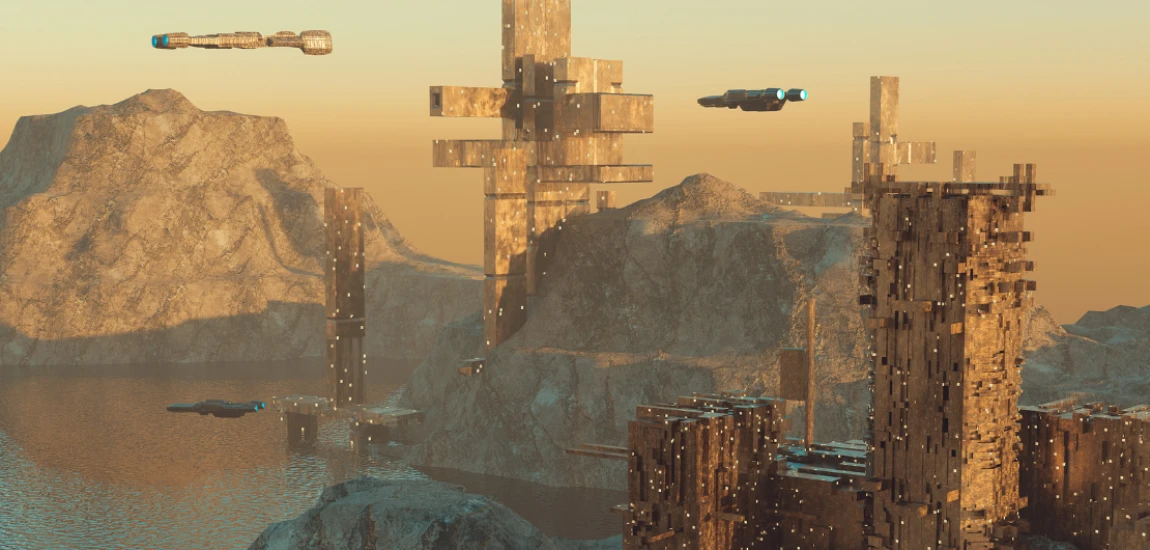
Humanity stands at the threshold of a new era in space exploration—one that extends far beyond the boundaries of our solar system. For decades, space missions have focused on planetary exploration, satellite deployment, and limited deep-space probes. However, as technological capabilities evolve, attention is shifting toward interstellar exploration technologies and autonomous deep-space discovery architectures that can operate independently across vast cosmic distances.
Interstellar exploration refers to the study and potential travel between star systems, while autonomous deep-space architectures involve intelligent, self-operating spacecraft systems capable of making decisions without real-time human intervention. These technologies are essential because of the enormous distances involved—signals traveling between Earth and distant probes can take years or even decades.
To overcome these limitations, future exploration systems must rely heavily on artificial intelligence, robotics, advanced propulsion systems, distributed sensor networks, and self-sustaining spacecraft ecosystems. These innovations are designed to enable long-duration missions, real-time decision-making in space, and continuous scientific discovery without constant Earth-based control.
As humanity looks toward destinations such as Alpha Centauri, exoplanets, and interstellar space, these technologies will form the backbone of exploration strategies. They represent not just scientific progress but a fundamental shift in how we explore, understand, and interact with the universe.
Foundations of Interstellar Exploration Technologies

Evolution of Deep-Space Exploration Systems
Interstellar exploration technologies are built upon decades of advancements in space science and engineering. Early missions like Voyager and Pioneer provided the first glimpses of deep space, demonstrating that spacecraft could operate far beyond planetary boundaries. However, these missions were limited in capability and relied heavily on pre-programmed instructions from Earth.
Modern exploration systems are significantly more advanced. They incorporate real-time data processing, autonomous navigation, and adaptive mission planning capabilities. This evolution marks a shift from passive exploration to intelligent, self-directed discovery systems.
As technology progresses, spacecraft are becoming more capable of handling unpredictable environments, adjusting mission parameters dynamically, and continuing operations even under communication delays or system failures.
Core Principles of Interstellar Systems
Interstellar exploration relies on several foundational principles. Autonomy is critical, allowing spacecraft to operate independently without constant human input. Resilience ensures that systems can withstand harsh conditions such as radiation, extreme temperatures, and microgravity.
Scalability is another key principle, enabling networks of spacecraft to collaborate and share data across vast distances. Energy efficiency is also essential, as long-duration missions require sustainable power sources such as nuclear energy or advanced solar harvesting systems.
Together, these principles form the basis for next-generation exploration architectures.
Challenges of Cosmic Distance and Time
One of the greatest challenges in interstellar exploration is distance. Even the nearest star systems are light-years away, making real-time communication impossible. This delay requires spacecraft to operate with high levels of autonomy.
Time also presents challenges, as missions may last decades or even centuries. Systems must be designed for long-term reliability, self-repair, and continuous adaptation.
These constraints are driving innovation in autonomous systems and self-sustaining technologies.
Autonomous Deep-Space Discovery Architectures

Self-Operating Spacecraft Systems
Autonomous deep-space architectures are designed to function independently in extreme environments. These systems use onboard artificial intelligence to manage navigation, scientific data collection, and system maintenance.
Instead of waiting for instructions from Earth, autonomous spacecraft can analyze their surroundings and make real-time decisions. This capability is essential for exploring unknown regions of space where immediate human guidance is impossible.
Self-operating systems reduce mission risks and increase scientific output by enabling continuous exploration.
Distributed Exploration Networks
Future interstellar missions are likely to involve fleets of interconnected spacecraft rather than single probes. These distributed networks allow multiple units to share data, coordinate movements, and collectively analyze discoveries.
If one spacecraft encounters a failure, others can continue the mission, ensuring resilience and continuity.
Distributed architectures also enable broader spatial coverage, increasing the likelihood of discovering new celestial phenomena.
This collaborative approach represents a major advancement in exploration strategy.
AI-Driven Mission Control Systems
Artificial intelligence is at the core of autonomous space architectures. AI systems manage navigation, resource allocation, and scientific analysis.
Machine learning algorithms help spacecraft adapt to unexpected conditions and optimize mission objectives over time.
These intelligent systems reduce dependency on Earth-based control centers and enable fully autonomous exploration missions.
As AI continues to evolve, spacecraft will become increasingly capable of independent decision-making.
Advanced Propulsion Systems for Deep Space Travel

Nuclear and Fusion Propulsion Technologies
Traditional chemical propulsion is insufficient for interstellar travel due to its limited efficiency. Nuclear propulsion systems offer a more powerful alternative, enabling faster and more sustainable space travel.
Fusion propulsion, still in experimental stages, holds the potential to revolutionize deep-space exploration by providing extremely high energy output with relatively low fuel requirements.
These technologies could significantly reduce travel time between star systems.
They represent one of the most critical components of future interstellar missions.
Photonic and Solar Sail Systems
Light-based propulsion systems, such as solar sails and photonic drives, use radiation pressure to propel spacecraft without traditional fuel.
These systems are highly efficient for long-duration missions and can achieve continuous acceleration over time.
Although acceleration is gradual, solar sails can eventually reach extremely high speeds in the vacuum of space.
They offer a promising low-cost solution for interstellar exploration.
Hybrid Propulsion Architectures
Future spacecraft may combine multiple propulsion technologies to maximize efficiency and performance.
Hybrid systems could integrate nuclear propulsion for initial acceleration and solar sails for sustained travel.
This combination allows for flexible mission design and improved adaptability.
Hybrid architectures are likely to play a key role in next-generation exploration missions.


Ben Schlappig runs "One Mile at a Time," focusing on aviation and frequent flying. He offers insights on maximizing travel points, airline reviews, and industry news.
Ben Schlappig

Prev Post

Next Post