
Holographic Computing Platforms and Next-Generation Immersive Information Processing Systems
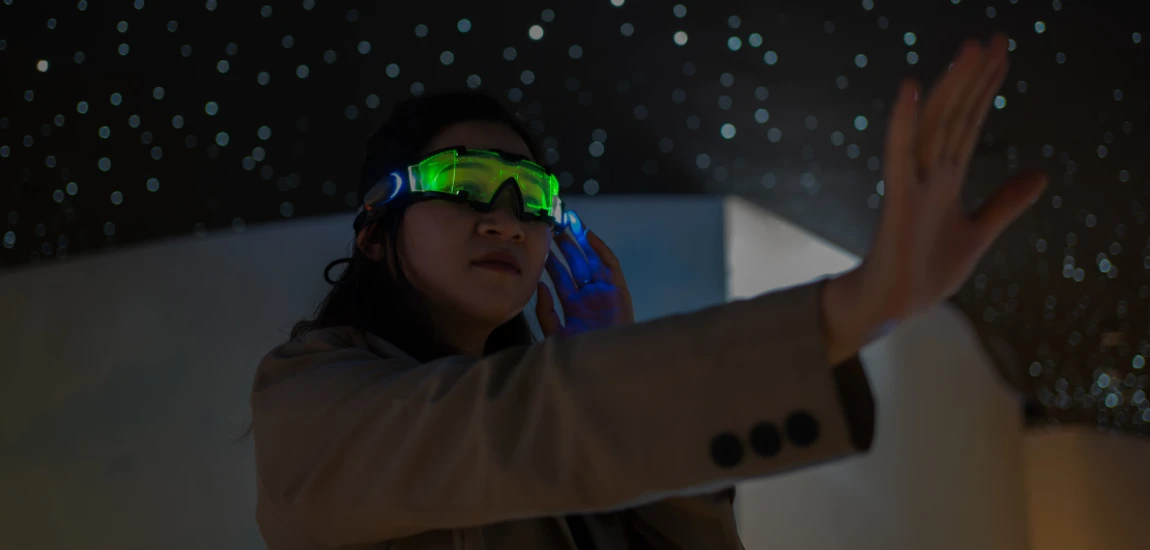
The evolution of computing has consistently moved toward more intuitive, immersive, and human-centered interaction models. From command-line interfaces to graphical user interfaces, and now to touch, voice, and gesture-based systems, each generation of computing has aimed to make digital systems more natural and accessible. The next major leap in this evolution is being driven by holographic computing platforms and immersive information processing systems.
Holographic computing represents a paradigm shift from traditional 2D screens to fully spatial, three-dimensional environments where data, applications, and digital objects exist in physical space. Instead of interacting with flat interfaces, users can manipulate holographic representations of information as if they were real objects. This creates an entirely new way of processing, analyzing, and interacting with data.
Immersive information processing systems extend this concept further by integrating artificial intelligence, augmented reality (AR), virtual reality (VR), advanced sensors, and spatial computing technologies. These systems enable real-time visualization and interaction with complex datasets in ways that enhance comprehension, collaboration, and decision-making.
As industries become more data-driven and complex, traditional interfaces are no longer sufficient to manage large-scale information systems. Holographic computing platforms provide a solution by transforming abstract data into intuitive, spatially organized environments. From engineering and medicine to education, business, and scientific research, holographic systems are poised to redefine how humans interact with information.
Understanding Holographic Computing Platforms

Evolution from Traditional to Spatial Computing
Holographic computing is the next stage in the evolution of human-computer interaction. Early computing systems relied on text-based commands, requiring users to understand specific syntax and instructions. The introduction of graphical user interfaces made computing more accessible by introducing visual elements such as icons, windows, and menus.
However, even graphical systems are limited by their two-dimensional nature. Holographic computing eliminates these constraints by introducing spatial interfaces where digital objects exist in three-dimensional space. Users can walk around, interact with, and manipulate data as if it were physically present.
This shift represents a fundamental change in how information is structured and perceived. Instead of navigating through layers of screens, users interact with environments where information is naturally organized in space.
Core Components of Holographic Systems
Holographic computing platforms are built on several advanced technologies. These include light-field displays, volumetric rendering engines, spatial mapping sensors, and high-performance computing systems capable of generating real-time 3D environments.
Artificial intelligence plays a crucial role in interpreting user interactions and dynamically adjusting holographic environments. Motion tracking, eye-tracking, and gesture recognition systems enable intuitive control without traditional input devices.
These components work together to create seamless immersive experiences that respond intelligently to user behavior.
The Shift Toward Spatial Information Architecture
One of the most important innovations in holographic computing is spatial information architecture. Instead of organizing data in files and folders, information is arranged in spatial structures.
For example, financial data might appear as interactive 3D graphs floating in space, while engineering models can be manipulated in real time. This spatial arrangement improves understanding and reduces cognitive load.
As a result, users can process complex information more efficiently and intuitively.
Immersive Information Processing Systems Explained

Integration of AI and Spatial Computing
Immersive information systems rely heavily on artificial intelligence to interpret data and create meaningful visualizations. AI algorithms analyze large datasets and convert them into interactive holographic models.
Machine learning enhances system responsiveness by adapting interfaces based on user preferences and behavior patterns.
This integration enables dynamic and personalized information environments.
AI-driven holographic systems significantly improve productivity and decision-making capabilities.
Real-Time Data Visualization and Interaction
One of the most powerful features of immersive systems is real-time visualization. Data is continuously updated and displayed in holographic form, allowing users to observe changes instantly.
This is particularly useful in fields such as scientific research, financial analysis, and engineering design, where real-time insights are critical.
Users can interact directly with data points, modify variables, and instantly see outcomes.
This interactive approach transforms passive data consumption into active exploration.
Multi-Sensory Computing Environments
Immersive systems often incorporate multiple sensory inputs, including visual, auditory, and haptic feedback. This creates a more engaging and realistic user experience.
Haptic technologies allow users to "feel" virtual objects, while spatial audio enhances depth perception in holographic environments.
These multi-sensory experiences improve comprehension and engagement significantly.
As sensory technologies advance, immersive computing will become even more realistic and intuitive.
Applications in Industry and Enterprise Systems

Engineering and Product Design
Holographic computing is revolutionizing engineering and design processes. Engineers can create, modify, and test 3D models in real time without physical prototypes.
Complex systems such as aircraft, vehicles, and infrastructure can be visualized at full scale.
This reduces development time, improves accuracy, and lowers production costs.
Collaboration between teams becomes more efficient through shared holographic environments.
Healthcare and Medical Visualization
In healthcare, holographic computing enables advanced medical imaging and surgical planning. Doctors can view 3D representations of organs, tissues, and medical scans.
This improves diagnostic accuracy and supports better treatment planning.
Surgeons can rehearse complex procedures in immersive environments before operating on patients.
These capabilities enhance both medical education and patient outcomes.
Business Intelligence and Data Analytics
Businesses are increasingly using holographic systems to visualize complex datasets. Financial trends, market analysis, and operational metrics can be displayed in interactive 3D environments.
Executives can explore data dynamically, identify patterns, and make faster decisions.
This enhances strategic planning and improves organizational efficiency.
Holographic analytics transforms business intelligence into an immersive experience.
Education and Knowledge Transformation

Immersive Learning Environments
Education is one of the most promising applications of holographic computing. Students can explore historical events, scientific models, and mathematical concepts in 3D environments.
This makes learning more engaging and improves knowledge retention.
Complex subjects become easier to understand through visual and interactive representation.
Immersive learning environments bridge the gap between theory and practical understanding.
Virtual Laboratories and Simulations
Holographic systems enable virtual laboratories where students can conduct experiments safely and interactively.
Scientific simulations allow learners to explore physics, chemistry, and biology in realistic environments.
This reduces the need for physical resources and increases accessibility.
Virtual labs enhance scientific education at all levels.
Collaborative Learning Spaces
Students and educators can collaborate in shared holographic environments regardless of physical location.
This supports global education initiatives and remote learning systems.
Collaboration becomes more interactive and engaging compared to traditional video-based learning.
These systems redefine how education is delivered and experienced.


Gary Arndt operates "Everything Everywhere," a blog focusing on worldwide travel. An award-winning photographer, Gary shares stunning visuals alongside his travel tales.
Gary Arndt
Prev Post

Next Post