
Digital Twin Civilization Platforms and Real-Time Planetary Simulation Architectures
As the world becomes increasingly connected through digital technologies, managing the complexity of modern civilization has become one of humanity's greatest challenges. Governments, businesses, researchers, and infrastructure operators must process enormous amounts of information every second to make informed decisions regarding transportation, healthcare, energy, environmental protection, disaster management, and economic development. Traditional planning methods often rely on historical data and isolated analytical tools, making it difficult to understand how interconnected systems influence one another in real time.
Digital twin civilization platforms are emerging as one of the most transformative technological innovations of the twenty-first century. These platforms create dynamic digital replicas of entire cities, regions, countries, and potentially the entire planet by combining artificial intelligence, Internet of Things (IoT) devices, cloud computing, big data analytics, and high-performance computing. Unlike static computer models, digital twins continuously receive live information from sensors, satellites, infrastructure networks, and communication systems, allowing them to mirror real-world conditions with exceptional accuracy.
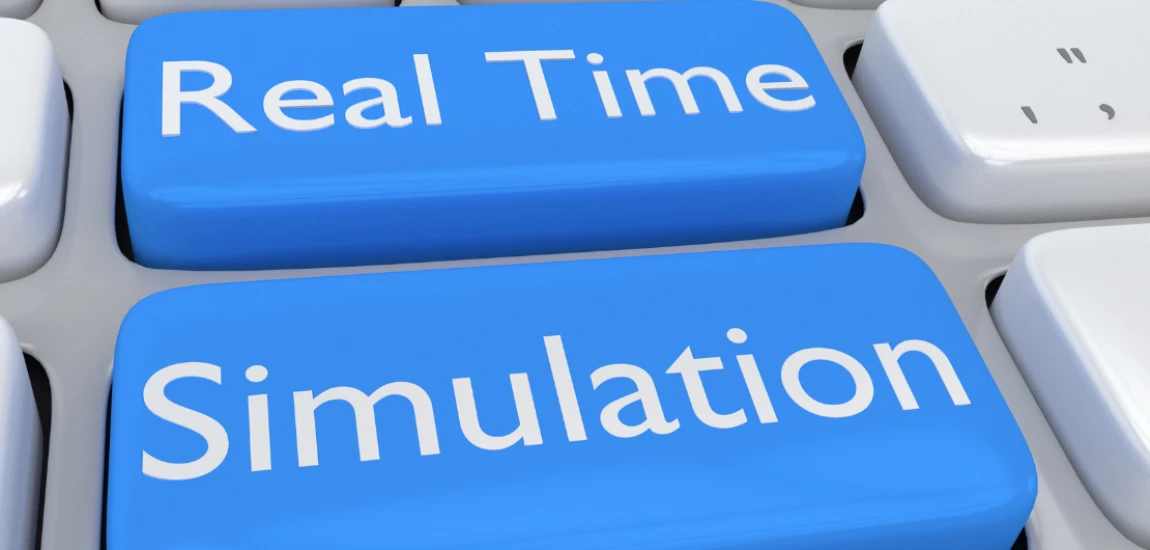
Real-time planetary simulation architectures extend this concept by integrating environmental, social, economic, industrial, and governmental systems into unified virtual ecosystems. Decision-makers can test policies, predict disasters, optimize infrastructure, improve sustainability, and simulate future scenarios before implementing real-world actions. This significantly reduces uncertainty while improving efficiency and resilience.
As technology continues to evolve, digital twin civilization platforms will become indispensable tools for creating smarter cities, stronger economies, safer infrastructure, and more sustainable societies. Their ability to provide real-time intelligence and predictive insights represents a major leap forward in humanity's capacity to understand and manage complex global systems.
Understanding Digital Twin Civilization Platforms

The Evolution from Industrial Digital Twins
Digital twin technology originally emerged within manufacturing industries, where virtual models of machinery helped engineers monitor equipment performance and predict maintenance requirements. These early digital twins focused primarily on individual machines or industrial assets. However, advancements in cloud computing, artificial intelligence, IoT connectivity, and big data processing have dramatically expanded their capabilities.
Today, digital twin civilization platforms extend far beyond factories by creating comprehensive digital representations of cities, transportation systems, utility networks, healthcare infrastructure, environmental ecosystems, and entire nations. Every connected device contributes valuable information that continuously updates the digital model.
Instead of analyzing isolated systems independently, civilization-scale platforms simulate relationships between transportation, energy production, communications, public safety, healthcare, weather patterns, and economic activity. This interconnected approach provides a much deeper understanding of how complex systems influence one another.
The transition from individual asset monitoring to civilization-scale simulations represents one of the most significant advancements in digital transformation. These comprehensive models provide unprecedented visibility into large-scale societal operations while supporting more informed planning and resource management.
Core Technologies Powering Digital Twins
Modern digital twin civilization platforms integrate multiple advanced technologies into a unified ecosystem. Internet of Things sensors collect real-time information from infrastructure, vehicles, industrial facilities, environmental monitoring stations, healthcare systems, and communication networks.
Artificial intelligence analyzes incoming data streams, identifying patterns, predicting future conditions, and generating recommendations for optimization. Cloud computing provides the computational resources necessary to process billions of data points simultaneously, while edge computing enables rapid local processing where immediate decisions are required.
Geographic Information Systems add spatial intelligence that allows users to visualize infrastructure, natural environments, and population movements across large geographic areas. High-performance computing enables sophisticated simulations that model interactions between thousands of interconnected systems.
Together, these technologies create intelligent virtual environments capable of continuously adapting to changing real-world conditions.
Benefits of Civilization-Scale Digital Twins
Civilization-scale digital twins provide far more than visualization tools. They enable governments and organizations to understand complex interactions before implementing major decisions.
Infrastructure investments can be evaluated through realistic simulations, disaster response strategies can be tested safely, transportation systems can be optimized, and environmental policies can be assessed for long-term impacts.
By improving situational awareness and predictive planning, digital twin platforms support smarter governance, stronger resilience, and more sustainable development.
Real-Time Planetary Simulation Architectures

Simulating Earth's Complex Systems
Real-time planetary simulation architectures create comprehensive digital models capable of representing environmental, economic, technological, and social systems simultaneously. Unlike conventional simulations that examine individual sectors independently, planetary architectures evaluate interactions across multiple domains.
Weather systems influence transportation, transportation affects economic activity, economic growth impacts energy demand, and energy production influences environmental sustainability. Advanced simulations capture these complex relationships continuously.
Artificial intelligence processes data from satellites, sensor networks, communication systems, research institutions, and industrial infrastructure to update models dynamically.
These continuously evolving simulations provide accurate representations of current global conditions while enabling exploration of future scenarios.
Predictive Modeling Through Artificial Intelligence
Artificial intelligence transforms digital twins into predictive decision-support platforms rather than simple monitoring systems. Machine learning algorithms analyze historical information alongside real-time observations to identify emerging trends and forecast future developments.
Governments can predict infrastructure demand, climate impacts, healthcare requirements, traffic congestion, energy consumption, and disaster risks with increasing accuracy.
As additional information becomes available, predictive models continuously improve, providing increasingly reliable forecasts.
Organizations benefit from proactive planning instead of reactive problem solving.
Supporting Strategic Decision-Making
Strategic planning often involves uncertainty because future conditions cannot be observed directly. Digital twin simulation platforms reduce uncertainty by allowing decision-makers to evaluate multiple policy options before implementation.
Infrastructure projects, environmental regulations, renewable energy initiatives, transportation improvements, and emergency response strategies can all be tested within virtual environments.
Decision-makers gain valuable insights into possible consequences, allowing better allocation of resources while reducing financial and operational risks.
This capability significantly improves long-term planning effectiveness.
Artificial Intelligence and Intelligent Infrastructure Management

AI as the Intelligence Layer
Artificial intelligence serves as the analytical engine behind digital twin civilization platforms. Rather than simply collecting data, AI continuously interprets information, identifies anomalies, predicts future developments, and recommends optimized operational strategies.
Machine learning algorithms recognize relationships between seemingly unrelated events, providing deeper insights into system behavior.
These analytical capabilities improve understanding of increasingly complex societal systems.
AI transforms enormous datasets into actionable intelligence.
Optimizing Critical Infrastructure
Cities depend upon transportation systems, power grids, communication networks, water distribution, healthcare facilities, and public safety infrastructure.
Digital twins monitor these systems continuously using connected sensors and predictive analytics. Infrastructure operators receive early warnings regarding equipment failures, maintenance requirements, and operational bottlenecks before disruptions occur.
Predictive maintenance reduces repair costs while improving reliability and public safety.
Intelligent infrastructure management also supports sustainable resource utilization by optimizing energy consumption and operational efficiency.
Smart Resource Allocation
Governments and organizations frequently face difficult decisions regarding budget allocation and infrastructure investments.
Digital twin platforms evaluate resource utilization across multiple sectors simultaneously, identifying opportunities for improved efficiency.
Decision-makers can prioritize projects based on measurable outcomes rather than assumptions.
This data-driven approach strengthens economic performance while supporting sustainable development goals.
Applications Across Smart Cities and Global Industries

Transforming Urban Planning
Smart cities rely heavily on digital twin technologies to optimize transportation, housing, utilities, environmental quality, waste management, and public services.
Urban planners use simulations to evaluate future population growth, traffic patterns, construction projects, and sustainability initiatives before implementation.
These capabilities improve infrastructure design while reducing long-term operational costs.
Citizens benefit from more efficient services and improved quality of life.
Environmental Monitoring and Climate Resilience
Environmental sustainability requires continuous monitoring of ecosystems, biodiversity, pollution levels, water resources, and climate conditions.
Planetary simulation platforms integrate satellite observations, environmental sensors, weather forecasting models, and AI-powered analytics to provide comprehensive ecological intelligence.
Governments can anticipate droughts, floods, wildfires, and other natural disasters more effectively.
Improved environmental visibility supports stronger conservation strategies and climate adaptation planning.
Healthcare and Emergency Management
Digital twins also support healthcare planning by modeling disease transmission, hospital capacity, emergency response operations, and resource availability.
Public safety agencies use simulations to coordinate disaster response activities, optimize evacuation plans, and allocate emergency resources efficiently.
Real-time information sharing improves coordination among government agencies, healthcare providers, and emergency responders.
These capabilities enhance societal resilience during crises.


Anil Polat, behind the blog "FoxNomad," combines technology and travel. A computer security engineer by profession, he focuses on the tech aspects of travel.
Anil Polat
Prev Post
Next Post