
Orbital Manufacturing Systems and the Future of Zero-Gravity Industrial Production Technologies
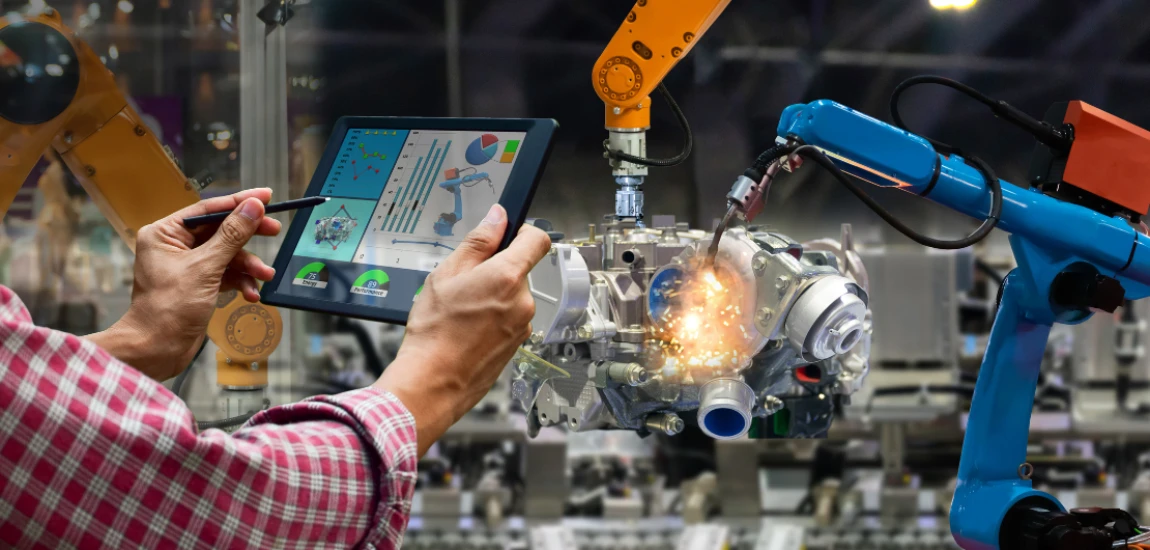
For decades, space has been viewed primarily as a destination for exploration, scientific discovery, and satellite deployment. However, a new frontier is rapidly emerging that could fundamentally transform global industry: Orbital Manufacturing Systems. These advanced production ecosystems utilize the unique conditions of space, particularly microgravity or zero-gravity environments, to manufacture products that are difficult or impossible to produce on Earth.
Traditional manufacturing is constrained by gravity, atmospheric interference, contamination risks, and environmental limitations. In contrast, orbital production facilities can leverage the vacuum of space, ultra-clean environments, and microgravity conditions to create advanced materials, pharmaceuticals, semiconductors, optical components, and engineered structures with unprecedented precision and quality.
Advancements in reusable launch vehicles, autonomous robotics, artificial intelligence, additive manufacturing, and space infrastructure are accelerating the development of orbital factories. Governments, private space companies, research institutions, and industrial organizations increasingly view space-based manufacturing as a strategic opportunity for economic growth and technological innovation.
As humanity moves toward a more space-enabled economy, orbital manufacturing systems may become a cornerstone of future industrial ecosystems. Their ability to produce high-value products, support deep-space exploration, and expand economic activity beyond Earth could reshape global manufacturing in profound ways.
Understanding Orbital Manufacturing Systems

The Concept of Space-Based Manufacturing
Orbital manufacturing refers to industrial production activities conducted in Earth orbit or other space environments. Unlike conventional factories, orbital production facilities operate within microgravity conditions where many physical processes behave differently.
Without the influence of gravity, materials can form more uniformly, fluids can mix differently, and crystal structures can grow with fewer defects. These characteristics create opportunities for manufacturing products with enhanced performance and quality.
The concept has evolved significantly from early space station experiments to sophisticated visions of autonomous orbital factories capable of large-scale industrial production.
Key Components of Orbital Production Networks
Modern orbital manufacturing systems integrate multiple advanced technologies. Space stations, robotic assembly systems, additive manufacturing equipment, autonomous maintenance platforms, AI-driven production management software, and orbital logistics networks work together as interconnected ecosystems.
Artificial intelligence plays a critical role in monitoring production processes, optimizing workflows, and managing autonomous operations. Robotics handle manufacturing tasks that would otherwise require human intervention.
These technologies collectively enable efficient and scalable industrial production in space.
Why Zero-Gravity Matters
Gravity affects nearly every manufacturing process on Earth. In microgravity environments, many limitations disappear, allowing scientists and engineers to explore entirely new production methods.
The ability to manipulate matter under unique physical conditions creates opportunities for innovation that cannot be replicated within terrestrial factories.
Advanced Materials Manufacturing in Microgravity

Producing Superior Materials
One of the most promising applications of orbital manufacturing involves advanced materials production. Microgravity allows materials to form more uniformly, reducing defects and improving structural consistency.
Researchers have observed significant improvements in crystal growth, metal alloys, fiber optics, and composite materials produced in space. These enhancements can lead to superior mechanical, optical, and electronic properties.
Such materials may support future innovations across numerous industries.
High-Performance Fiber Optics
Certain types of optical fibers manufactured in space exhibit dramatically lower signal loss compared to conventional fibers produced on Earth. These improvements result from reduced crystallization and contamination during production.
Enhanced fiber optics could transform telecommunications, scientific instrumentation, and data transmission technologies.
As global demand for connectivity continues growing, space-manufactured optical systems may become increasingly valuable.
Novel Material Discoveries
Microgravity environments enable researchers to study material behaviors that are difficult to observe on Earth. These investigations may lead to the discovery of entirely new materials with unique properties.
Future orbital laboratories and factories could become major centers for materials innovation, supporting technological advancements across multiple sectors.
Pharmaceutical and Biomedical Production in Space

Advancing Drug Development
The pharmaceutical industry is among the sectors most interested in orbital manufacturing technologies. Protein crystals grown in microgravity often exhibit greater size and structural uniformity than those produced under Earth's gravitational conditions.
These improvements enable researchers to study biological molecules more accurately, accelerating drug discovery and development efforts.
Enhanced molecular understanding can lead to more effective treatments for complex diseases.
Precision Biomanufacturing
Space-based biomanufacturing platforms offer unique opportunities for producing specialized biological products. Cell cultures, tissue engineering processes, and regenerative medicine applications may benefit significantly from microgravity conditions.
Researchers are exploring methods for manufacturing advanced biomedical materials and therapies that could improve healthcare outcomes worldwide.
Such capabilities could transform future medical innovation.
Supporting Personalized Medicine
Orbital manufacturing systems may eventually contribute to personalized healthcare by enabling highly customized pharmaceutical production. Advanced biomanufacturing processes could create patient-specific therapies optimized for individual biological characteristics.
This capability aligns with broader trends toward precision medicine and individualized treatment strategies.
Autonomous Robotics and AI-Driven Space Factories

The Rise of Autonomous Manufacturing
Human labor in space remains expensive and resource-intensive. As a result, future orbital manufacturing systems are expected to rely heavily on autonomous robotics and artificial intelligence.
Robotic systems can perform assembly, maintenance, quality control, and logistics operations with minimal human supervision. AI algorithms monitor production processes continuously, ensuring efficiency and reliability.
Automation is essential for achieving economically viable large-scale manufacturing in space.
Intelligent Production Management
AI-powered manufacturing platforms analyze operational data in real time to optimize resource allocation, equipment performance, and production schedules.
Machine learning algorithms identify inefficiencies, predict maintenance requirements, and improve overall system performance through continuous learning.
These capabilities enhance productivity while reducing operational risks.
Self-Maintaining Orbital Facilities
Future space factories may incorporate self-repair and autonomous maintenance systems. Advanced robotics could inspect equipment, replace components, and perform repairs without direct human involvement.
This level of autonomy will be critical for long-duration industrial operations beyond Earth.


Kate McCulley, the voice behind "Adventurous Kate," provides travel advice tailored for women. Her blog encourages safe and adventurous travel for female readers.
Kate McCulley

Prev Post

Next Post