
Low-Impact Tourism Mobility – Developing Cleaner Ways to Connect Destinations

Transportation is one of the most important parts of the tourism experience. Travelers need reliable ways to reach destinations, move between attractions, access accommodation, and explore surrounding communities. However, tourism mobility can also create environmental challenges through fuel consumption, traffic congestion, air pollution, noise, and greenhouse gas emissions.
As destinations seek more sustainable ways to manage tourism growth, transportation is becoming an important area for innovation. Low-Impact Tourism Mobility focuses on developing cleaner, more efficient, accessible, and convenient ways for visitors to move between destinations and attractions while reducing unnecessary environmental pressure.
Low-impact mobility can include public transportation, electric buses, trains, bicycles, walking networks, shared mobility, electric vehicles, shuttle services, and improved connections between different transportation modes. The objective is not simply to replace petrol or diesel vehicles with electric alternatives. A truly low-impact tourism mobility system also encourages travelers to use efficient shared transportation and reduces unnecessary journeys.
Tourism destinations can benefit from these changes in several ways. Better public transportation can reduce congestion. Walking and cycling routes can create healthier visitor experiences. Electric mobility can reduce local air pollution. Integrated transportation networks can make it easier for visitors to explore destinations without relying heavily on private cars.
Low-impact mobility can also strengthen local communities. Residents can benefit from better public transportation, safer streets, improved pedestrian infrastructure, and new mobility services that serve both visitors and local people.
Creating cleaner tourism mobility therefore requires a destination-wide approach. Transportation providers, tourism businesses, local governments, visitors, and communities need to work together to develop systems that connect places efficiently while minimizing environmental impacts.
Understanding Low-Impact Tourism Mobility

What Low-Impact Tourism Mobility Means
Low-Impact Tourism Mobility refers to transportation systems and travel practices designed to reduce the environmental and social impacts associated with tourism movement.
These systems prioritize efficient transportation, lower-emission vehicles, shared mobility, active travel, and better connections between different modes.
Instead of encouraging every visitor to use a private car, destinations can provide convenient alternatives such as trains, buses, electric shuttles, cycling networks, walking routes, and shared transportation.
The approach considers both how visitors travel to a destination and how they move once they arrive.
Why Sustainable Tourism Transportation Matters
Tourism transportation can contribute to emissions and congestion, particularly in popular destinations during peak seasons.
Road traffic can also affect local residents and reduce the quality of visitor experiences. Heavy congestion can increase travel times and make attractions less enjoyable.
Sustainable tourism transportation can address these challenges by providing alternatives to private vehicles and improving the efficiency of existing systems.
The objective is to make sustainable choices practical rather than forcing visitors to choose between convenience and environmental responsibility.
Connecting the Complete Tourism Journey
Low-impact mobility works best when different transportation services are connected.
A visitor may travel by train to a destination, use an electric shuttle to reach a hotel, walk to nearby attractions, and rent a bicycle for local exploration.
If these services are planned separately, transfers can become difficult. Integrated schedules, connected ticketing, clear signage, and digital travel information can make multimodal tourism more convenient.
Expanding Public Transportation for Tourism

Improving Bus and Rail Connections
Public transportation can carry large numbers of travelers using fewer resources per passenger compared with individual private vehicles, depending on the system and its utilization.
Tourism destinations can strengthen bus and rail connections between airports, railway stations, hotels, city centers, attractions, and surrounding communities.
Frequent services during tourism seasons can reduce dependence on private vehicles.
Real-time schedules and digital journey-planning tools can make public transportation easier for visitors unfamiliar with the destination.
Developing Tourism Shuttle Services
Tourism shuttle services can connect popular attractions and accommodation areas without requiring every visitor to drive.
Electric or low-emission shuttles can operate on routes designed around visitor demand.
For example, a destination could establish shuttle connections between a city center, major attractions, a beach, a heritage district, and a transportation hub.
Shuttles can also help manage visitor flows by directing travelers toward less congested areas.
Making Public Transport Visitor-Friendly
Visitors may avoid public transportation when ticketing systems are confusing, information is unavailable in common visitor languages, or routes are difficult to understand.
Tourism-focused transportation improvements can include simple maps, clear signage, digital journey planners, contactless payments, tourist passes, and multilingual information.
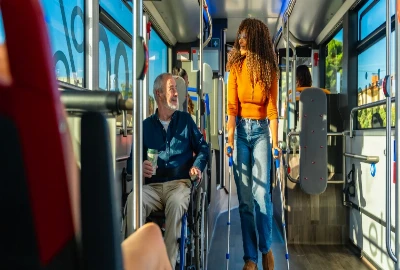
Accessibility should also be considered so that transportation can serve travelers with different mobility, sensory, and cognitive needs.
Promoting Electric and Low-Emission Tourism Vehicles

Expanding Electric Mobility
Electric vehicles can play an important role in reducing local transportation emissions, particularly when powered by increasingly cleaner electricity sources.
Tourism destinations can encourage electric taxis, buses, rental cars, shuttle services, and service vehicles.
Hotels can also provide electric vehicle charging where appropriate.
A coordinated charging network is important because visitors need confidence that they can recharge during their journeys.
Electrifying Tourism Fleets
Tourism businesses operate many different types of vehicles, including hotel shuttles, tour buses, airport transfers, taxis, delivery vehicles, and rental fleets.
Replacing high-emission vehicles with electric or other suitable lower-emission alternatives can reduce the environmental impact of tourism mobility.
Businesses can introduce changes gradually by replacing vehicles as existing fleets reach the end of their useful lives.
Fleet-management technology can help operators understand vehicle utilization and identify opportunities for greater efficiency.
Considering the Full Environmental Impact
Electric mobility should be considered as part of a wider sustainability strategy.
Vehicle size, occupancy, energy sources, manufacturing impacts, charging infrastructure, and travel demand all influence the overall environmental footprint.
For short journeys, walking, cycling, and shared transportation may be more resource-efficient than using any type of private vehicle.
The goal is therefore to create a hierarchy of mobility options that prioritizes efficient and appropriate modes for each journey.
Developing Walking, Cycling, and Shared Mobility Networks

Creating Walkable Tourism Destinations
Walking is one of the simplest forms of low-impact mobility.
Destinations can encourage walking by creating safe sidewalks, pedestrian streets, shaded pathways, crossings, seating areas, accessible routes, and clear wayfinding.
Walkable tourism areas can also encourage visitors to explore local businesses, restaurants, markets, cultural sites, and public spaces at a slower pace.
This can strengthen connections between tourism and local communities.
Building Tourism Cycling Infrastructure
Cycling can provide visitors with an efficient way to explore destinations without relying on motor vehicles.
Destinations can develop protected cycling lanes, bike parking, rental stations, repair facilities, and cycling routes connecting tourism attractions.
Electric bicycles can make cycling accessible to visitors who may find longer or hillier journeys challenging.
Cycling tourism can also distribute visitors toward surrounding communities and lesser-known areas when routes are planned responsibly.
Expanding Shared Mobility
Shared bicycles, e-bikes, scooters where appropriate, car-sharing, and on-demand shuttles can provide alternatives to private vehicle ownership.
However, shared mobility needs careful management.
Vehicles should not block sidewalks or create accessibility barriers. Parking areas, operating rules, safety requirements, and maintenance systems should be clearly established.
Well-managed shared mobility can increase transportation options while reducing the need for individual vehicles.


Gary Arndt operates "Everything Everywhere," a blog focusing on worldwide travel. An award-winning photographer, Gary shares stunning visuals alongside his travel tales.
Gary Arndt
Prev Post

Next Post