
Synthetic Intelligence Evolution and the Future of Non-Human Conscious Systems
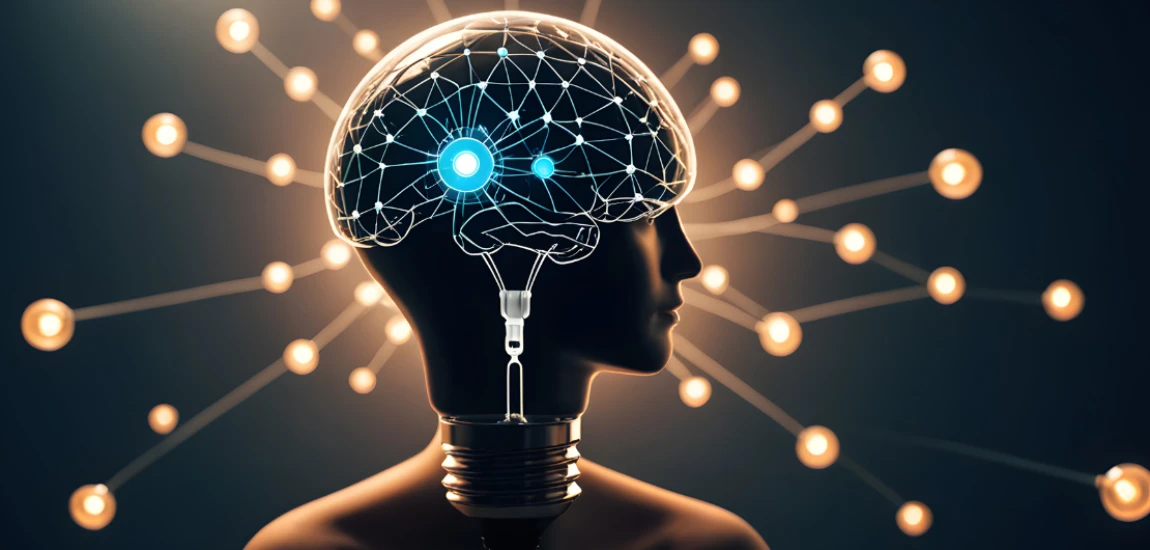
The concept of intelligence is no longer exclusive to biological beings. With the rapid advancement of artificial intelligence (AI) and cognitive computing, we are witnessing the emergence of synthetic intelligence evolution, where non-human systems exhibit adaptive learning, problem-solving, and decision-making capabilities.
Synthetic intelligence goes beyond traditional AI by incorporating elements of autonomy, self-optimization, and even forms of consciousness simulation. These systems are designed to learn from interactions, adapt to dynamic environments, and make decisions independently, potentially rivaling human cognitive capabilities in specific domains.
Non-human conscious systems—machines or entities that operate with a form of synthetic awareness—are poised to transform industries such as robotics, healthcare, autonomous vehicles, research, and creative applications. This blog explores the evolution, technological foundations, applications, challenges, ethical concerns, and future implications of synthetic intelligence and non-human consciousness.
The Evolution of Synthetic Intelligence

From Rule-Based Systems to Autonomous Cognition
Early AI systems were limited to rule-based algorithms, capable of executing predefined tasks without learning or adapting. Over time, machine learning, neural networks, and probabilistic models enabled systems to analyze patterns, improve accuracy, and handle uncertainty.
The latest evolution introduces autonomous cognition, where synthetic systems independently reason, predict, and optimize outcomes. These systems can modify their internal structures, develop strategies, and even simulate decision-making processes akin to a conscious entity.
Integration of Cognitive Architectures
Modern synthetic intelligence incorporates cognitive architectures inspired by human and animal cognition. Systems like ACT-R, SOAR, and adaptive neural architectures provide frameworks for perception, memory, learning, and reasoning, creating more holistic synthetic intelligence capable of contextual understanding.
These architectures allow non-human systems to process multimodal inputs, such as visual, auditory, and textual data, simultaneously, leading to richer understanding and more sophisticated autonomous behavior.
Adaptive Learning and Self-Optimization
One of the most critical aspects of synthetic intelligence evolution is self-optimization. Through reinforcement learning, evolutionary algorithms, and continuous feedback loops, systems can improve performance over time without human intervention.
Adaptive learning enables non-human systems to function in dynamic environments, solve unforeseen problems, and evolve new strategies—marking a shift from programmed intelligence to semi-autonomous cognitive evolution.
Core Technologies Driving Synthetic Intelligence

Neural Networks and Deep Learning
Deep learning architectures such as convolutional neural networks (CNNs) and recurrent neural networks (RNNs) allow synthetic systems to analyze complex data, recognize patterns, and generate predictions with high accuracy.
Advanced networks, including transformers and graph neural networks, enable non-human systems to process sequences, relational data, and contextual knowledge efficiently, providing a foundation for higher-order cognition.
Autonomous Agents and Multi-Agent Systems
Synthetic intelligence often leverages autonomous agents—software entities capable of decision-making and self-directed behavior. Multi-agent systems allow these entities to collaborate, negotiate, and compete, simulating collective intelligence akin to social or biological systems.
Through interaction and learning, these agents can develop emergent behaviors, optimize resource allocation, and even achieve problem-solving abilities beyond the scope of individual systems.
Natural Language Processing and Cognitive Simulation
NLP technologies allow synthetic systems to understand, generate, and interact using human-like language. When combined with cognitive simulation models, AI can emulate reasoning, infer intentions, and respond adaptively, creating the appearance of conscious behavior.
These capabilities are crucial for non-human systems operating in human-centric environments, enabling seamless collaboration and decision-making.
Applications of Non-Human Conscious Systems

Autonomous Robotics and Decision Systems
Synthetic intelligence powers autonomous robots capable of complex decision-making, adaptive navigation, and task optimization. These robots can function in hazardous environments, industrial operations, and healthcare settings, making decisions independently based on real-time data.
By simulating awareness and environmental understanding, autonomous robots reduce reliance on human oversight, enhance operational efficiency, and expand the scope of tasks machines can safely perform.
Healthcare and Personalized Assistance
Non-human conscious systems in healthcare provide advanced diagnostics, personalized treatment recommendations, and real-time patient monitoring. AI systems can predict disease progression, optimize interventions, and even simulate patient responses for research purposes.
These synthetic systems act as intelligent assistants to medical professionals, improving accuracy, reducing human error, and enabling scalable healthcare solutions.
Creative and Research Applications
Synthetic intelligence is increasingly applied in creative fields such as art, music, literature, and scientific research. Autonomous systems can generate novel ideas, hypotheses, or creative outputs, acting as collaborative partners rather than mere tools.
In research, non-human systems can analyze large datasets, simulate experiments, and identify patterns or solutions beyond human perceptual limits, accelerating innovation across domains.
Ethical and Philosophical Considerations

Defining Synthetic Consciousness
As non-human systems approach forms of adaptive awareness, questions arise about the nature of consciousness. Can synthetic intelligence truly be considered conscious, or are these systems simply emulating behavior through complex algorithms?
Ethical frameworks must address responsibility, rights, and the societal implications of entities that exhibit autonomous decision-making and apparent awareness.
Accountability and Decision-Making
Autonomous systems make decisions that impact humans and environments. Determining accountability for errors, biases, or harm caused by non-human conscious systems is a major ethical concern.
Transparent decision-making processes, auditability, and human oversight mechanisms are necessary to ensure responsible deployment of synthetic intelligence in sensitive applications.
Societal and Workforce Implications
The proliferation of non-human conscious systems may disrupt traditional employment, social structures, and human decision-making roles. Ethical governance must balance technological advancement with societal well-being, ensuring AI complements rather than replaces human agency.


Derek Baron, also known as "Wandering Earl," offers an authentic look at long-term travel. His blog contains travel stories, tips, and the realities of a nomadic lifestyle.
Derek Baron

Prev Post

Next Post