
AI-Driven Economic Forecasting and Autonomous Financial Ecosystems: Transforming the Future of Finance
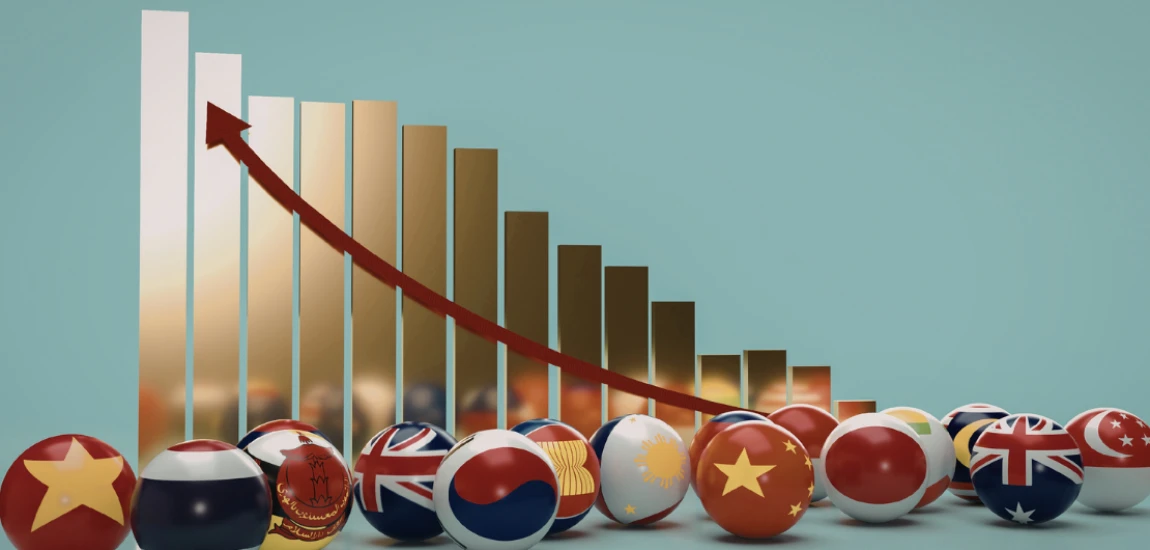
Financial markets have always been dynamic, complex, and unpredictable. Traditional forecasting models often rely on historical trends, econometric assumptions, and human judgment, which can be slow, error-prone, and unable to capture real-time economic disruptions. With the rise of AI-driven economic forecasting, financial institutions, governments, and enterprises are now leveraging machine learning, neural networks, and predictive analytics to make smarter, faster, and more accurate decisions.
AI-driven systems can analyze vast amounts of structured and unstructured data, detect patterns, and predict future economic trends with higher precision than conventional models. Autonomous financial ecosystems take this a step further, enabling real-time decision-making, automated transactions, and dynamic risk management across global markets.
These technologies are reshaping investment strategies, policy formulation, risk assessment, and operational efficiency. In this blog, we explore the fundamentals, technologies, applications, benefits, challenges, and future potential of AI-driven economic forecasting and autonomous financial ecosystems.
Understanding AI-Driven Economic Forecasting

The Core Concept of AI Forecasting
AI-driven economic forecasting involves using artificial intelligence, machine learning algorithms, and advanced analytics to predict economic trends such as inflation, GDP growth, unemployment rates, and market fluctuations. Unlike traditional models, AI can integrate multiple datasets—from trade statistics and social sentiment to global events—providing a multi-dimensional view of economic dynamics.
By analyzing historical and real-time data simultaneously, AI models can uncover correlations and hidden patterns that human analysts might overlook. This capability allows governments and enterprises to respond proactively to potential crises, adjust policies, and optimize resource allocation.
Machine Learning and Predictive Analytics
Machine learning models, including neural networks, regression analysis, and reinforcement learning, form the backbone of AI-driven forecasting. These models can process massive datasets and learn continuously, improving predictive accuracy over time.
Predictive analytics enables scenario planning, where financial institutions can simulate the impact of various economic factors, such as interest rate changes or trade policy shifts, on national or global economies. This proactive approach improves decision-making and mitigates risks associated with uncertainty.
Real-Time Data Integration
Modern economic forecasting increasingly relies on real-time data streams from financial markets, social media, consumer behavior, and IoT devices. AI systems can process these inputs instantly, identifying emerging trends or anomalies that traditional forecasting methods might miss.
For example, a sudden surge in online retail activity or commodity prices can be detected and incorporated into AI forecasts to predict short-term economic impacts or potential market volatility.
Autonomous Financial Ecosystems Explained

Definition and Functionality
An autonomous financial ecosystem refers to an interconnected system where financial transactions, investment decisions, risk management, and operational tasks are executed with minimal human intervention. AI and automation drive these ecosystems, making them adaptive, responsive, and highly efficient.
These systems utilize predictive models, algorithmic trading, smart contracts, and blockchain to execute transactions, manage portfolios, and enforce compliance automatically. This reduces human error, enhances transparency, and ensures financial stability across complex networks.
Algorithmic Trading and Portfolio Management
Autonomous financial systems rely heavily on algorithmic trading, where AI models analyze market conditions and execute trades in real time. These models continuously adjust strategies based on performance metrics, risk appetite, and macroeconomic conditions.
Portfolio management is similarly automated, with AI allocating assets dynamically to optimize returns while minimizing exposure to market volatility. Investors benefit from real-time adjustments, predictive insights, and reduced operational overhead.
Smart Contracts and Blockchain Integration
Blockchain technology and smart contracts play a crucial role in autonomous financial ecosystems. Transactions can be executed automatically when predefined conditions are met, reducing settlement times, ensuring compliance, and minimizing fraud.
Combined with AI, blockchain allows financial ecosystems to self-monitor, validate transactions, and adapt dynamically, creating a secure and fully autonomous financial network.
Applications Across Sectors

Government Policy and Economic Planning
AI-driven forecasting informs government decisions on fiscal policy, taxation, and public spending. Predictive insights enable policymakers to anticipate economic recessions, inflationary pressures, or labor market shifts, improving the timing and effectiveness of interventions.
Autonomous financial ecosystems in public sectors can manage state-owned investment portfolios, optimize budget allocation, and monitor financial compliance in real time.
Banking and Investment
Banks use AI forecasting for credit risk assessment, loan approvals, and investment planning. Autonomous ecosystems streamline processes, from automated loan disbursement to algorithmic trading, enhancing efficiency and customer satisfaction.
Investment firms leverage AI to identify market opportunities, simulate portfolio scenarios, and execute trades autonomously. This reduces human bias, increases profitability, and allows real-time adaptation to volatile market conditions.
Corporate Finance and Supply Chain
Corporations can use AI-driven forecasting to anticipate market demand, optimize production schedules, and manage cash flow efficiently. Autonomous systems track payments, detect anomalies, and ensure regulatory compliance across global supply chains.
The integration of predictive insights into corporate financial management enables smarter resource allocation, lower operational risk, and increased competitiveness.
Benefits of AI-Driven Economic Forecasting

Improved Accuracy and Decision-Making
AI forecasting models can process far more data than humans, uncover hidden patterns, and adapt dynamically to changing conditions. This improves accuracy in predicting market trends, consumer behavior, and macroeconomic shifts.
Enhanced accuracy enables better strategic planning, investment decisions, and policy interventions, reducing financial losses and improving economic stability.
Real-Time Responsiveness
Unlike conventional models, AI-driven systems operate in real time. They continuously monitor data streams, detect anomalies, and update forecasts instantly.
This responsiveness allows governments, investors, and corporations to act preemptively, mitigating risks and capitalizing on emerging opportunities faster than competitors relying on traditional forecasting methods.
Operational Efficiency and Automation
Autonomous financial ecosystems reduce the need for manual monitoring, data processing, and transaction management. Automation accelerates processes, lowers operational costs, and minimizes human error.
By freeing human analysts from routine tasks, organizations can focus on strategic decision-making, innovation, and customer engagement.


Kate McCulley, the voice behind "Adventurous Kate," provides travel advice tailored for women. Her blog encourages safe and adventurous travel for female readers.
Kate McCulley

Prev Post

Next Post