
Smart Quantum Computing Systems and High-Speed Predictive Analytics Architectures
The rapid expansion of digital technologies, artificial intelligence, cloud computing, and big data analytics has created an enormous demand for faster and more powerful computational systems. Traditional computing architectures, despite significant advancements, are approaching physical and operational limitations when handling extremely complex calculations, massive datasets, and high-speed predictive modeling tasks.
Industries such as healthcare, finance, cybersecurity, manufacturing, logistics, scientific research, and climate analysis increasingly require advanced computational systems capable of processing data at unprecedented speeds while delivering highly accurate predictive insights. To address these growing demands, researchers and technology companies are developing smart quantum computing systems and high-speed predictive analytics architectures powered by quantum mechanics and intelligent automation technologies.
Quantum computing represents a revolutionary shift from classical binary computing systems. Instead of relying solely on binary bits that exist as either 0 or 1, quantum computers use quantum bits, or qubits, which can exist in multiple states simultaneously through quantum superposition and entanglement principles.
When combined with artificial intelligence, machine learning, cloud infrastructure, and predictive analytics platforms, smart quantum computing systems offer extraordinary computational capabilities capable of solving highly complex problems exponentially faster than traditional computers.
High-speed predictive analytics architectures further enhance quantum systems by enabling real-time data processing, intelligent forecasting, advanced simulation modeling, and automated decision-making across dynamic digital environments.
In this blog, we will explore the technologies, benefits, applications, challenges, and future opportunities of smart quantum computing systems while understanding how predictive analytics architectures are reshaping the future of computational intelligence and digital transformation.
Understanding Smart Quantum Computing Systems

The Evolution of Quantum Computing Technology
Quantum computing has evolved from a theoretical scientific concept into one of the most promising emerging technologies of the modern digital era. Traditional computers process information using classical bits that represent either a zero or one state. While classical computing systems have become highly advanced, they face significant limitations when solving extremely large-scale optimization and simulation problems.
Quantum computing systems use qubits, which can exist in multiple states simultaneously due to the principle of quantum superposition. This allows quantum computers to process massive numbers of calculations at the same time, dramatically increasing computational power.
Quantum entanglement further enhances processing efficiency by enabling interconnected qubits to share information instantly across quantum systems. These unique quantum properties allow smart quantum computing systems to solve problems that would take classical supercomputers years or even centuries to complete.
As quantum hardware and software technologies continue improving, industries are beginning to explore practical applications for next-generation computational intelligence systems.
Artificial Intelligence and Quantum Integration
Artificial intelligence plays a major role in enhancing smart quantum computing systems. AI-driven algorithms help optimize quantum computations, reduce processing errors, and improve overall system performance.
Machine learning models analyze quantum operational data to optimize qubit stability, error correction, and computational efficiency. AI systems can also automate quantum programming tasks and support intelligent resource allocation within quantum environments.
Quantum machine learning combines the power of AI with quantum processing capabilities to accelerate data analysis, predictive modeling, and optimization tasks dramatically.
The integration of AI with quantum computing creates highly adaptive computational architectures capable of solving increasingly complex real-world problems.
Quantum Hardware and Computational Infrastructure
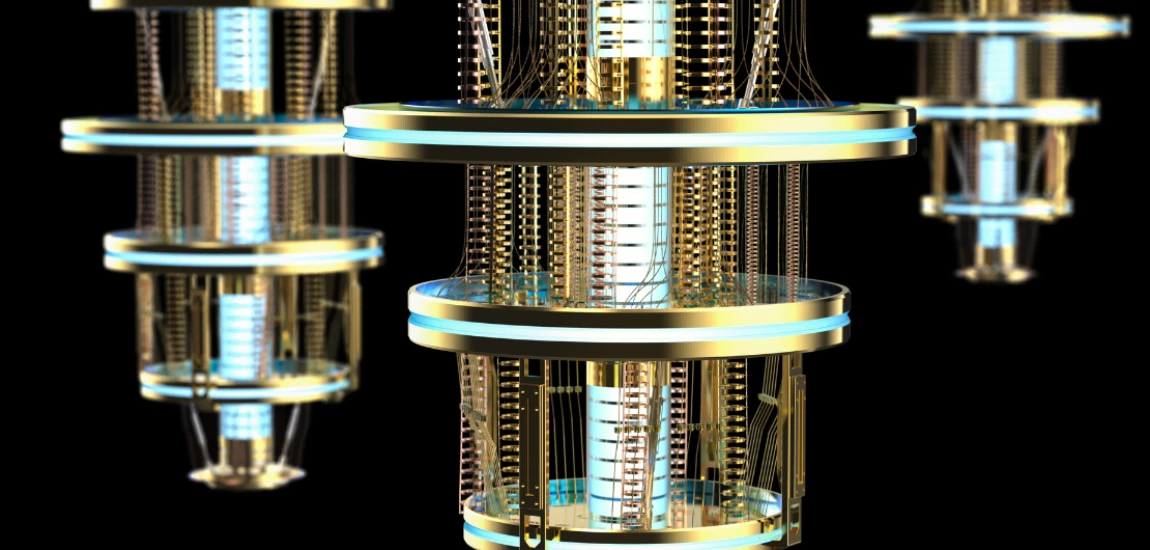
Modern quantum computing systems rely on highly specialized hardware infrastructures designed to maintain qubit stability and minimize quantum decoherence. Superconducting circuits, trapped ions, photonic processors, and topological qubits are among the leading quantum hardware technologies under development.
Quantum systems often require ultra-cold operating environments and advanced electromagnetic shielding to maintain stable quantum states.
Cloud-based quantum computing platforms are also emerging, allowing researchers and businesses to access quantum processing resources remotely through scalable digital infrastructures.
Advanced quantum hardware combined with intelligent computational architectures forms the foundation of future high-performance computing ecosystems.
High-Speed Predictive Analytics Architectures

Real-Time Data Processing and Analytics
Predictive analytics architectures are essential for extracting meaningful insights from massive volumes of structured and unstructured data. Traditional analytics systems often struggle with the speed and complexity required for modern AI-driven applications.
Smart quantum computing systems dramatically improve predictive analytics capabilities by enabling ultra-fast data processing and advanced pattern recognition.
Quantum-enhanced analytics platforms can analyze financial markets, weather systems, healthcare data, cybersecurity threats, and industrial operations in real time with significantly improved speed and accuracy.
Real-time analytics allows organizations to make faster decisions, improve operational efficiency, and respond proactively to emerging trends and risks.
Machine Learning and Predictive Intelligence
Machine learning technologies are central to modern predictive analytics systems. Quantum-enhanced machine learning algorithms process complex datasets more efficiently than classical AI systems.
These advanced architectures improve predictive modeling capabilities by identifying hidden relationships, optimizing large-scale simulations, and accelerating data classification tasks.
Quantum predictive intelligence systems support applications such as fraud detection, disease diagnosis, logistics optimization, climate forecasting, and financial risk analysis.
Continuous learning and adaptive analytics further improve prediction accuracy over time as systems process larger and more diverse datasets.
Cloud Computing and Distributed Analytics
Cloud computing infrastructure provides the scalability and accessibility required for deploying high-speed predictive analytics architectures across global digital ecosystems.
Quantum cloud platforms enable businesses and research institutions to access advanced computational resources without requiring dedicated quantum hardware infrastructure.
Distributed analytics systems integrate quantum processors, classical computing resources, edge devices, and AI-driven automation into unified data-processing ecosystems.
Cloud-based predictive analytics frameworks improve collaboration, scalability, and operational flexibility while supporting next-generation computational innovation.
Benefits of Smart Quantum Computing Systems

Exponential Computational Speed and Performance
One of the most important advantages of smart quantum computing systems is their extraordinary computational speed. Quantum systems can process multiple calculations simultaneously, enabling exponential performance improvements for complex problem-solving tasks.
Optimization problems involving logistics, financial modeling, molecular simulations, and supply chain management can be solved significantly faster using quantum computing architectures.
Quantum-enhanced processing also accelerates AI training, machine learning model development, and predictive analytics operations.
Improved computational speed enables organizations to solve previously impossible or time-consuming challenges more efficiently.
Improved Predictive Accuracy and Decision-Making
High-speed predictive analytics architectures powered by quantum computing improve forecasting accuracy across multiple industries.
Quantum-enhanced AI systems can process larger datasets and identify deeper patterns compared to traditional predictive models. This leads to more accurate business forecasting, healthcare diagnostics, weather predictions, and cybersecurity analysis.
Real-time predictive intelligence allows organizations to optimize operations, reduce risks, and make data-driven decisions more effectively.
Improved analytical capabilities create significant competitive advantages in rapidly evolving digital markets.
Advanced Scientific Research and Innovation
Quantum computing systems are accelerating innovation in scientific research, pharmaceutical development, materials science, and climate modeling.
Quantum simulations can model molecular interactions, chemical reactions, and biological systems with unprecedented accuracy. This capability may revolutionize drug discovery, renewable energy research, and advanced materials engineering.
Researchers can also use quantum systems to solve complex mathematical and physical problems that are beyond the capabilities of classical supercomputers.
These advancements are expected to drive major breakthroughs across multiple scientific disciplines in the coming decades.
Applications of Quantum Predictive Analytics Architectures

Financial Services and Risk Analysis
Financial institutions are increasingly exploring quantum computing technologies for portfolio optimization, fraud detection, algorithmic trading, and risk management.
Quantum predictive analytics systems can analyze massive market datasets in real time and identify investment patterns with exceptional speed and accuracy.
AI-driven quantum systems also improve fraud detection by identifying suspicious transaction behaviors and cybersecurity threats instantly.
These technologies enable financial organizations to improve decision-making while reducing operational and security risks.
Healthcare and Pharmaceutical Research
Healthcare and pharmaceutical industries are among the biggest potential beneficiaries of quantum computing innovation.
Quantum-enhanced predictive analytics systems support personalized medicine, genomic analysis, disease modeling, and drug discovery processes.
AI-powered quantum simulations can accelerate pharmaceutical research by modeling molecular interactions more accurately than traditional computational systems.
Healthcare providers can also use predictive intelligence systems to improve diagnostics, treatment planning, and patient outcome forecasting.
Cybersecurity and Encryption Technologies
Quantum computing is transforming cybersecurity by introducing both opportunities and challenges for digital encryption systems.
Quantum-enhanced cybersecurity architectures can detect cyber threats, analyze network vulnerabilities, and automate security monitoring with improved speed and intelligence.
At the same time, quantum computing may eventually break many traditional encryption methods, creating demand for quantum-resistant cryptographic systems.
Organizations are investing heavily in quantum-safe cybersecurity technologies to prepare for the future quantum computing era.


Gary Arndt operates "Everything Everywhere," a blog focusing on worldwide travel. An award-winning photographer, Gary shares stunning visuals alongside his travel tales.
Gary Arndt
Prev Post

Next Post