
Quantum Sensor Intelligence Networks and the Evolution of Hyper-Accurate Environmental Monitoring
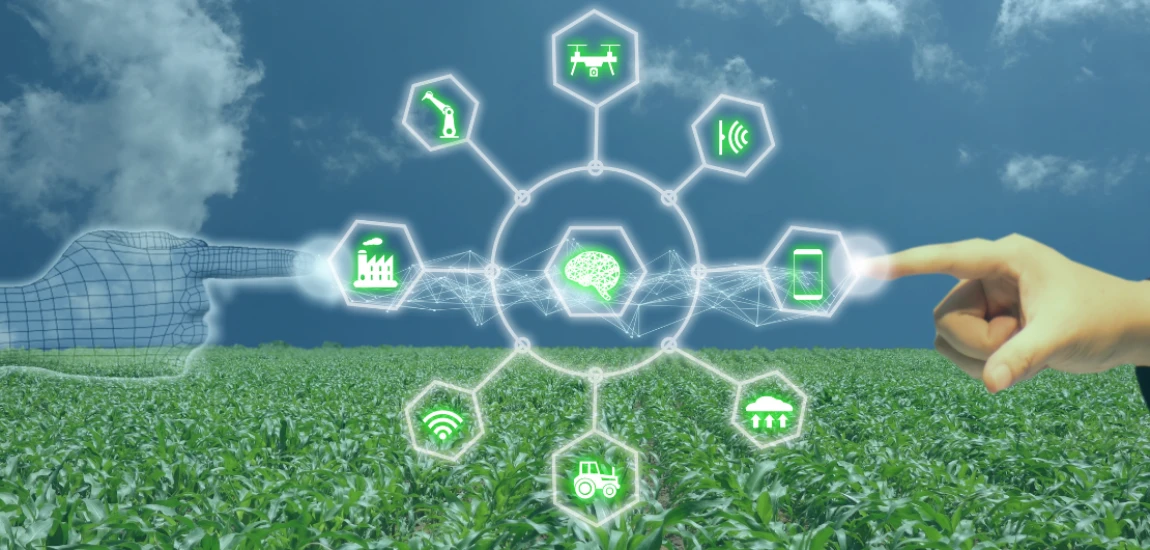
Environmental monitoring has become increasingly important as climate change, biodiversity loss, pollution, and natural resource depletion continue to affect ecosystems around the world. Governments, scientific organizations, and industries require more accurate environmental data to make informed decisions about conservation, disaster preparedness, sustainable development, and public safety. Conventional monitoring systems have significantly improved over recent decades, but they still face limitations in sensitivity, precision, and real-time detection. Quantum Sensor Intelligence Networks represent a revolutionary advancement by combining quantum sensing, artificial intelligence, Internet of Things (IoT) technologies, cloud computing, edge computing, and advanced analytics to deliver unprecedented environmental measurement accuracy.
Unlike traditional sensors, quantum sensors exploit quantum mechanical phenomena such as superposition and entanglement to detect extremely small variations in magnetic fields, gravity, temperature, pressure, and electromagnetic signals. When integrated into intelligent sensor networks, these devices generate highly precise environmental data that artificial intelligence can analyze instantly to identify emerging environmental changes. This combination enables earlier detection of pollution, natural disasters, geological shifts, and ecosystem degradation than conventional monitoring technologies.
Governments, research institutions, environmental agencies, and technology companies are investing heavily in quantum sensing because of its potential to improve climate science, agriculture, resource management, infrastructure monitoring, and disaster resilience. As quantum technologies continue maturing, intelligent sensor networks are expected to become a cornerstone of next-generation environmental intelligence. This article explores the technologies, applications, benefits, challenges, and future trends driving the evolution of hyper-accurate environmental monitoring.
Understanding Quantum Sensor Intelligence Networks

The Science Behind Quantum Sensing
Quantum sensors utilize the unique properties of quantum physics to measure environmental conditions with extraordinary precision. Unlike conventional sensors that depend on classical electronic measurements, quantum sensors monitor atomic and subatomic interactions that respond to even the smallest environmental changes.
Researchers use atoms, ions, photons, superconducting circuits, and other quantum systems to detect minute variations in gravity, magnetic fields, acceleration, pressure, and temperature. These highly sensitive measurements enable scientists to observe environmental phenomena that previously remained undetectable using traditional monitoring equipment.
Because quantum sensors provide exceptionally accurate measurements, they are becoming valuable tools for scientific research, infrastructure management, environmental protection, and industrial monitoring across numerous sectors.
Technologies Powering Intelligent Sensor Networks
Quantum Sensor Intelligence Networks combine multiple advanced technologies into integrated monitoring ecosystems. Quantum sensing devices continuously collect highly accurate environmental data, while Internet of Things sensors extend monitoring coverage across large geographic regions.
Artificial intelligence processes enormous streams of sensor information using machine learning algorithms capable of identifying hidden environmental patterns, detecting anomalies, and forecasting future conditions. Edge computing enables immediate local analysis during emergencies, while cloud computing stores historical datasets and supports large-scale environmental modeling.
Satellite communications, autonomous drones, robotics, and geospatial information systems further enhance monitoring capabilities by extending sensor coverage into remote forests, oceans, mountains, deserts, and polar regions where conventional monitoring is difficult.
Why Quantum Sensor Networks Matter
Environmental challenges are becoming increasingly complex as climate variability, pollution, biodiversity loss, and resource depletion accelerate worldwide. Conventional monitoring technologies often struggle to detect subtle environmental changes early enough to support effective intervention.
Quantum sensor intelligence networks dramatically improve detection accuracy, allowing scientists and policymakers to identify environmental risks before they become severe. Earlier detection supports more effective conservation, disaster preparedness, infrastructure protection, and resource management strategies.
As societies increasingly depend on data-driven environmental decision-making, quantum sensing will become an essential technology supporting sustainable development and long-term ecological resilience.
Artificial Intelligence as the Intelligence Layer of Quantum Monitoring

AI-Driven Environmental Analytics
Artificial intelligence transforms raw quantum sensor measurements into meaningful environmental intelligence by analyzing enormous volumes of complex data in real time. Machine learning algorithms identify long-term environmental trends, seasonal changes, pollution sources, ecosystem disturbances, and unusual natural events with remarkable precision.
Unlike traditional analytical methods that rely heavily on manual interpretation, AI continuously improves its predictive capabilities as additional environmental data becomes available. This adaptive learning enables scientists to detect subtle ecological changes much earlier than conventional monitoring systems.
AI-powered analytics support evidence-based environmental policymaking while improving scientific understanding of complex interactions among climate, ecosystems, biodiversity, and human activities.
Predictive Monitoring and Early Warning Systems
Quantum sensor intelligence networks enable highly advanced early warning systems capable of detecting environmental threats before they escalate into major disasters. Artificial intelligence evaluates quantum sensor measurements alongside satellite imagery, weather forecasts, geological observations, and historical environmental records.
These integrated models predict floods, earthquakes, landslides, volcanic activity, wildfires, pollution events, and extreme weather conditions with greater speed and accuracy. Emergency management agencies receive timely alerts that improve evacuation planning, disaster response coordination, and infrastructure protection.
Continuous learning allows predictive models to become increasingly accurate over time, strengthening community resilience while reducing economic losses associated with natural disasters.
Intelligent Data Integration and Decision Support
Modern environmental monitoring requires integrating information collected from thousands of different sensors distributed across oceans, forests, rivers, agricultural regions, cities, and industrial facilities. Artificial intelligence serves as the central intelligence platform that combines these diverse datasets into unified environmental knowledge systems.
Decision-support platforms present complex environmental information through intuitive visualizations, digital twins, and interactive forecasting models that assist scientists, policymakers, emergency managers, and conservation organizations. Automated reporting systems identify emerging risks while recommending appropriate mitigation strategies.
By converting highly precise quantum measurements into actionable intelligence, AI enables faster, more informed environmental decisions that improve sustainability, public safety, and ecosystem protection.
Real-World Applications of Quantum Sensor Intelligence Networks

Transforming Climate Research and Environmental Protection
Quantum Sensor Intelligence Networks are revolutionizing climate science by providing exceptionally accurate measurements of environmental conditions. Scientists use quantum sensors to monitor atmospheric temperature, greenhouse gas concentrations, ocean currents, soil moisture, glacier movement, and changes in Earth's magnetic and gravitational fields. These highly sensitive measurements improve climate models and help researchers understand long-term environmental changes with greater precision.
Artificial intelligence analyzes data collected from thousands of distributed quantum sensors to identify emerging climate trends, forecast extreme weather events, and evaluate the effectiveness of conservation initiatives. Environmental agencies can detect pollution sources earlier, monitor ecosystem health continuously, and measure the impacts of restoration projects in real time.
Governments also benefit from improved environmental intelligence when developing climate adaptation strategies, carbon reduction policies, and sustainable resource management plans. By delivering reliable scientific data, quantum sensor networks strengthen environmental protection while supporting evidence-based policymaking.
Supporting Agriculture, Water Resources, and Natural Ecosystems
Modern agriculture increasingly depends on accurate environmental information to maximize productivity while conserving natural resources. Quantum sensors monitor soil moisture, groundwater movement, nutrient availability, temperature variations, and atmospheric conditions with extraordinary precision. Artificial intelligence converts this information into actionable recommendations that improve irrigation schedules, fertilizer application, crop planning, and pest management.
Water resource authorities use quantum sensor networks to monitor reservoirs, rivers, groundwater systems, and coastal environments. Early detection of contamination, water shortages, and changing hydrological conditions enables more efficient water allocation while protecting drinking water supplies.
Conservation organizations also deploy intelligent sensor networks to monitor forests, wetlands, coral reefs, wildlife habitats, and biodiversity hotspots. AI identifies ecological disturbances, illegal deforestation, invasive species, and habitat degradation before irreversible damage occurs. These capabilities strengthen ecosystem management while supporting long-term biodiversity conservation.
Enhancing Infrastructure Monitoring and Disaster Preparedness
Quantum sensor intelligence networks provide continuous monitoring for bridges, tunnels, dams, railways, pipelines, power grids, and other critical infrastructure. Extremely sensitive quantum measurements detect structural stress, ground movement, vibration, and material degradation long before visible damage develops.
Artificial intelligence evaluates infrastructure performance continuously, enabling predictive maintenance programs that reduce repair costs while improving public safety. Engineers receive early warnings about potential structural failures, allowing preventive maintenance before serious problems arise.
Disaster preparedness also benefits significantly from quantum sensing technologies. Networks of highly sensitive sensors detect subtle geological activity associated with earthquakes, volcanic eruptions, and landslides. Combined with satellite observations and meteorological data, AI-powered forecasting systems improve emergency planning, evacuation strategies, and disaster response coordination.
Challenges Facing Quantum Sensor Intelligence Networks

Technological Complexity and Commercial Deployment
Although quantum sensing offers remarkable accuracy, developing reliable commercial systems remains a significant engineering challenge. Many quantum sensors require highly controlled operating environments, advanced cooling systems, specialized materials, and sophisticated calibration techniques to maintain optimal performance.
Researchers continue improving sensor stability, durability, portability, and energy efficiency to support broader deployment outside laboratory settings. Manufacturing scalable quantum devices at commercially viable costs also remains an important priority.
As engineering advances continue, quantum sensors are expected to become smaller, more robust, and increasingly suitable for widespread environmental monitoring applications.
Infrastructure Investment and Data Management
Large-scale quantum sensor networks require substantial investment in sensing equipment, communication infrastructure, cloud computing platforms, data storage, and artificial intelligence systems. Organizations must also integrate quantum sensing technologies with existing environmental monitoring networks and scientific databases.
Managing enormous volumes of high-precision environmental data presents additional challenges. Advanced data processing platforms, standardized communication protocols, and efficient storage architectures are necessary to ensure reliable long-term operation.
Continued investment in digital infrastructure and research collaboration will accelerate commercialization while expanding access to quantum monitoring technologies.
Cybersecurity, Standards, and Skilled Workforce
Environmental monitoring systems increasingly support national infrastructure, emergency management, and scientific research, making cybersecurity essential. Organizations must implement secure communication networks, encrypted data transmission, identity management, and continuous monitoring to protect sensitive environmental information.
International standards governing quantum sensing performance, calibration, interoperability, and data quality will also be necessary as global deployment expands. Consistent standards improve scientific collaboration while ensuring reliable environmental measurements across multiple organizations.
Developing a skilled workforce is equally important. Scientists, engineers, AI specialists, environmental researchers, and quantum technology experts must work together to design, operate, and maintain intelligent quantum sensor ecosystems.


Operating "The Blonde Abroad," Kiersten Rich specializes in solo female travel. Her blog provides destination guides, packing tips, and travel resources.
Kiersten Rich

Prev Post

Next Post