
Quantum Matter Reconfiguration Systems and Programmable Material Manufacturing Frameworks
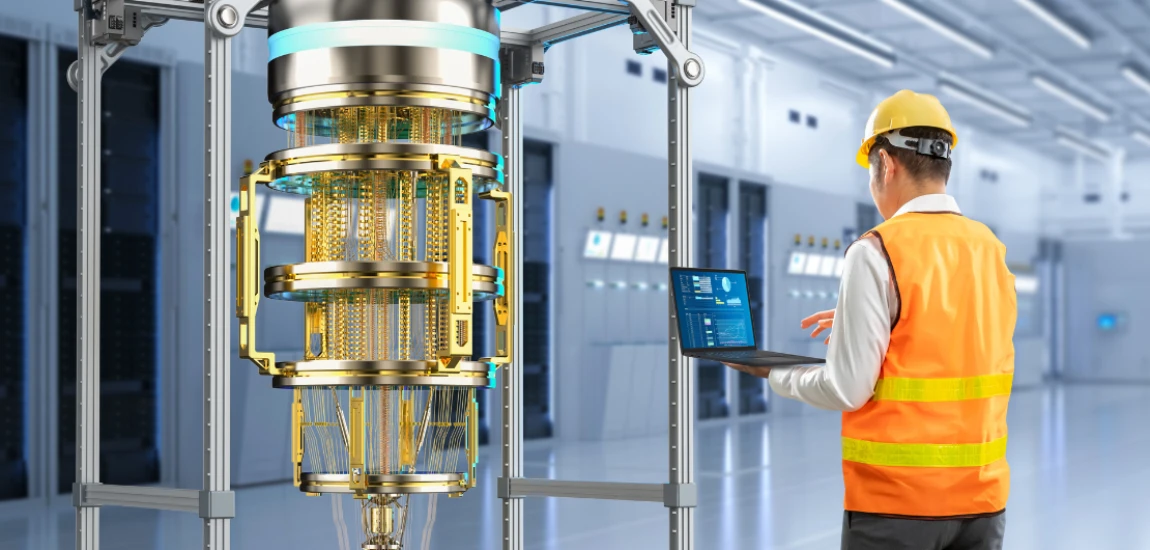
The history of human civilization is closely tied to the materials we have mastered. From the Stone Age and Bronze Age to the modern era of semiconductors and advanced composites, material innovation has consistently driven technological progress. Today, industries depend on specialized materials for applications ranging from aerospace engineering and healthcare to renewable energy and artificial intelligence infrastructure. However, conventional manufacturing processes often produce materials with fixed properties that cannot adapt to changing environments or operational requirements.
As technological demands become increasingly sophisticated, scientists and engineers are exploring entirely new approaches to material design and production. One of the most exciting concepts emerging from advanced research is the development of Quantum Matter Reconfiguration Systems and Programmable Material Manufacturing Frameworks. These systems envision materials that can alter their physical, chemical, and functional properties in response to specific instructions or environmental conditions.
By combining quantum science, nanotechnology, artificial intelligence, advanced manufacturing, and computational material engineering, future programmable materials may become capable of self-optimization, dynamic adaptation, and intelligent performance enhancement. Such innovations could fundamentally transform manufacturing, construction, medicine, transportation, electronics, and space exploration.
As industries move toward increasingly automated and intelligent production ecosystems, quantum matter reconfiguration technologies may serve as the foundation for a new era of adaptive manufacturing and smart material innovation.
Understanding Quantum Matter Reconfiguration Systems

The Concept of Matter Reconfiguration
Traditional materials are typically designed with fixed characteristics. Steel remains steel, polymers retain their predefined properties, and composite materials perform according to their engineered specifications. While these materials can be highly effective, they generally cannot modify themselves once manufactured.
Quantum matter reconfiguration systems introduce a radically different concept. Instead of producing static materials, these systems seek to create matter capable of dynamically changing its structure and behavior at microscopic or even quantum scales.
Theoretical reconfiguration mechanisms could allow materials to alter strength, flexibility, conductivity, transparency, thermal resistance, or other properties based on operational requirements. Such adaptability would dramatically expand the capabilities of future manufacturing systems.
Quantum-Level Material Control
Advances in quantum engineering may eventually enable unprecedented control over atomic and molecular structures. By manipulating quantum interactions and material arrangements, future systems could achieve highly precise modifications without requiring complete material replacement.
This level of control could significantly improve manufacturing efficiency while reducing waste and resource consumption.
Intelligent Material Adaptation
Artificial intelligence will likely play a crucial role in managing reconfigurable materials. AI-driven systems can analyze environmental conditions, operational demands, and performance metrics to determine optimal material configurations in real time.
The result is a highly responsive material ecosystem capable of continuously optimizing itself for specific applications.
Programmable Material Manufacturing Frameworks

The Evolution of Manufacturing Technologies
Manufacturing has evolved from manual craftsmanship to automated production lines and digital fabrication systems. Programmable material manufacturing represents the next major step in this evolution.
Instead of producing identical products repeatedly, future manufacturing frameworks may generate materials whose properties can be programmed during production and modified throughout their operational lifecycles.
This flexibility enables manufacturers to create products with unprecedented functionality and adaptability.
Digital Material Design
Programmable manufacturing relies heavily on digital design environments. Engineers can define material behaviors using computational models that specify how structures should respond under different conditions.
Advanced simulation platforms enable precise prediction of performance characteristics before physical production begins.
This digital-first approach reduces development costs while accelerating innovation cycles.
On-Demand Property Configuration
Future programmable materials may allow users to adjust properties according to changing needs. A material could be rigid during transportation, flexible during installation, and highly durable during operation.
Such versatility reduces the need for multiple specialized materials while improving overall efficiency.
Artificial Intelligence and Smart Material Intelligence

AI-Driven Material Optimization
Artificial intelligence has become a powerful tool for material discovery and optimization. Machine learning algorithms can evaluate millions of potential material combinations and identify promising candidates for specific applications.
Quantum matter systems may leverage AI to continuously improve material performance by analyzing operational data and recommending structural modifications.
This capability enhances efficiency while supporting rapid technological advancement.
Predictive Material Behavior
Understanding how materials will perform under varying conditions is critical for engineering success. AI-powered predictive models can forecast stress responses, degradation patterns, thermal behavior, and structural performance.
These insights enable proactive optimization and improved reliability across diverse applications.
Self-Learning Material Networks
Future programmable materials may function as interconnected intelligent systems. Embedded sensors and computational components could allow materials to learn from their environments and adapt accordingly.
Self-learning capabilities support continuous improvement and operational resilience.
Applications Across Advanced Industries

Aerospace and Space Exploration
The aerospace sector demands materials capable of withstanding extreme conditions while maintaining minimal weight. Reconfigurable materials could adapt to temperature fluctuations, radiation exposure, and structural stresses during flight.
Spacecraft equipped with programmable materials may optimize performance automatically throughout missions, improving safety and efficiency.
Healthcare and Biomedical Engineering
Medical technologies could benefit enormously from adaptive materials. Implantable devices, prosthetics, and regenerative medicine platforms may utilize programmable structures that respond dynamically to patient needs.
Such innovations could improve treatment effectiveness and patient outcomes.
Construction and Infrastructure
Buildings and infrastructure systems face changing environmental conditions over time. Smart materials capable of self-repair, structural adaptation, and environmental optimization may significantly extend infrastructure lifespans.
These capabilities support more sustainable and resilient urban development.


Dave Lee runs "GoBackpacking," a blog that blends travel stories with how-to guides. He aims to inspire backpackers and offer them practical advice.
Dave Lee

Prev Post

Next Post