
Quantum Machine Learning and Hybrid Computing Architectures: The Future of Intelligent Computing
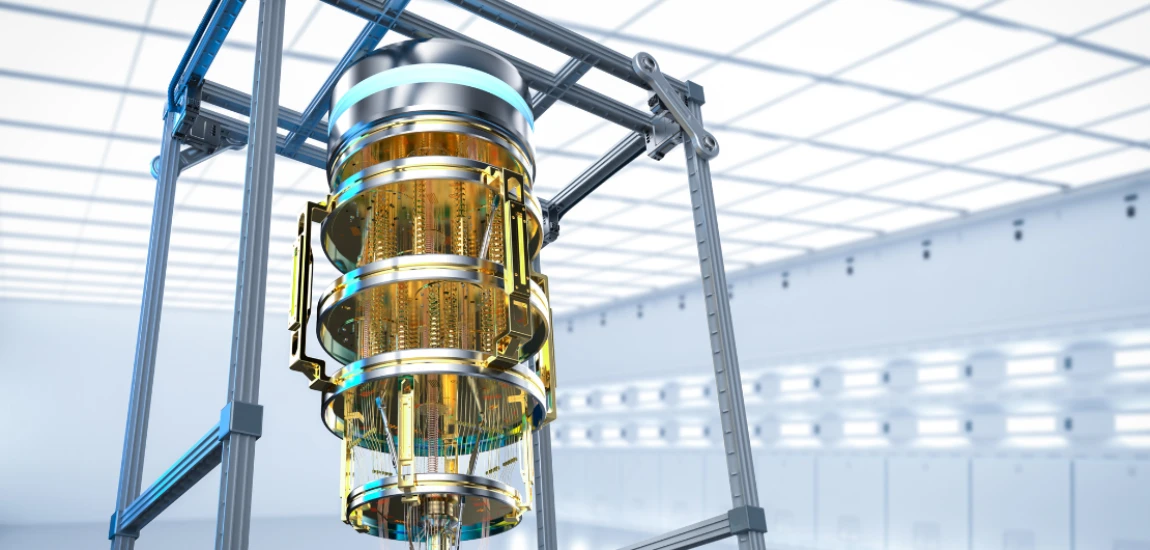
The rapid evolution of artificial intelligence and computational technologies has pushed classical computing systems close to their limits. As data grows exponentially and problems become increasingly complex, traditional algorithms often struggle to deliver efficient and timely results. This is where quantum machine learning and hybrid computing architectures step in as groundbreaking innovations. By combining the principles of quantum mechanics with advanced AI models, these technologies promise to redefine how we process information, solve problems, and build intelligent systems.
Quantum machine learning (QML) leverages the unique properties of quantum computing—such as superposition, entanglement, and interference—to enhance machine learning algorithms. These capabilities allow quantum systems to process vast amounts of data simultaneously, making them particularly suited for optimization, pattern recognition, and high-dimensional analysis. Meanwhile, hybrid computing architectures integrate classical and quantum systems, enabling organizations to harness the strengths of both paradigms. Classical systems handle tasks like data preprocessing and control logic, while quantum processors tackle computationally intensive operations.
This synergy is not just theoretical—it is already influencing industries like healthcare, finance, logistics, and materials science. Hybrid quantum-classical systems provide practical pathways for adopting quantum technologies without fully replacing existing infrastructure. As research and development continue to advance, these systems are expected to unlock unprecedented computational power and accelerate innovation across domains. In this blog, we will explore the fundamentals, technologies, applications, benefits, challenges, and future trends of quantum machine learning and hybrid computing architectures.
Understanding Quantum Machine Learning

Core Concepts of Quantum Computing in AI
Quantum machine learning is built on the foundation of quantum computing principles that differ significantly from classical computing. While classical bits exist in a binary state of 0 or 1, quantum bits (qubits) can exist in multiple states simultaneously due to superposition. This allows quantum systems to perform multiple calculations at once, dramatically increasing computational efficiency for certain tasks.
Entanglement further enhances this capability by linking qubits in such a way that the state of one qubit instantly influences another, regardless of distance. This interconnectedness enables more complex computations and correlations that are difficult for classical systems to replicate.
How QML Differs from Classical Machine Learning
Traditional machine learning relies on sequential data processing and large computational resources to train models. In contrast, QML can process high-dimensional data spaces more efficiently, offering potential speed-ups in training and inference.
Quantum algorithms such as quantum neural networks and quantum support vector machines are designed to exploit quantum properties, enabling faster optimization and improved pattern recognition in certain scenarios.
Why QML Matters Today
As industries generate massive datasets, the need for more efficient processing becomes critical. QML addresses this challenge by offering new computational paradigms that can handle complexity beyond classical limits.
Its potential applications in drug discovery, financial modeling, and cryptography highlight its importance as a transformative technology for the future.
Hybrid Computing Architectures Explained

What Are Hybrid Quantum-Classical Systems
Hybrid computing architectures combine classical and quantum computing resources into a unified system. Instead of replacing classical computers, quantum processors are integrated as specialized components that handle complex computations.
This approach makes quantum computing more accessible and practical, allowing organizations to leverage existing infrastructure while exploring quantum capabilities.
Workflow of Hybrid Architectures
In a typical hybrid system, data is first processed using classical algorithms. The processed data is then sent to a quantum processor for advanced computation. Once the quantum computation is complete, the results are returned to the classical system for further analysis and interpretation.
This iterative process enables efficient collaboration between classical and quantum components, optimizing overall system performance.
Advantages of Hybrid Models
Hybrid architectures provide scalability, flexibility, and cost-effectiveness. They allow organizations to gradually adopt quantum technologies without significant disruptions.
By combining the reliability of classical systems with the computational power of quantum processors, hybrid models offer a balanced approach to solving complex problems.
Key Technologies Behind QML and Hybrid Systems

Quantum Hardware Innovations
Advancements in quantum hardware are essential for the development of QML. Technologies such as superconducting qubits, trapped ions, and photonic systems are being used to build quantum processors.
These innovations aim to improve qubit stability, reduce error rates, and increase computational capacity, making quantum systems more practical for real-world applications.
Quantum Algorithms and Frameworks
Quantum algorithms like the Variational Quantum Eigensolver (VQE) and Quantum Approximate Optimization Algorithm (QAOA) are designed to solve complex optimization problems.
Frameworks such as Qiskit, Cirq, and TensorFlow Quantum enable developers to design, simulate, and implement quantum machine learning models within hybrid environments.
Integration with Classical Systems
Effective integration between quantum and classical systems is crucial for hybrid architectures. Middleware and software platforms facilitate communication between these components, ensuring seamless data exchange and computation.
This integration enables the development of robust and scalable hybrid systems capable of handling diverse workloads.
Applications Across Industries

Healthcare and Drug Discovery
Quantum machine learning is revolutionizing healthcare by enabling faster drug discovery and personalized medicine. By simulating molecular interactions at a quantum level, researchers can identify potential drug candidates more efficiently.
Hybrid systems allow for the processing of large datasets and complex simulations, accelerating the development of new treatments.
Finance and Optimization Problems
In the financial sector, QML is used for portfolio optimization, risk analysis, and fraud detection. Quantum algorithms can analyze vast amounts of financial data to identify patterns and optimize investment strategies.
Hybrid architectures enhance these capabilities by combining classical data processing with quantum optimization techniques.
Logistics and Supply Chain Management
Quantum machine learning can optimize logistics and supply chain operations by solving complex routing and scheduling problems. Hybrid systems enable real-time decision-making, improving efficiency and reducing costs.
This application is particularly valuable for large-scale operations that require precise coordination and optimization.


Kate McCulley, the voice behind "Adventurous Kate," provides travel advice tailored for women. Her blog encourages safe and adventurous travel for female readers.
Kate McCulley

Prev Post

Next Post