
Quantum Communication Mesh Networks and the Future of Unbreakable Global Connectivity
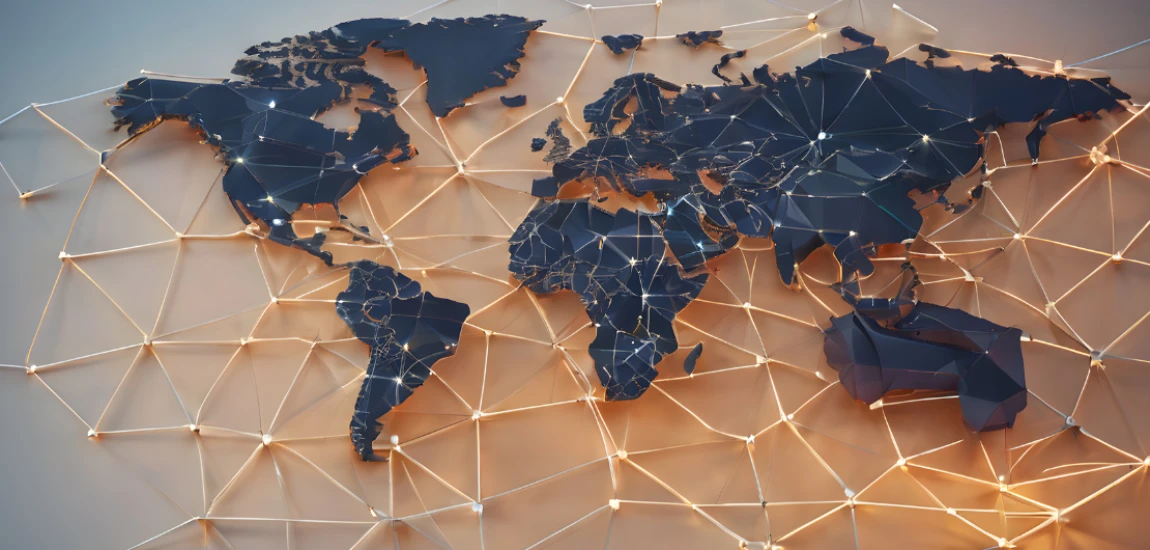
The digital world is evolving rapidly, and with it comes an increasing demand for stronger, faster, and more secure communication systems. As cyber threats continue to grow in sophistication, traditional encryption methods are gradually approaching their limits. Governments, businesses, healthcare organizations, financial institutions, and research facilities require communication networks capable of protecting highly sensitive information from both current and future cyberattacks. This need has accelerated the development of Quantum Communication Mesh Networks, an innovative networking approach that combines quantum mechanics with intelligent mesh networking to create exceptionally secure global communication infrastructures.
Unlike conventional communication systems that rely solely on mathematical encryption algorithms, quantum communication uses the unique properties of quantum particles to protect data. Any attempt to intercept or eavesdrop on transmitted information immediately changes the quantum state, alerting network participants to potential security breaches. When combined with mesh networking, where every node can communicate with multiple neighboring nodes, quantum communication becomes not only more secure but also significantly more resilient against failures and attacks.
As quantum technologies mature, researchers envision a future where interconnected quantum satellites, fiber-optic infrastructure, and quantum repeaters establish an ultra-secure global communication web. This next-generation infrastructure could revolutionize banking, defense, healthcare, cloud computing, scientific research, and even the future quantum internet.
Understanding Quantum Communication Mesh Networks

The Foundation of Quantum Communication
Quantum Communication Mesh Networks are built upon the principles of quantum mechanics, particularly quantum entanglement and Quantum Key Distribution (QKD). Instead of relying exclusively on complex mathematical algorithms, these networks generate encryption keys using quantum particles such as photons. Because quantum states cannot be copied without detection, any interception attempt instantly becomes visible to authorized users.
Traditional encryption depends on computational complexity, meaning powerful future quantum computers may eventually crack today's encryption algorithms. Quantum communication addresses this challenge by creating security based on the laws of physics rather than computational difficulty. This makes quantum-secured communication fundamentally different from conventional cybersecurity approaches.
How Mesh Networking Enhances Security
A mesh network allows every communication node to connect with several neighboring nodes rather than relying on one central server or pathway. If one communication route fails, the network automatically redirects information through alternative paths without interrupting communication.
When quantum communication operates within a mesh architecture, security and reliability increase simultaneously. Multiple secure pathways ensure continuous connectivity while reducing the risks associated with centralized infrastructure. This decentralized design also minimizes single points of failure that cybercriminals commonly exploit.
Why These Networks Matter Today
Modern organizations generate enormous amounts of sensitive information every second. Financial transactions, healthcare records, military communications, industrial automation, and cloud services all require stronger protection against increasingly advanced cyber threats.
Quantum Communication Mesh Networks represent the next generation of cybersecurity infrastructure by combining decentralized networking with quantum encryption. They promise data confidentiality that remains secure even in the era of quantum computing, making them an essential technology for future digital ecosystems. As governments and technology companies continue investing billions into quantum research, these networks are expected to become a cornerstone of secure global connectivity.
Core Technologies Powering Quantum Communication Mesh Networks

Quantum Key Distribution
Quantum Key Distribution is one of the most significant breakthroughs enabling secure quantum communication. Instead of transmitting encrypted messages directly, QKD securely exchanges cryptographic keys using quantum particles. If an unauthorized party attempts to intercept the transmission, the quantum state changes immediately, allowing legitimate users to detect the intrusion before confidential information is exchanged.
This capability offers a level of protection that traditional encryption methods cannot provide. Even future quantum computers capable of solving today's cryptographic algorithms would struggle to compromise properly implemented quantum key distribution systems.
Quantum Repeaters and Long-Distance Communication
One of the major technical challenges in quantum networking is maintaining quantum signals over long distances. Unlike classical signals, quantum information cannot simply be amplified because doing so would destroy its quantum properties.
Quantum repeaters solve this problem by extending communication distances while preserving quantum states. These advanced devices enable quantum information to travel across continents through fiber-optic cables and satellite links, making truly global quantum communication networks possible.
Researchers continue improving repeater technology to reduce transmission losses, improve reliability, and support larger-scale quantum networking infrastructures.
Artificial Intelligence and Intelligent Routing
Artificial Intelligence plays an increasingly important role in managing Quantum Communication Mesh Networks. AI-powered systems continuously monitor network conditions, identify optimal communication routes, predict failures, and dynamically reroute traffic when necessary.
Machine learning algorithms can also optimize quantum resource allocation, reduce communication latency, and improve network efficiency without compromising security. As quantum networks grow more complex, intelligent automation will become essential for maintaining stable and secure communication across millions of interconnected devices.
The combination of quantum encryption, decentralized mesh architecture, quantum repeaters, and AI-driven optimization creates an exceptionally resilient communication ecosystem capable of supporting future global digital infrastructure.
Transforming Industries Through Quantum Communication Mesh Networks

Financial Services and Banking
The financial sector depends heavily on secure communication to protect transactions, customer information, and confidential business operations. Every second, banks process millions of digital transactions across international networks, making them attractive targets for cybercriminals. Quantum Communication Mesh Networks can dramatically improve financial security by enabling quantum-encrypted communication channels that are virtually impossible to intercept without detection.
Future banking systems could use Quantum Key Distribution (QKD) to secure online payments, interbank communications, cryptocurrency exchanges, and cross-border settlements. Unlike traditional encryption methods, quantum encryption remains secure even against future quantum computers capable of breaking many of today's cryptographic standards. This provides financial institutions with long-term protection for sensitive data and regulatory compliance.
Additionally, mesh networking improves operational resilience. If one communication path experiences disruption due to cyberattacks, natural disasters, or infrastructure failures, the network automatically reroutes traffic through alternative secure paths. This ensures continuous banking operations while minimizing downtime and protecting customer trust.
Healthcare, Government, and Defense
Healthcare organizations manage enormous volumes of confidential patient information that must remain protected for decades. Quantum-secured communication can safeguard electronic medical records, medical imaging, pharmaceutical research, and telemedicine consultations against unauthorized access.
Government agencies and defense organizations also benefit from quantum communication by securing diplomatic communications, military operations, intelligence sharing, and classified research. Since any interception attempt immediately alters quantum states, potential espionage activities become detectable in real time.
The decentralized nature of mesh networking further enhances national security by preventing single points of failure. Even during cyber warfare or infrastructure attacks, critical communication channels remain operational through multiple interconnected network nodes.
Scientific Research and Global Collaboration
International research projects often require secure collaboration among universities, laboratories, and research institutions spread across multiple countries. Quantum Communication Mesh Networks enable secure sharing of experimental data, confidential discoveries, and intellectual property while protecting research from industrial espionage.
Large-scale scientific initiatives involving quantum computing, space exploration, biotechnology, climate research, and advanced manufacturing can benefit from encrypted global collaboration without sacrificing speed or reliability. As scientific cooperation becomes increasingly international, secure communication infrastructure will play a central role in accelerating innovation.
Benefits That Make Quantum Communication Mesh Networks Revolutionary

Unprecedented Cybersecurity
Perhaps the most significant advantage of Quantum Communication Mesh Networks is their extraordinary level of security. Traditional cybersecurity relies on mathematical encryption algorithms that may eventually become vulnerable as computing power increases. Quantum communication, however, relies on the fundamental laws of physics.
Because observing quantum information changes its state, unauthorized interception cannot occur without detection. This provides organizations with confidence that sensitive communications remain protected even against highly sophisticated attackers equipped with future quantum computers.
Such protection is especially valuable for industries handling critical infrastructure, national security information, financial transactions, healthcare records, and intellectual property.
Network Resilience and Reliability
Mesh networking introduces exceptional fault tolerance into communication infrastructure. Every node connects with multiple neighboring nodes, creating numerous possible communication routes throughout the network.
If equipment fails or communication links become unavailable, data automatically finds alternative pathways without requiring manual intervention. This self-healing capability significantly reduces service interruptions while improving overall network availability.
Combined with quantum encryption, this resilience creates communication systems capable of maintaining secure operations even during infrastructure failures, cyberattacks, or natural disasters.
Preparing for the Quantum Future
Many cybersecurity experts warn about "harvest now, decrypt later" attacks, where hackers steal encrypted information today with the intention of decrypting it once quantum computers become powerful enough.
Organizations implementing Quantum Communication Mesh Networks proactively protect their data against these future threats. By adopting quantum-safe communication technologies early, businesses and governments can ensure long-term security while avoiding costly emergency transitions later.
As global digital transformation accelerates, preparing communication infrastructure for the quantum era becomes an increasingly strategic investment rather than a technological luxury.


Gary Arndt operates "Everything Everywhere," a blog focusing on worldwide travel. An award-winning photographer, Gary shares stunning visuals alongside his travel tales.
Gary Arndt

Prev Post

Next Post