
Planetary Defense Systems and Advanced Asteroid Detection and Mitigation Technologies
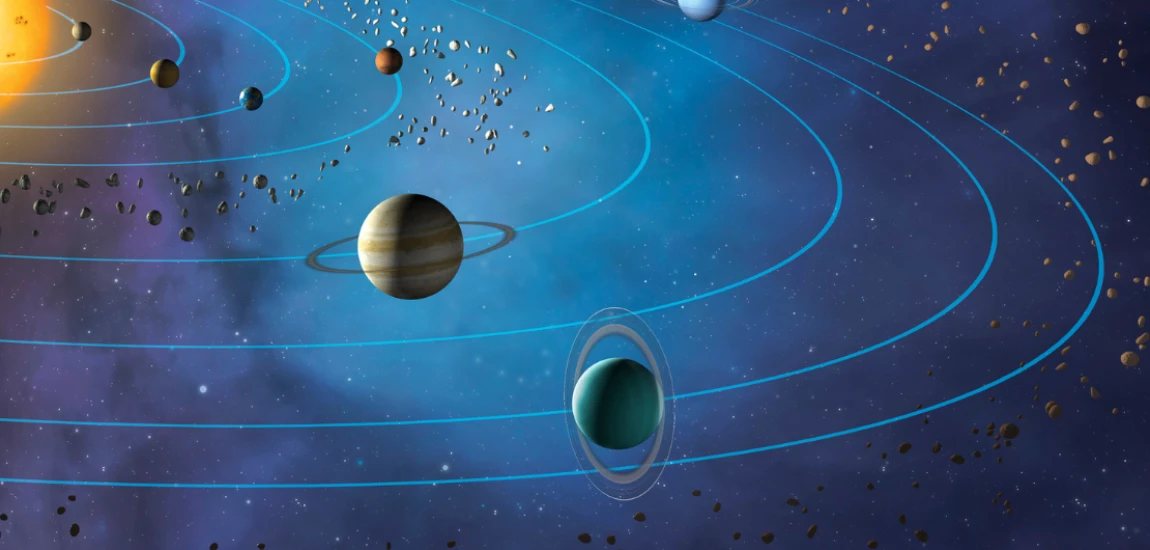
Planetary defense systems represent one of the most critical scientific and technological efforts aimed at safeguarding Earth from potential cosmic threats, particularly near-Earth objects such as asteroids and comets. As space exploration advances and detection capabilities improve, scientists have identified thousands of objects that pass near Earth’s orbit, some of which pose potential collision risks in the future. Advanced asteroid detection and mitigation technologies are designed to identify these threats early, track their trajectories, and develop strategies to prevent or minimize impact damage. These systems rely on a combination of astronomical observation, radar imaging, space-based telescopes, and artificial intelligence-driven predictive models to continuously monitor space for hazardous objects. Unlike earlier eras when asteroid impacts were unpredictable and poorly understood, modern planetary defense frameworks provide real-time tracking and long-term forecasting capabilities. The goal is not only to detect threats but also to actively intervene when necessary using deflection or disruption techniques. As humanity expands its presence in space and becomes increasingly aware of cosmic risks, planetary defense systems are emerging as a fundamental component of global space security infrastructure.
Core Architecture of Planetary Defense Systems

Space-Based and Ground-Based Observation Networks
Planetary defense systems rely on a hybrid network of space-based telescopes and ground-based observatories to monitor near-Earth objects. Space telescopes provide a wide field of view and can detect asteroids approaching from directions that are difficult to observe from Earth. Ground-based radar and optical systems complement this by tracking object movement, size, and composition. Together, these systems create a continuous surveillance network that ensures no significant object goes undetected.
AI-Powered Trajectory Prediction Models
Artificial intelligence plays a central role in predicting the future paths of asteroids. Machine learning models analyze vast datasets of orbital mechanics, gravitational influences, and historical asteroid behavior to forecast potential impact scenarios. These models continuously improve their accuracy as new data is collected, enabling early warning systems that can predict collisions years or even decades in advance.
Global Data Integration and Monitoring Systems
Planetary defense requires collaboration between multiple space agencies and research institutions worldwide. Integrated data platforms combine observations from NASA, ESA, and other organizations into unified monitoring systems. This global coordination ensures that all available data is used to assess risks and develop mitigation strategies effectively.
Asteroid Detection Technologies and Methods

Optical and Infrared Space Telescopes
Space-based optical and infrared telescopes are essential for detecting asteroids that are difficult to observe from Earth. Infrared sensors are particularly useful because they can detect heat signatures from dark or non-reflective objects. These telescopes help identify objects that might otherwise remain invisible until they are dangerously close to Earth.
Radar Imaging and Surface Analysis
Radar systems provide detailed information about asteroid size, shape, rotation, and surface composition. By bouncing radio waves off asteroids, scientists can create high-resolution models that help determine their structural integrity and potential impact behavior. This information is critical for designing effective deflection strategies.
Spectral Analysis and Composition Mapping
Spectral analysis allows scientists to determine the chemical composition of asteroids by analyzing reflected light. Understanding whether an asteroid is made of rock, metal, or ice helps in selecting the appropriate mitigation technique. For example, metallic asteroids may require different deflection strategies compared to porous or icy ones.
Asteroid Mitigation and Deflection Strategies

Kinetic Impactor Technology
One of the most practical asteroid deflection methods is the kinetic impactor approach, where a spacecraft is intentionally crashed into an asteroid to change its trajectory. The impact transfers momentum, slightly altering the asteroid’s path over time. This method has already been tested in space missions and is considered one of the most viable planetary defense strategies.
Gravity Tractor and Orbital Towing
The gravity tractor method involves positioning a spacecraft near an asteroid and using its gravitational pull to gradually alter the asteroid’s trajectory. This slow but precise technique allows for controlled adjustments without physically impacting the asteroid, making it suitable for long-term deflection planning.
Nuclear Deflection and Disruption Methods
In extreme scenarios, nuclear devices may be considered to either deflect or fragment large asteroids. While controversial, this method is studied as a last-resort option for high-risk objects. The goal is not necessarily destruction but controlled alteration of the asteroid’s path.
Challenges in Planetary Defense Systems

Detection Limitations and Blind Spots
Despite advanced technology, some asteroids remain difficult to detect due to their size, speed, or direction of approach. Objects coming from the Sun’s direction are particularly challenging to observe, creating potential blind spots in detection systems.
Uncertainty in Orbital Predictions
Asteroid trajectories can be influenced by gravitational interactions, solar radiation, and unknown physical properties. These factors introduce uncertainty into long-term predictions, making precise forecasting difficult in some cases.
Coordination Between Global Agencies
Planetary defense requires international collaboration, but differences in technology, funding, and policy between countries can slow down decision-making processes. Establishing unified global protocols remains a key challenge.


Anil Polat, behind the blog "FoxNomad," combines technology and travel. A computer security engineer by profession, he focuses on the tech aspects of travel.
Anil Polat
Prev Post

Next Post