
Intelligent Dark Matter Exploration Systems and Quantum Cosmic Discovery Coordination Networks
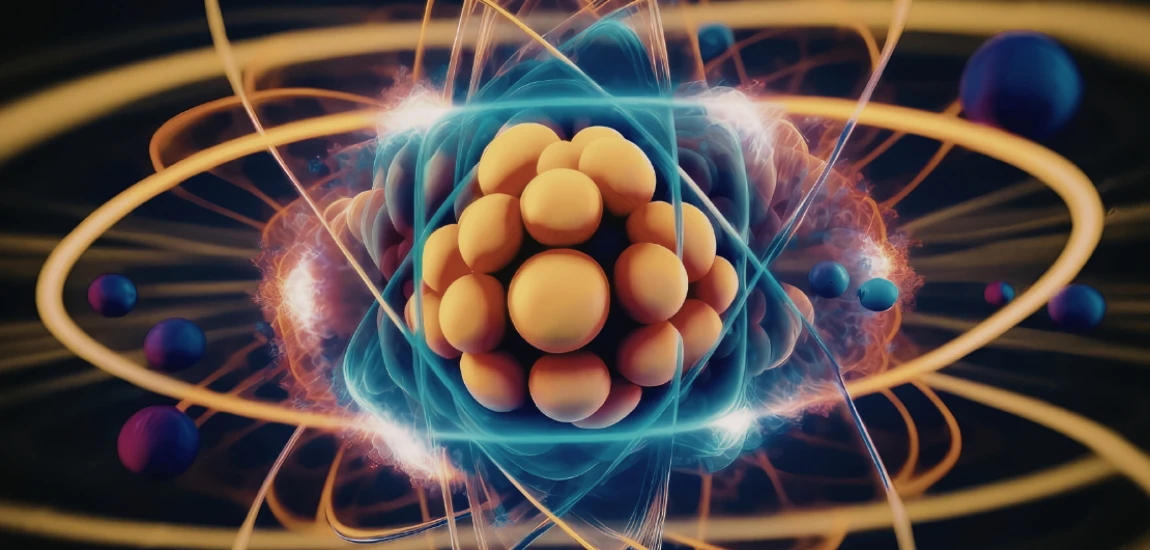
The universe remains one of the greatest mysteries ever explored by humanity. Despite major advancements in astronomy, astrophysics, and space technology, scientists still understand only a small fraction of the cosmos. One of the most mysterious components of the universe is dark matter, an invisible substance believed to make up a significant portion of all cosmic matter. To unlock these mysteries, researchers are developing Intelligent Dark Matter Exploration Systems and Quantum Cosmic Discovery Coordination Networks powered by artificial intelligence, quantum computing, and advanced observational technologies.
Traditional astronomical methods rely heavily on human analysis and conventional computational systems. However, modern space exploration generates enormous amounts of data that are increasingly difficult to process manually. AI-driven exploration systems can analyze massive cosmic datasets, identify hidden patterns, and coordinate scientific missions far more efficiently than traditional approaches.
Quantum computing technologies may further revolutionize space science by solving highly complex astrophysical calculations and enabling faster cosmic simulations. Together, intelligent exploration systems and quantum discovery networks could dramatically accelerate humanity’s understanding of dark matter, galaxy formation, black holes, and the large-scale structure of the universe.
Understanding Intelligent Dark Matter Exploration Systems

Intelligent dark matter exploration systems are advanced scientific infrastructures designed to study dark matter using artificial intelligence, quantum technologies, autonomous spacecraft, and deep-space observational networks.
Artificial Intelligence in Astrophysics
Artificial intelligence has become increasingly important in astrophysics and space research. Modern telescopes, satellites, and observatories collect enormous quantities of cosmic data every second, making manual analysis extremely difficult.
Machine learning algorithms can identify unusual cosmic events, classify galaxies, detect gravitational anomalies, and analyze radiation patterns associated with dark matter interactions. AI systems may also uncover hidden relationships within astronomical data that human researchers might overlook.
Deep learning models are particularly useful for recognizing patterns in cosmic microwave background radiation, galaxy clustering, and gravitational lensing effects. These patterns may provide valuable clues regarding the existence and behavior of dark matter throughout the universe.
Autonomous Space Exploration Technologies
Autonomous robotic spacecraft and AI-controlled probes are essential components of future dark matter exploration systems. These intelligent machines can operate independently in deep-space environments where communication delays make real-time human control impractical.
AI-powered exploration drones may navigate hazardous cosmic environments, conduct experiments, and adapt mission strategies based on changing conditions. Autonomous systems could also coordinate multiple telescopes and observational platforms simultaneously.
Future missions may involve swarms of intelligent satellites working together to create highly detailed maps of dark matter distributions across galaxies and interstellar regions.
Advanced Cosmic Data Processing
One of the greatest challenges in space science is processing massive amounts of observational data. Intelligent exploration systems may use distributed AI networks capable of analyzing cosmic information continuously in real time.
These systems could process data from radio telescopes, gravitational wave detectors, particle accelerators, and deep-space probes simultaneously. AI-driven analytics may improve the speed and accuracy of cosmic discovery significantly.
Such technologies are critical for studying rare and complex cosmic phenomena linked to dark matter and quantum astrophysics.
Quantum Cosmic Discovery Coordination Networks

Quantum cosmic discovery coordination networks are futuristic scientific infrastructures designed to connect astronomical research systems through quantum computing and ultra-fast data processing technologies.
Quantum Computing in Space Science
Quantum computing has the potential to revolutionize astrophysical research by solving problems far beyond the capabilities of classical computers. Quantum processors can analyze multiple possibilities simultaneously through quantum superposition and entanglement.
This computational power may allow scientists to simulate galaxy formation, dark matter interactions, and black hole dynamics with unprecedented accuracy. Quantum simulations could also help researchers test complex cosmological theories more efficiently.
As quantum hardware continues advancing, cosmic research networks may become increasingly dependent on quantum-enhanced analytical systems.
Distributed Astronomical Intelligence Networks
Future cosmic discovery networks may consist of globally interconnected AI systems capable of sharing astronomical data instantly. Observatories, satellites, and research centers across Earth and space could collaborate through intelligent coordination platforms.
Distributed AI networks would enable real-time synchronization between telescopes and particle detection systems worldwide. This coordination may improve the accuracy of dark matter detection experiments and cosmic event monitoring.
Quantum communication systems could further enhance secure and ultra-fast information exchange between scientific facilities.
Real-Time Cosmic Event Detection
The universe constantly produces dynamic events such as supernovae, gamma-ray bursts, gravitational waves, and black hole collisions. Detecting and analyzing these events rapidly is essential for advancing astrophysical knowledge.
AI-powered cosmic networks may monitor the universe continuously and automatically identify unusual activity. Real-time analysis systems could then direct telescopes and scientific instruments toward significant events instantly.
This rapid coordination may significantly improve humanity’s ability to study rare cosmic phenomena associated with dark matter and quantum astrophysics.
Dark Matter Detection Technologies and Scientific Innovations

Understanding dark matter requires highly advanced detection technologies and innovative scientific methods.
Gravitational Lensing Analysis
Scientists cannot observe dark matter directly because it does not emit or absorb light. Instead, researchers study its gravitational effects on visible matter and radiation.
Gravitational lensing occurs when massive objects bend light traveling through space. AI systems can analyze these distortions to identify hidden concentrations of dark matter around galaxies and galaxy clusters.
Machine learning algorithms may improve lensing analysis accuracy by processing massive astronomical datasets far faster than traditional methods.
Particle Detection Systems
Many dark matter theories suggest that unknown particles may exist throughout the universe. Advanced particle detectors located underground, in space, or near particle accelerators are designed to identify possible dark matter interactions.
AI-driven detection systems may filter background noise, recognize rare particle signatures, and improve experimental precision. Quantum sensors could further enhance sensitivity levels during detection experiments.
Future particle observatories may combine AI analytics with quantum processing to accelerate discoveries in fundamental physics.
Cosmic Simulation Platforms
Simulating the universe is one of the most computationally demanding scientific tasks ever attempted. AI-enhanced cosmic simulation platforms can model galaxy evolution, dark matter behavior, and cosmic expansion processes with increasing realism.
Quantum computing may eventually allow researchers to simulate entire sections of the universe at extraordinary levels of detail. These simulations could reveal new insights regarding the structure and origin of dark matter.
Improved simulation accuracy may also help scientists refine theories about the evolution of the cosmos.
Applications of Intelligent Cosmic Exploration Systems

Intelligent dark matter exploration systems may influence multiple scientific and technological fields beyond astrophysics.
Advancing Fundamental Physics
Dark matter research could reshape humanity’s understanding of physics entirely. Discovering the true nature of dark matter may lead to new theories regarding gravity, energy, space-time, and quantum mechanics.
AI-powered research systems may uncover physical principles that challenge current scientific models. These discoveries could revolutionize both theoretical and applied science.
Breakthroughs in fundamental physics may eventually influence energy production, computing technologies, and advanced engineering systems.
Enhancing Space Exploration Missions
AI-driven cosmic exploration systems can improve navigation, communication, and decision-making during deep-space missions. Autonomous spacecraft may use intelligent mapping systems to navigate complex gravitational environments more efficiently.
Dark matter research could also improve understanding of cosmic radiation and large-scale space structures, helping future interstellar missions operate more safely.
Quantum navigation systems may eventually provide ultra-precise positioning capabilities for long-distance space travel.
Strengthening Global Scientific Collaboration
Large-scale cosmic exploration requires international cooperation between governments, universities, research institutions, and private aerospace companies.
AI coordination platforms may improve data sharing, mission planning, and collaborative experimentation across global scientific communities. Distributed discovery networks could accelerate innovation while reducing research duplication.
Future space science may depend increasingly on interconnected intelligent research ecosystems.


Kate McCulley, the voice behind "Adventurous Kate," provides travel advice tailored for women. Her blog encourages safe and adventurous travel for female readers.
Kate McCulley

Prev Post

Next Post