
Human Augmentation Technologies and Advanced Cybernetic Enhancement Architectures
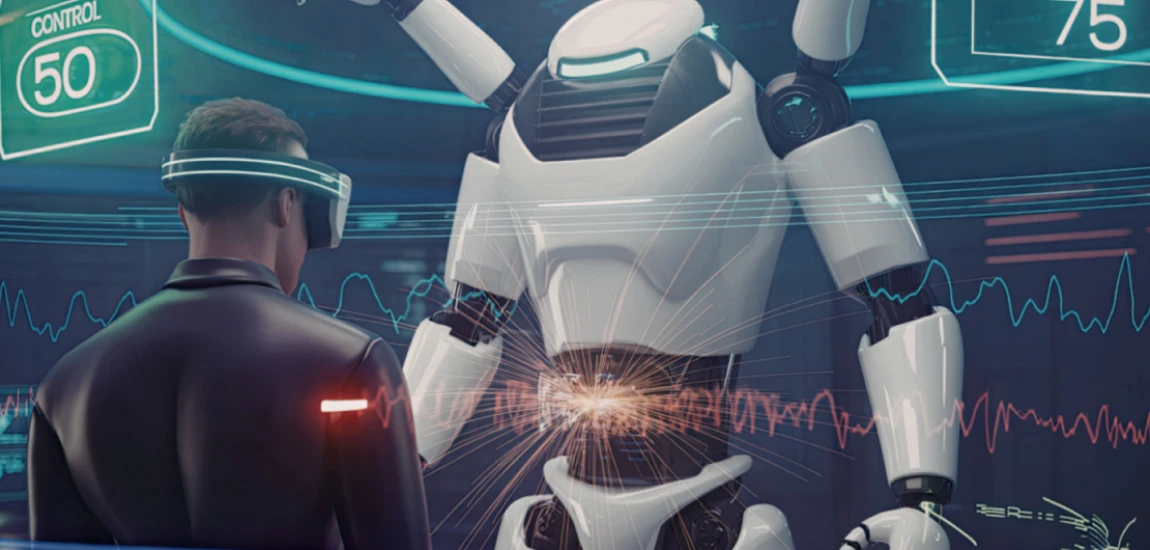
Human evolution is entering a transformative phase where biology and technology are beginning to merge in unprecedented ways. Human augmentation technologies and advanced cybernetic enhancement architectures represent a rapidly growing field focused on enhancing physical, cognitive, and sensory abilities beyond natural human limitations. These technologies combine neuroscience, artificial intelligence, robotics, biotechnology, and advanced computing systems to create enhanced human-machine integration.
Unlike traditional assistive devices that simply restore lost functions, modern augmentation systems aim to enhance human capabilities far beyond baseline biological limits. From neural implants that improve memory and cognition to robotic exoskeletons that amplify strength and endurance, the boundary between human and machine is becoming increasingly blurred. This shift is not only technological but also philosophical, raising important questions about identity, ethics, and the future of human evolution.
As research advances in brain-computer interfaces, bio-integrated electronics, and cybernetic architectures, the possibility of enhanced humans capable of superior cognition, strength, and perception is becoming more realistic. Governments, research institutions, and private companies are investing heavily in this domain, signaling a future where human augmentation may become a mainstream part of society. This blog explores the foundations, applications, challenges, and future implications of these transformative technologies.
Foundations of Human Augmentation Technologies and Cybernetic Systems

Neural Interfaces and Brain-Computer Integration
At the core of human augmentation technologies lies the development of brain-computer interfaces (BCIs), which enable direct communication between the human brain and external digital systems. These interfaces decode neural signals and translate them into commands that can control machines, software, or prosthetic devices. Similarly, they can also send information back into the brain, enabling sensory or cognitive enhancement.
Advanced BCIs are being developed using high-density electrode arrays, non-invasive neural sensors, and AI-powered signal processing systems. These technologies allow for increasingly precise interpretation of brain activity. As accuracy improves, BCIs are expected to enable applications such as memory augmentation, thought-based communication, and direct interaction with digital environments.
The integration of neural interfaces into everyday life could redefine human-computer interaction entirely. Instead of using keyboards or screens, humans may eventually communicate directly through thought-driven systems.
Cybernetic Architecture and System Integration
Cybernetic enhancement architectures refer to the structured integration of biological systems with mechanical and digital components. These architectures are designed to ensure seamless communication between human physiology and external augmentation devices.
Modern cybernetic systems rely heavily on adaptive feedback loops that continuously monitor biological signals such as heart rate, neural activity, and muscular movement. These signals are processed in real time to optimize device performance. For example, a robotic limb can adjust its movement dynamically based on user intent and environmental conditions.
As cybernetic systems become more advanced, they are evolving into fully integrated enhancement platforms capable of enhancing multiple human functions simultaneously, including strength, perception, and cognitive processing.
Role of Artificial Intelligence in Augmentation Systems
Artificial intelligence plays a crucial role in interpreting complex biological signals and enabling real-time adaptation in augmentation systems. Machine learning algorithms are used to decode neural patterns, predict user intent, and optimize device responsiveness.
AI also enables personalized augmentation by learning individual user behavior over time. This allows systems to adapt to specific cognitive and physical patterns, making enhancements more natural and efficient. Without AI, the complexity of human-machine integration would be extremely difficult to manage at scale.
Cognitive Enhancement and Neural Performance Expansion

Memory Augmentation and Cognitive Acceleration
One of the most promising applications of human augmentation technologies is cognitive enhancement. Neural implants and AI-assisted systems are being developed to improve memory retention, learning speed, and decision-making abilities.
These systems work by strengthening neural connections or providing external memory storage that can be accessed directly by the brain. In the future, individuals may be able to instantly recall large amounts of information or process complex data at accelerated speeds.
Such advancements could revolutionize education, professional training, and knowledge-based industries by dramatically increasing human cognitive capacity.
Attention Control and Mental Optimization Systems
Augmentation technologies are also being explored to improve focus, attention span, and mental clarity. Brain stimulation devices can influence neural activity patterns associated with concentration and relaxation.
These systems may help reduce cognitive fatigue, improve productivity, and enhance mental performance in high-stress environments. AI-driven neurofeedback systems can also train users to optimize their mental states over time.
Human-AI Cognitive Collaboration
A key vision of augmentation technologies is seamless collaboration between human intelligence and artificial intelligence. Instead of replacing human cognition, AI systems will act as cognitive partners, assisting in decision-making, analysis, and problem-solving.
This hybrid intelligence model could significantly enhance human capabilities, enabling faster and more accurate decision-making across various fields such as medicine, engineering, and scientific research.
Physical Enhancement Through Cybernetic Systems

Robotic Exoskeletons and Strength Augmentation
Robotic exoskeletons are wearable mechanical systems designed to enhance human strength and endurance. These devices amplify physical capabilities by supporting movement and reducing strain on muscles and joints.
Exoskeletons are already being used in industrial work, military operations, and rehabilitation therapy. Future versions will be more lightweight, responsive, and AI-controlled, allowing users to perform physically demanding tasks with minimal effort.
Sensory Enhancement and Perception Expansion
Human augmentation technologies are also being developed to enhance sensory perception. This includes systems that improve vision, hearing, and even the ability to detect environmental data such as temperature, radiation, or electromagnetic fields.
These enhancements could provide humans with abilities beyond natural biological limits, enabling improved awareness and interaction with complex environments.
Bio-Integrated Wearable Systems
Wearable augmentation devices are becoming increasingly sophisticated, integrating directly with biological systems. These devices monitor health metrics, enhance physical performance, and provide real-time feedback to users.
As materials science advances, wearables are becoming more flexible, durable, and seamlessly integrated with human skin and tissue.
Medical Applications of Human Augmentation Technologies

Prosthetics and Bio-Mechanical Replacement Systems
Modern prosthetics have evolved far beyond simple mechanical replacements. Advanced bio-mechanical limbs now use neural signals to enable precise and natural movement.
These prosthetics can adapt to user behavior over time, improving performance and functionality. Future developments may include fully sensory prosthetics capable of replicating touch, temperature, and pressure sensations.
Neural Rehabilitation and Recovery Systems
Augmentation technologies are also being used in medical rehabilitation to help patients recover from neurological injuries. Brain stimulation devices and AI-guided therapy systems can accelerate recovery and restore lost functions.
These systems are particularly effective in treating conditions such as stroke, spinal injuries, and neurodegenerative diseases.
Personalized Bioengineering and Regenerative Medicine
Advances in bioengineering are enabling personalized medical treatments that enhance human biological systems at the cellular level. This includes tissue regeneration, genetic modification, and organ enhancement technologies.
These innovations may eventually allow humans to repair or upgrade biological functions in ways previously thought impossible.


Gilbert Ott, the man behind "God Save the Points," specializes in travel deals and luxury travel. He provides expert advice on utilizing rewards and finding travel discounts.
Gilbert Ott

Prev Post

Next Post