
How Quantum Computing Could Disrupt Industries We Rely On Today
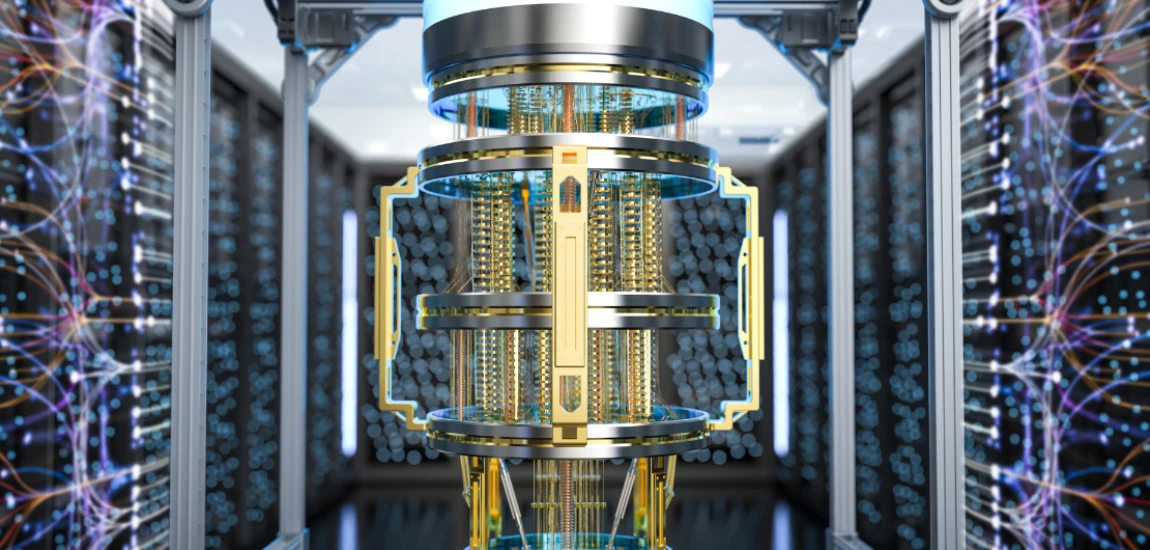
For decades, progress in computing followed a predictable path: faster processors, smaller chips, and more powerful classical computers. Quantum computing breaks that trajectory entirely. Instead of processing information in binary bits, quantum computers use qubits, which can exist in multiple states simultaneously. This shift allows quantum systems to explore vast solution spaces at speeds unimaginable with traditional machines.
While practical, large-scale quantum computers are still emerging, their potential impact is already reshaping strategic planning across industries. From drug discovery to financial modeling and cybersecurity, quantum computing threatens to upend systems that modern society relies on every day.
Understanding how quantum computing could disrupt industries is no longer theoretical—it’s essential preparation for a near-future reality.
Understanding Quantum Computing and Why It’s Different

From bits to qubits
Traditional computers operate using bits that represent either a 0 or a 1. Quantum computers use qubits, which can represent 0, 1, or both simultaneously through superposition. This allows quantum systems to process many possibilities at once.
This capability fundamentally changes how problems are approached, especially those involving massive complexity.
Entanglement and exponential power
Quantum entanglement links qubits so that the state of one instantly affects another, regardless of distance. This creates exponential computational power, enabling calculations that would take classical computers thousands of years.
Complexity becomes manageable.
Why classical computers hit a wall
Certain problems—such as molecular simulation or large-scale optimization—grow exponentially harder for classical machines. Quantum computing is designed specifically to overcome these limitations.
This makes quantum disruption inevitable, not optional.
Healthcare and Drug Discovery Transformation

Accelerating drug development
Drug discovery relies on simulating molecular interactions, a task that overwhelms classical computers. Quantum computing can model molecular behavior at an atomic level, dramatically reducing research timelines.
Years of research could become months.
Personalized medicine breakthroughs
Quantum computing could analyze genetic data and treatment responses at scale, enabling highly personalized therapies tailored to individual biology.
Healthcare becomes predictive, not reactive.
Medical system optimization
Beyond research, quantum algorithms could optimize hospital operations, resource allocation, and diagnostic accuracy, improving patient outcomes while reducing costs.
Efficiency meets precision.
Financial Services and Economic Modeling

Portfolio optimization at new scales
Financial institutions juggle countless variables—risk, return, market volatility. Quantum computing can evaluate all possibilities simultaneously, enabling more accurate portfolio optimization.
Decision-making becomes mathematically superior.
Fraud detection and risk analysis
Quantum systems can detect subtle patterns in massive transaction datasets, identifying fraud or systemic risk faster than traditional analytics.
Threats surface earlier.
Market simulation and forecasting
Quantum-powered models could simulate economic scenarios with unprecedented depth, helping institutions prepare for crises and volatility.
Uncertainty becomes quantifiable.
Cybersecurity in a Post-Quantum World

Breaking today’s encryption
Most modern encryption relies on mathematical problems that are extremely hard for classical computers but potentially trivial for quantum machines. This threatens global digital security.
Current safeguards may become obsolete.
Race for quantum-safe encryption
Industries are now developing post-quantum cryptography designed to resist quantum attacks. Transitioning global systems will be complex and urgent.
Security must evolve before disruption arrives.
Redefining trust infrastructure
Quantum computing will force a redesign of identity verification, secure communications, and data protection frameworks across industries.
Trust becomes computational.


Ben Schlappig runs "One Mile at a Time," focusing on aviation and frequent flying. He offers insights on maximizing travel points, airline reviews, and industry news.
Ben Schlappig

Prev Post

Next Post