
Holographic Computing Platforms and the Rise of Immersive Next-Generation Digital Workspaces
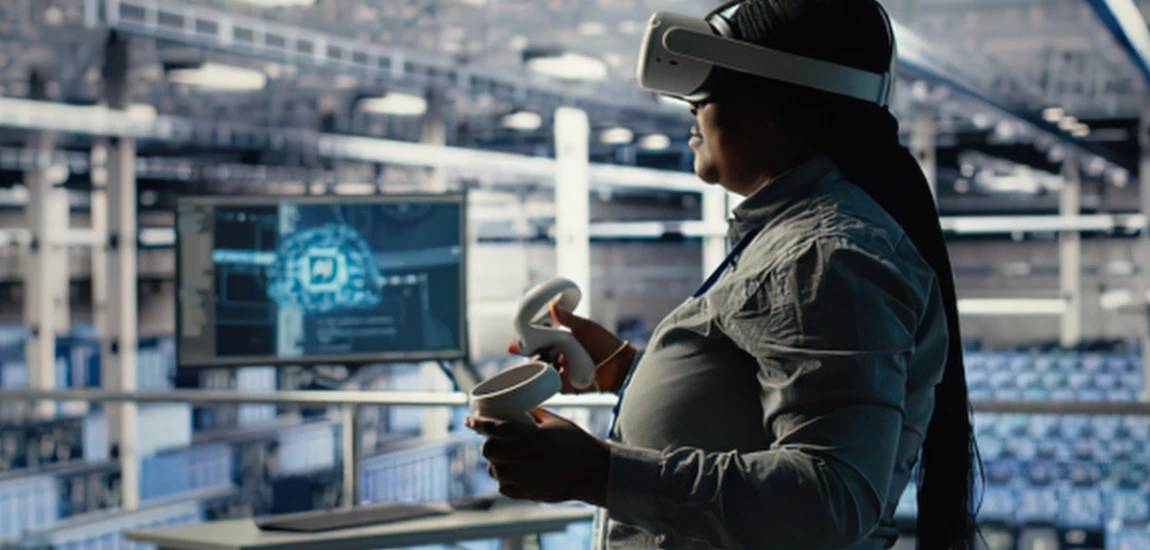
The modern workplace is evolving rapidly as organizations embrace digital transformation, remote collaboration, and intelligent technologies. Traditional desktop environments are gradually expanding beyond flat computer screens into immersive three-dimensional digital workspaces that allow people to interact with information in more natural and engaging ways. Holographic Computing Platforms represent a significant advancement in this transformation by combining spatial computing, artificial intelligence (AI), augmented reality (AR), mixed reality (MR), advanced visualization, and cloud computing to create interactive digital environments.
Unlike conventional computing interfaces, holographic computing enables users to view and manipulate digital content as three-dimensional holograms integrated into their physical surroundings. Engineers can design complex products in virtual space, healthcare professionals can visualize medical data in 3D, educators can create immersive learning experiences, and business teams can collaborate regardless of geographic location.
Although fully immersive holographic workspaces are still evolving, continuous advances in AI, high-speed connectivity, graphics processing, and wearable technologies are accelerating their development. This article explores the technologies behind Holographic Computing Platforms, their benefits, practical applications, and their potential role in creating the next generation of intelligent digital workspaces.
Understanding Holographic Computing Platforms

The Evolution from Traditional Computing to Spatial Computing
For decades, digital work has relied primarily on keyboards, mice, and two-dimensional displays. While these interfaces remain effective, they often limit how users visualize complex information and collaborate on sophisticated projects.
Holographic Computing Platforms introduce spatial computing, allowing digital information to exist within three-dimensional environments where users can interact naturally using gestures, voice commands, eye tracking, and intelligent controllers. Instead of viewing data through a single monitor, users can position virtual objects around them, creating flexible digital workspaces that improve visualization and collaboration.
Spatial computing bridges the gap between physical and digital environments, making technology feel more intuitive and interactive across numerous professional applications.
Artificial Intelligence as the Intelligent Workspace Assistant
Artificial intelligence plays a central role in Holographic Computing Platforms by making immersive environments more responsive and intelligent. AI systems recognize speech, interpret user gestures, analyze workflows, automate repetitive tasks, and personalize workspace layouts according to user preferences.
Machine learning algorithms continuously optimize digital environments by predicting user actions, organizing information, and providing intelligent recommendations. AI-powered assistants can retrieve documents, summarize meetings, translate conversations, and support real-time collaboration among distributed teams.
This intelligent automation improves productivity while allowing professionals to focus on creative problem-solving rather than routine administrative tasks.
Creating Collaborative Digital Ecosystems
One of the defining features of Holographic Computing Platforms is the ability to create shared digital environments where multiple participants collaborate simultaneously from different locations. Engineers, architects, healthcare professionals, educators, designers, and business leaders can interact with the same virtual models regardless of physical distance.
Cloud computing synchronizes holographic content while AI manages collaboration, version control, and communication between participants. Real-time updates ensure that every team member works with the latest information, improving coordination and reducing misunderstandings.
These collaborative digital ecosystems strengthen teamwork while supporting increasingly global and distributed organizations.
Core Technologies Behind Immersive Next-Generation Digital Workspaces

Spatial Computing, Mixed Reality, and Augmented Reality
Spatial computing forms the technological foundation of Holographic Computing Platforms. By combining augmented reality, mixed reality, advanced sensors, and intelligent software, digital information becomes integrated into physical environments where users can interact naturally.
Mixed reality allows holographic objects to coexist with real-world surroundings, while augmented reality overlays digital content onto physical spaces. These technologies enable professionals to visualize engineering designs, medical images, architectural models, and business analytics in highly interactive three-dimensional formats.
Future improvements in display technology, optics, and wearable devices will continue enhancing immersion and user comfort.
Artificial Intelligence and Intelligent User Interaction
Artificial intelligence enables holographic workspaces to understand user behavior and respond intelligently. Natural language processing supports voice-controlled interfaces, while computer vision recognizes gestures, facial expressions, and environmental conditions.
Machine learning continuously improves interaction accuracy by adapting to user preferences and working styles. AI also automates scheduling, content organization, document retrieval, meeting transcription, and intelligent knowledge management.
These capabilities create highly personalized work environments that increase productivity while simplifying complex workflows.
Cloud Computing, Edge Computing, and High-Speed Connectivity
Cloud computing provides scalable infrastructure for storing holographic content, synchronizing collaboration sessions, and supporting AI-powered services. Edge computing complements cloud platforms by processing latency-sensitive information closer to users, improving responsiveness during immersive interactions.
Next-generation communication networks enable high-bandwidth data transfer required for real-time holographic rendering and collaborative digital environments. Low-latency connectivity supports smooth interactions between geographically distributed users while maintaining synchronized virtual workspaces.
Together, cloud computing, edge computing, and advanced networking technologies create the infrastructure necessary for large-scale holographic collaboration.
Benefits of Holographic Computing Platforms

Enhancing Productivity and Collaboration
One of the greatest advantages of Holographic Computing Platforms is their ability to improve collaboration by allowing teams to interact with complex digital content in shared three-dimensional environments. Instead of exchanging static documents or screen-sharing presentations, participants can manipulate virtual objects together while discussing ideas in real time.
Engineers can review product prototypes, architects can evaluate building designs, healthcare professionals can examine anatomical models, and educators can demonstrate scientific concepts more effectively using immersive visualization.
Improved collaboration reduces communication barriers while accelerating decision-making across distributed organizations.
Improving Learning, Creativity, and Innovation
Immersive holographic environments encourage more engaging learning experiences by transforming abstract concepts into interactive visual representations. Students can explore historical sites, scientific simulations, engineering systems, and biological structures through realistic three-dimensional models.
Creative professionals also benefit from enhanced visualization capabilities that simplify product design, artistic development, animation, and architectural planning. Artificial intelligence assists by generating design suggestions, optimizing workflows, and automating repetitive creative tasks.
These technologies encourage innovation by enabling professionals to experiment, collaborate, and solve problems within highly interactive digital environments.
Supporting Flexible and Intelligent Workplaces
Holographic Computing Platforms support hybrid and remote work by creating digital offices where employees collaborate regardless of physical location. AI-powered workspace management personalizes user experiences while optimizing resource allocation and meeting coordination.
Organizations can reduce travel requirements, improve communication, accelerate project development, and create more inclusive workplaces through immersive collaboration technologies. Intelligent workspaces also support accessibility by providing voice interaction, multilingual communication, and adaptive interfaces for diverse users.
As digital transformation continues, holographic computing will become an increasingly valuable tool for building smarter, more connected workplaces.
Real-World Applications of Holographic Computing Platforms

Transforming Business Collaboration and Remote Work
Holographic Computing Platforms are redefining how organizations collaborate across distributed teams. Instead of relying solely on video conferencing or screen sharing, professionals can enter immersive digital workspaces where three-dimensional holograms, interactive documents, and virtual prototypes become shared collaboration tools. Team members located in different countries can work together as though they are in the same physical room, improving communication and reducing misunderstandings.
Business leaders can use holographic dashboards to visualize financial data, supply chain performance, and operational metrics in real time. Engineers can inspect complex machinery through interactive 3D models, while product designers can modify prototypes instantly during collaborative meetings. Artificial intelligence further enhances these workspaces by generating meeting summaries, translating multilingual conversations, organizing digital assets, and recommending workflow improvements.
These capabilities increase productivity, reduce travel costs, and create more engaging collaborative experiences for organizations embracing hybrid and remote work models.
Advancing Healthcare, Education, and Engineering
Healthcare professionals can benefit significantly from holographic computing by visualizing detailed anatomical structures, medical imaging, and surgical planning models in three dimensions. Doctors may collaborate remotely with specialists, improving diagnostic accuracy and treatment planning while supporting medical education through immersive simulations.
Educational institutions can create highly interactive learning environments where students explore scientific concepts, historical landmarks, engineering designs, and biological systems using realistic holographic models. These immersive experiences improve knowledge retention and encourage active participation.
Engineering, architecture, and manufacturing industries also gain substantial advantages. Designers can visualize products before physical production, identify design flaws early, and collaborate with clients using realistic virtual prototypes. Construction teams can review building layouts, infrastructure projects, and safety procedures within immersive digital environments, reducing costly design errors.
Supporting Smart Cities and Industrial Innovation
Smart cities generate enormous volumes of operational data from transportation systems, energy infrastructure, public utilities, and environmental sensors. Holographic Computing Platforms allow city planners to visualize this information spatially, improving decision-making for urban development and emergency response planning.
Industrial organizations may integrate holographic interfaces into manufacturing facilities to support equipment monitoring, maintenance, workforce training, and quality assurance. AI-powered visualization enables technicians to inspect digital twins of machinery, identify potential faults, and perform guided maintenance more efficiently.
These applications strengthen operational efficiency while supporting digital transformation across numerous industries.


Gary Arndt operates "Everything Everywhere," a blog focusing on worldwide travel. An award-winning photographer, Gary shares stunning visuals alongside his travel tales.
Gary Arndt

Prev Post

Next Post