
Biohybrid Robotics and the Integration of Living Tissue with Intelligent Machines

The rapid advancement of robotics, biotechnology, and artificial intelligence is transforming the way intelligent machines are designed and developed. Traditional robots rely on mechanical components, electronic circuits, and computer algorithms to perform specific tasks. While these systems have achieved remarkable success in manufacturing, healthcare, logistics, and space exploration, they often lack the flexibility, adaptability, and self-repair capabilities found in living organisms. To overcome these limitations, researchers are exploring an innovative field known as biohybrid robotics, which combines biological tissues with engineered robotic systems.
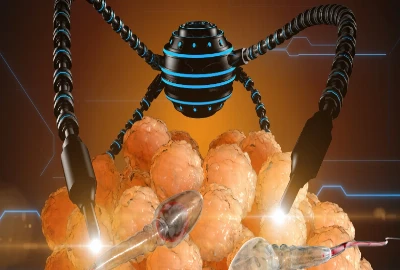
Biohybrid robotics integrates living cells, muscles, or other biological materials into robotic structures, creating machines that can move, sense, and adapt more naturally. By using living tissue alongside advanced electronics and artificial intelligence, these systems can achieve greater efficiency, softer movement, and improved interaction with complex environments. This interdisciplinary field combines principles from robotics, tissue engineering, synthetic biology, materials science, and computer science to develop machines with capabilities that extend beyond conventional robotics.
Although biohybrid robots are still largely in the research and experimental stages, they hold enormous potential for applications in healthcare, environmental monitoring, biomedical research, and soft robotics. Scientists continue to improve the performance, durability, and control of these systems while addressing technical and ethical challenges. As research progresses, biohybrid robotics is expected to play a significant role in the future of intelligent machines and human-centered technologies.
Understanding Biohybrid Robotics

What Is Biohybrid Robotics?
Biohybrid robotics is an emerging field that combines living biological tissues with robotic components to create machines capable of performing tasks more naturally and efficiently. Instead of relying entirely on motors and mechanical actuators, biohybrid robots may use living muscle cells or engineered tissues to generate movement. This unique combination enables robotic systems to imitate many characteristics of living organisms, including flexibility, responsiveness, and energy efficiency.
How Living Tissue Is Integrated into Robots
Researchers cultivate biological tissues such as muscle cells in laboratory environments and integrate them with flexible robotic structures. These tissues act as biological actuators, contracting and relaxing in response to electrical, chemical, or optical stimulation. Sensors, microcontrollers, and artificial intelligence algorithms coordinate these biological movements, allowing the robot to perform controlled actions while adapting to changing conditions.
Why Biohybrid Robotics Is Important
Biohybrid robotics offers a new approach to designing intelligent machines that are more adaptable, energy-efficient, and capable of interacting safely with humans and delicate environments. Its applications extend to medical devices, rehabilitation technologies, soft robotics, environmental monitoring, and scientific research. By combining the strengths of biology and engineering, biohybrid systems have the potential to solve challenges that conventional robotic technologies cannot address.
Biohybrid robotics represents an important milestone in the evolution of intelligent machines by merging the adaptability of living tissue with the precision of advanced robotics. This innovative technology enables the development of systems that move more naturally, respond intelligently to environmental changes, and potentially repair certain biological components over time. Although the technology is still developing, ongoing advances in tissue engineering, artificial intelligence, and biomaterials are bringing biohybrid robotics closer to practical real-world applications across multiple industries.
How Biohybrid Robotics Works

Living Muscle Cells as Biological Actuators
Biohybrid robots use living muscle cells or engineered tissues to generate movement instead of relying solely on electric motors. These biological actuators contract and relax when stimulated by electrical, chemical, or optical signals, allowing the robot to perform smooth and flexible movements. This approach closely resembles the way muscles function in living organisms and improves the robot's adaptability in dynamic environments.
Artificial Intelligence and Sensor Integration
Artificial intelligence plays a vital role in controlling biohybrid robotic systems. Sensors continuously collect information about the robot's surroundings, while AI algorithms analyze this data and coordinate the movement of biological tissues. This combination enables biohybrid robots to respond intelligently to environmental changes, improve task accuracy, and operate with greater efficiency in complex situations.
Advanced Biomaterials and Soft Robotics
Researchers use flexible biomaterials, hydrogels, and biocompatible structures to support living tissues within robotic systems. These materials protect biological components while allowing natural movement and reducing mechanical stress. The integration of soft robotics with living tissue also improves safety when robots interact with humans or handle delicate objects in healthcare and industrial applications.
Applications of Biohybrid Robotics

Healthcare and Medical Technology
Biohybrid robotics has significant potential in healthcare by supporting the development of advanced prosthetic limbs, rehabilitation devices, surgical tools, and tissue-engineered medical technologies. These systems can improve precision during medical procedures and provide patients with more natural movement and enhanced recovery outcomes.
Scientific Research and Drug Development
Researchers use biohybrid robotic systems to study how living tissues behave under different conditions. These platforms help scientists test new medicines, understand muscle function, and investigate biological processes without relying solely on animal testing, contributing to faster and more efficient biomedical research.
Environmental Monitoring and Soft Robotics
Biohybrid robots can operate in environments where conventional robots face limitations. Their flexible movements and biological components make them suitable for environmental monitoring, underwater exploration, and agricultural applications. Soft biohybrid robots can also safely interact with fragile ecosystems while collecting valuable scientific data.
Benefits and Future of Biohybrid Robotics

Improved Adaptability and Energy Efficiency
By incorporating living tissue, biohybrid robots achieve smoother movement and consume less energy than many traditional robotic systems. Their biological components allow them to adapt more effectively to changing environments, making them valuable for applications requiring flexibility and precision.
Enhanced Human-Robot Interaction
The soft structures and natural movements of biohybrid robots enable safer interaction with people. This makes them particularly suitable for healthcare, rehabilitation, elderly assistance, and collaborative industrial environments where conventional rigid robots may present safety risks.
Future Outlook
As advances in tissue engineering, artificial intelligence, biomaterials, and robotics continue, biohybrid systems are expected to become more capable and practical. Future developments may lead to intelligent medical devices, advanced prosthetics, adaptive soft robots, and innovative research tools that combine the strengths of biology and engineering to address real-world challenges.


Gary Arndt operates "Everything Everywhere," a blog focusing on worldwide travel. An award-winning photographer, Gary shares stunning visuals alongside his travel tales.
Gary Arndt
Prev Post

Next Post