
Adaptive Metamaterial Engineering Platforms and Programmable Next-Generation Smart Material Technologies

Materials have always been the foundation of technological progress. From the Bronze Age to the Silicon Age, every major leap in civilization has been driven by the discovery and engineering of new materials. Today, science is entering another transformative era through adaptive metamaterial engineering platforms and programmable next-generation smart material technologies. Unlike traditional materials that maintain fixed physical characteristics, adaptive metamaterials are engineered to dynamically alter their structure and behavior in response to environmental changes or digital commands.
These advanced materials combine nanotechnology, artificial intelligence (AI), advanced manufacturing, embedded sensors, and programmable microstructures to create surfaces and components capable of changing shape, stiffness, thermal conductivity, electromagnetic behavior, and optical properties. Such innovations are opening new possibilities across aerospace, healthcare, robotics, telecommunications, energy systems, defense, and smart infrastructure.
As industries pursue greater efficiency, sustainability, and intelligent automation, programmable smart materials are becoming essential building blocks for future technologies. This article explores how adaptive metamaterial engineering platforms work, the technologies behind them, their real-world applications, benefits, challenges, and future potential.
Understanding Adaptive Metamaterial Engineering Platforms

What Are Adaptive Metamaterials?
Adaptive metamaterials are artificially engineered materials designed with microscopic or nanoscale structures that give them properties not commonly found in natural materials. Their behavior depends more on their internal architecture than on their chemical composition.
Unlike conventional materials such as steel, aluminum, or plastic, adaptive metamaterials can actively modify their physical characteristics. They may become stiffer, more flexible, transparent, reflective, or thermally conductive depending on external stimuli such as temperature, electrical signals, magnetic fields, light, or mechanical pressure.
These materials often integrate embedded electronics and sensors, allowing them to respond intelligently to changing environments without continuous human intervention.
Core Components of Metamaterial Platforms
Modern adaptive metamaterial systems combine several advanced technologies. Nanostructured materials create precisely engineered microscopic patterns responsible for unique mechanical and electromagnetic behavior.
Embedded sensors continuously monitor environmental conditions, while microprocessors analyze incoming data and determine appropriate responses. Artificial intelligence algorithms improve adaptive performance by learning from previous interactions and optimizing future behavior.
Additive manufacturing, including high-resolution 3D printing, enables engineers to fabricate highly complex metamaterial structures that would be impossible using conventional manufacturing methods.
Why Adaptive Materials Matter
Traditional engineering materials perform a single function throughout their lifespan. Adaptive metamaterials, however, can perform multiple functions while responding dynamically to changing operational requirements.
This adaptability reduces maintenance costs, improves energy efficiency, increases durability, and enables entirely new product designs. As technology becomes increasingly intelligent and connected, adaptive materials will play an essential role in creating responsive systems capable of self-adjustment and optimization.
Programmable Smart Material Technologies

Materials That Change Shape and Structure
One of the most exciting developments in smart materials is programmable shape transformation. Shape-memory alloys and programmable polymers can return to predetermined forms after deformation when exposed to heat, electricity, or magnetic fields.
These materials are already being explored for aerospace components that change aerodynamic profiles during flight and medical implants that expand automatically once placed inside the body.
Programmable structural adaptation allows engineers to create systems capable of adjusting performance without mechanical motors or hydraulic actuators.
Self-Healing Smart Materials
Self-healing materials contain microscopic capsules or dynamic chemical networks capable of repairing cracks and structural damage automatically.
When damage occurs, healing agents are released or chemical bonds reform, restoring structural integrity without human intervention. AI-powered monitoring systems detect microscopic damage early and optimize repair processes.
This technology significantly extends the lifespan of buildings, vehicles, aircraft, and industrial equipment while reducing maintenance costs.
Electromagnetic and Optical Metamaterials
Adaptive metamaterials also control electromagnetic waves, sound waves, and light in highly sophisticated ways.
Programmable optical materials can dynamically change transparency, reflection, or color, making them useful for smart windows, adaptive camouflage, and advanced imaging systems.
Electromagnetic metamaterials improve wireless communications, antenna performance, radar systems, and future 6G telecommunications infrastructure.
Artificial Intelligence and Digital Material Engineering

AI-Driven Material Design
Artificial intelligence is transforming material science by accelerating the discovery of entirely new material structures. Machine learning algorithms analyze millions of possible atomic and structural configurations to identify materials with desired mechanical, thermal, or electromagnetic properties.
This dramatically reduces research time while enabling innovations that would be difficult to achieve through traditional experimentation alone.
AI also predicts long-term material performance under different operating conditions.
Digital Twins for Smart Materials
Digital twin technology creates virtual models of adaptive materials that continuously receive data from real-world sensors.
Engineers use these digital replicas to simulate environmental conditions, predict performance, and optimize material behavior before physical implementation.
This reduces development costs while improving reliability and product quality.
Embedded Sensor Networks
Modern programmable materials increasingly include embedded sensor arrays capable of monitoring stress, temperature, vibration, humidity, and structural integrity.
These sensors enable continuous health monitoring while allowing the material itself to respond automatically to changing conditions.
The combination of sensing, computing, and adaptive response creates intelligent materials capable of autonomous operation.
Applications Across Industries

Aerospace and Aviation
Adaptive metamaterials are transforming aerospace engineering by enabling aircraft wings, spacecraft components, and satellite structures to change shape during operation.
These materials improve fuel efficiency, aerodynamic performance, and structural resilience while reducing overall vehicle weight.
Future spacecraft may use programmable thermal protection systems that automatically adapt to changing atmospheric conditions.
Healthcare and Biomedical Engineering
Smart materials have significant potential in medicine. Shape-memory stents, adaptive prosthetics, responsive drug delivery systems, and self-adjusting medical implants improve patient care while reducing invasive procedures.
Programmable biomaterials also support tissue engineering and regenerative medicine by creating environments that adapt to cellular growth.
Construction and Infrastructure
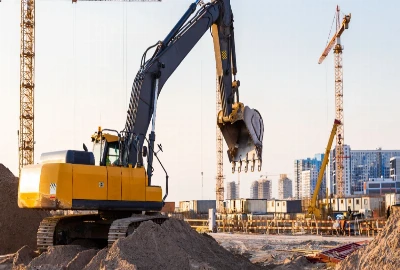
Buildings constructed with adaptive materials can respond to earthquakes, temperature changes, and structural stress.
Smart concrete capable of self-healing cracks, adaptive insulation materials, and responsive building facades improve durability, safety, and energy efficiency.
These technologies support the development of sustainable smart cities.


Derek Baron, also known as "Wandering Earl," offers an authentic look at long-term travel. His blog contains travel stories, tips, and the realities of a nomadic lifestyle.
Derek Baron
Prev Post
Next Post