
Autonomous Interplanetary Transportation Networks and Sustainable Deep-Space Mobility Systems
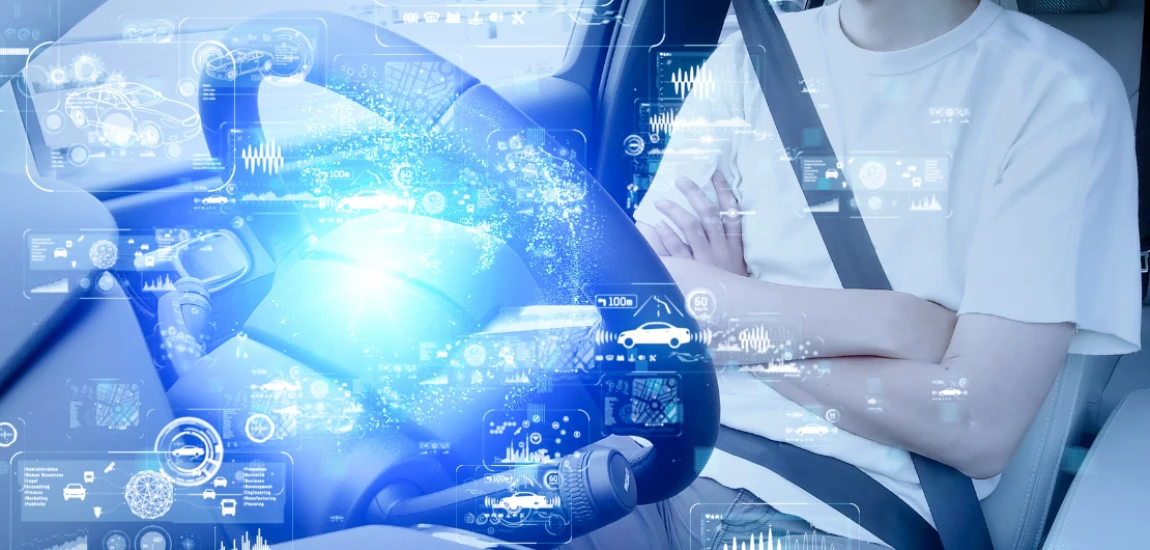
Humanity is entering a transformative era of space exploration where interplanetary travel is no longer confined to science fiction but is rapidly becoming a technological reality. With increasing advancements in propulsion systems, artificial intelligence, robotics, space engineering, and autonomous navigation, researchers are now developing autonomous interplanetary transportation networks designed to support long-term human presence beyond Earth.
Traditional space missions have been highly dependent on pre-programmed trajectories and ground-based control systems. However, as missions extend farther into deep space—toward the Moon, Mars, asteroids, and beyond—communication delays, resource limitations, and environmental unpredictability make centralized control increasingly impractical. This challenge has led to the emergence of autonomous deep-space mobility systems capable of self-navigation, self-repair, and intelligent decision-making without real-time human intervention.
These advanced systems integrate AI-driven navigation, distributed spacecraft networks, reusable propulsion technologies, and intelligent space logistics platforms to create a seamless interplanetary transportation infrastructure. Instead of isolated missions, future space exploration will rely on interconnected systems of spacecraft, orbital stations, fuel depots, and robotic maintenance units operating collaboratively across the solar system.
Sustainable deep-space mobility systems also emphasize efficiency, resource recycling, and long-term operational stability. By leveraging in-situ resource utilization, autonomous maintenance, and adaptive mission planning, these technologies aim to reduce dependency on Earth-based resupply missions.
As global space agencies and private aerospace companies accelerate their efforts, autonomous interplanetary transportation networks are poised to redefine how humanity explores, colonizes, and utilizes space resources.
Understanding Autonomous Interplanetary Transportation Networks

Evolution of Space Transportation Systems
Space transportation has evolved significantly from early single-use rocket missions to reusable launch systems and orbital spacecraft. However, traditional models still rely heavily on Earth-based mission control and limited operational autonomy.
Autonomous interplanetary transportation networks represent the next stage in this evolution. These systems consist of interconnected spacecraft, satellites, orbital hubs, and surface vehicles capable of independently coordinating missions across vast distances.
Rather than operating as isolated vehicles, spacecraft become part of a larger intelligent network that manages routing, fuel optimization, cargo distribution, and mission execution.
Core Components of Interplanetary Networks
A fully functional interplanetary transportation network includes multiple integrated elements working together seamlessly.
Autonomous spacecraft equipped with AI navigation systems form the backbone of the network. Orbital refueling stations enable long-distance travel without returning to Earth. Robotic maintenance units perform repairs and upgrades in space environments.
Communication satellites and deep-space relay systems ensure continuous data exchange between network components. Together, these systems form a distributed and intelligent transportation ecosystem.
Advantages of Network-Based Space Mobility
Unlike traditional mission-based approaches, network-based transportation systems offer scalability, flexibility, and resilience.
Spacecraft can dynamically adjust routes, share resources, and respond to environmental changes. This reduces mission risk and increases operational efficiency. Autonomous coordination also enables continuous exploration and infrastructure expansion across multiple planetary systems.
These advantages make interplanetary networks essential for long-term space development.
Artificial Intelligence and Autonomous Space Navigation

AI-Driven Deep-Space Navigation
Artificial intelligence plays a critical role in enabling autonomous interplanetary travel.
AI navigation systems process data from sensors, star trackers, gravitational models, and cosmic radiation detectors to determine spacecraft position and trajectory. These systems continuously adjust flight paths to optimize fuel consumption and mission timing.
Machine learning models improve navigation accuracy over time by analyzing previous mission data and environmental conditions.
Real-Time Decision-Making in Space
Deep-space environments are highly dynamic and unpredictable.
Autonomous systems must make real-time decisions without relying on Earth-based instructions due to communication delays that can span minutes or hours. AI systems evaluate multiple variables, including orbital mechanics, fuel levels, radiation exposure, and mission priorities.
This capability ensures safe and efficient mission execution even in uncertain conditions.
Predictive Maintenance and System Optimization
Spacecraft reliability is essential for long-duration missions.
AI-powered diagnostic systems monitor spacecraft health and predict potential failures before they occur. These systems can initiate corrective actions, adjust operational parameters, or activate backup systems automatically.
Predictive maintenance significantly enhances mission success rates and reduces operational risks.
Sustainable Deep-Space Mobility and Resource Utilization

In-Situ Resource Utilization (ISRU)
Sustainability is a key requirement for long-term space exploration.
In-situ resource utilization involves extracting and processing materials directly from celestial bodies such as the Moon, Mars, or asteroids. These resources can be used to produce fuel, oxygen, water, and construction materials.
ISRU reduces dependence on Earth-based supply chains and enables self-sustaining space missions.
Space-Based Fuel Production and Refueling
Fuel availability is one of the biggest limitations in interplanetary travel.
Future transportation networks will include orbital refueling stations that produce and store propellant in space. These stations will support spacecraft traveling between planets by enabling mid-journey refueling.
This approach extends mission range and reduces launch costs.
Recycling and Closed-Loop Systems
Sustainable space mobility requires efficient use of resources.
Closed-loop systems recycle water, air, and waste materials within spacecraft and space stations. Advanced life-support systems ensure minimal resource loss while maintaining crew safety and operational efficiency.
These technologies are essential for long-duration human presence in space.
Space Infrastructure and Orbital Transportation Hubs

Interplanetary Spaceports
Future space exploration will rely on orbital hubs serving as interplanetary transit points.
These spaceports will function similarly to airports on Earth, enabling spacecraft docking, refueling, maintenance, and cargo transfer. They will support both robotic and human missions across the solar system.
Orbital hubs improve mission coordination and logistical efficiency.
Robotic Maintenance and Construction Systems
Building and maintaining infrastructure in space requires autonomous robotics.
Robotic systems will assemble space stations, repair spacecraft, and construct orbital platforms without direct human involvement. These robots operate in extreme environments where human activity is limited.
Automation ensures continuous infrastructure development.
Distributed Space Logistics Networks
Logistics is a critical component of interplanetary transportation.
AI-managed logistics systems coordinate cargo movement, resource allocation, and mission scheduling across multiple spacecraft and destinations. Distributed networks ensure that supplies are delivered efficiently across vast distances.
This enhances the scalability of space operations.


Dave Lee runs "GoBackpacking," a blog that blends travel stories with how-to guides. He aims to inspire backpackers and offer them practical advice.
Dave Lee

Prev Post

Next Post