
Autonomous Asteroid Defense Systems and AI-Based Planetary Protection Frameworks
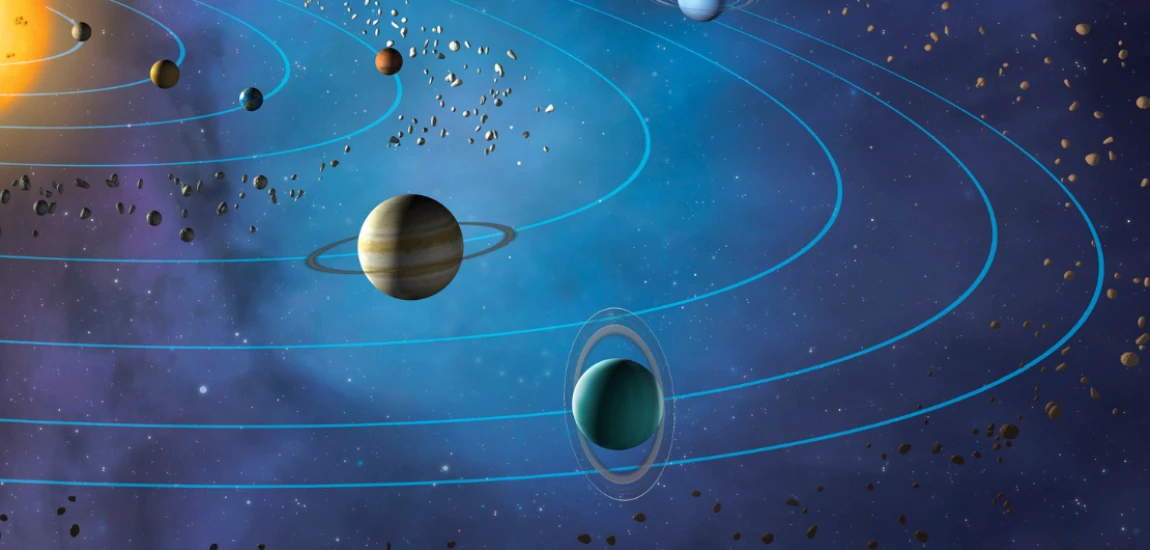
Throughout Earth's history, asteroid impacts have played a significant role in shaping the planet's geological and biological evolution. Scientists widely believe that a massive asteroid impact contributed to the extinction of the dinosaurs approximately 66 million years ago. While catastrophic impacts are relatively rare, thousands of near-Earth objects (NEOs) continue to travel through the solar system, and some possess the potential to threaten human civilization if their trajectories intersect with Earth.
Modern astronomy has significantly improved our ability to detect and monitor potentially hazardous asteroids. However, detection alone is not enough. Effective planetary protection requires rapid data analysis, accurate trajectory prediction, autonomous decision-making, and coordinated response strategies capable of operating across vast distances in space.
Autonomous Asteroid Defense Systems represent a new generation of planetary security technologies designed to address these challenges. By combining artificial intelligence, machine learning, advanced sensor networks, autonomous spacecraft, and predictive analytics, these systems can continuously monitor the space environment and respond proactively to emerging threats.
AI-Based Planetary Protection Frameworks extend these capabilities by integrating global observatories, space agencies, defense organizations, and scientific institutions into a unified planetary defense ecosystem. Together, these technologies may provide humanity with the tools necessary to detect, assess, and mitigate asteroid threats before they pose serious risks to Earth.
Understanding Autonomous Asteroid Defense Systems

The Need for Planetary Defense
Planetary defense has become an increasingly important area of scientific and technological research. While most asteroids pose no immediate threat to Earth, even a relatively small impact can cause significant regional damage. Larger impacts could have global consequences affecting infrastructure, ecosystems, economies, and human populations.
Traditional asteroid monitoring programs rely heavily on human analysis and observation. As the number of detected near-Earth objects continues to grow, managing this information becomes increasingly complex. Autonomous defense systems address this challenge by automating detection, classification, and risk assessment processes.
These systems can continuously evaluate incoming data from telescopes, satellites, and radar installations while identifying potential threats with remarkable speed and accuracy. This capability is critical because early detection significantly increases the range of available response options.
Planetary defense is no longer viewed solely as a scientific endeavor. It has become an essential component of long-term global resilience and security planning.
The Evolution of Space Surveillance
Space surveillance technologies have advanced dramatically over the past several decades. Modern observatories can identify previously unknown objects, track orbital movements, and estimate impact probabilities with increasing precision.
Autonomous systems build upon these capabilities by integrating advanced computational tools that continuously process vast amounts of observational data. Machine learning algorithms identify patterns and anomalies that may indicate emerging threats.
The combination of surveillance infrastructure and intelligent automation creates a powerful foundation for proactive planetary defense operations.
Creating a Continuous Defense Ecosystem
Autonomous asteroid defense systems operate continuously rather than relying solely on periodic observations. This persistent monitoring capability ensures that potentially hazardous objects can be identified as early as possible.
A continuous defense ecosystem improves preparedness and provides decision-makers with valuable time to evaluate mitigation strategies and coordinate international responses.
Artificial Intelligence as the Core of Planetary Protection Frameworks

Intelligent Threat Detection
Artificial intelligence serves as the analytical engine behind modern planetary defense systems. AI algorithms can process data from multiple observation platforms simultaneously, identifying objects that may require closer examination.
Traditional methods often require significant human oversight, whereas AI-driven systems can perform initial assessments automatically. This reduces response times and increases overall operational efficiency.
As observational datasets continue to expand, intelligent automation becomes increasingly valuable for maintaining effective surveillance capabilities.
Predictive Trajectory Analysis
One of the most important functions of planetary protection frameworks involves predicting asteroid trajectories accurately. Even small uncertainties in orbital calculations can significantly affect long-term impact predictions.
Machine learning models analyze historical observations, gravitational influences, and environmental variables to refine trajectory estimates continuously.
Improved predictive capabilities allow researchers to evaluate risks more effectively and identify potential mitigation opportunities long before a threat becomes imminent.
Autonomous Decision Support Systems
Future defense architectures may incorporate advanced decision-support systems capable of evaluating multiple response scenarios automatically.
These platforms can analyze mission feasibility, resource requirements, risk factors, and operational constraints while recommending optimal courses of action.
Such capabilities help policymakers and scientific organizations make informed decisions during critical situations.
Global Detection Networks and Space Surveillance Infrastructure

Ground-Based Observation Systems
Ground-based observatories remain a vital component of planetary defense efforts. Advanced optical telescopes and radar facilities provide detailed information regarding asteroid size, composition, velocity, and trajectory.
Modern observatories generate enormous amounts of data daily. AI systems help manage this information efficiently by prioritizing observations and identifying objects of interest.
Enhanced observational capabilities strengthen the overall effectiveness of planetary protection programs.
Space-Based Monitoring Platforms
Space-based telescopes offer significant advantages because they can observe regions that are difficult to monitor from Earth's surface.
Orbiting observatories can detect objects approaching from directions obscured by sunlight and provide continuous monitoring coverage across large portions of space.
Integrating space-based assets into autonomous defense networks improves detection rates and expands surveillance capabilities.
Data Fusion and Global Coordination
Planetary defense requires collaboration among numerous organizations worldwide. Data fusion platforms combine information from multiple sources to create comprehensive situational awareness.
AI systems analyze these integrated datasets and distribute actionable intelligence to relevant stakeholders.
Effective coordination enhances global preparedness and strengthens collective defense capabilities.
Asteroid Mitigation Technologies and Autonomous Response Systems

Kinetic Impact Strategies
One widely discussed mitigation approach involves kinetic impactors, which alter an asteroid's trajectory by colliding with it at high speed.
Autonomous guidance systems improve targeting accuracy and mission reliability. By making small adjustments early, kinetic impact missions may prevent future impacts without requiring large-scale interventions.
These strategies represent one of the most practical planetary defense options currently under investigation.
Robotic Interception Missions
Future asteroid defense efforts may rely heavily on autonomous robotic spacecraft capable of conducting inspection, tracking, and mitigation operations.
Robotic platforms can operate in challenging environments while collecting valuable information regarding asteroid structure and composition.
Advanced autonomy reduces communication dependencies and improves mission flexibility.
Emerging Deflection Concepts
Researchers continue exploring additional mitigation technologies, including gravity tractors, focused energy systems, and other advanced approaches.
While many concepts remain experimental, ongoing innovation expands the range of potential response options available for future planetary defense missions.
Diversified capabilities improve overall resilience and preparedness.


Kate McCulley, the voice behind "Adventurous Kate," provides travel advice tailored for women. Her blog encourages safe and adventurous travel for female readers.
Kate McCulley

Prev Post

Next Post