
Autonomous Agricultural Intelligence Ecosystems and Fully Automated Food Production Technologies
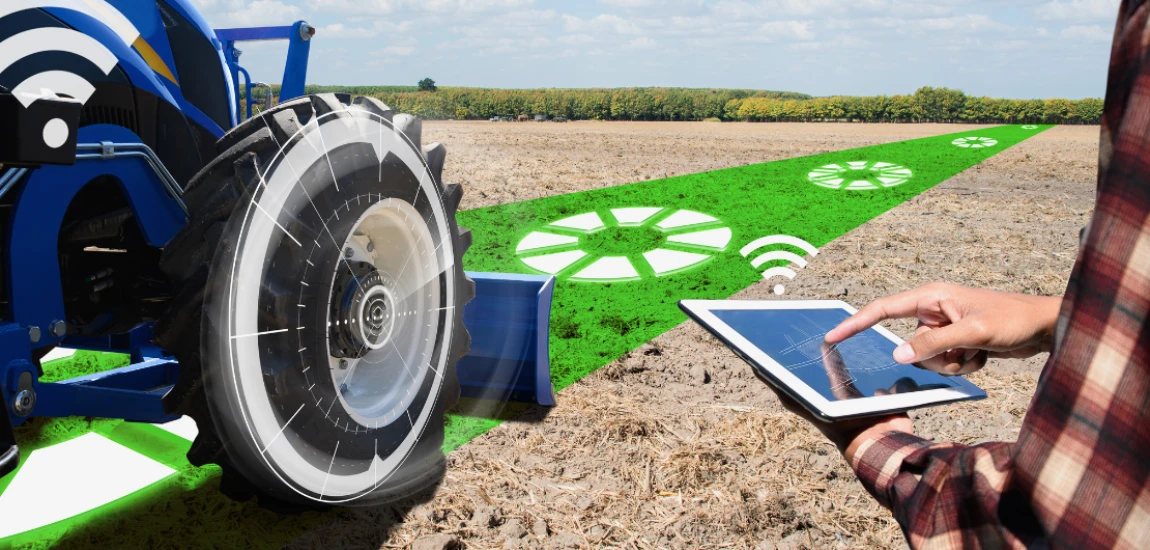
Global agriculture is undergoing one of the most significant technological transformations in history. As the world's population continues to grow, farmers face increasing challenges related to food demand, climate change, shrinking arable land, water scarcity, labor shortages, and environmental sustainability. Traditional farming methods alone may struggle to meet future food requirements while maintaining ecological balance. To address these challenges, researchers and agricultural innovators are developing intelligent technologies capable of transforming every stage of food production.
Artificial intelligence, robotics, Internet of Things (IoT) sensors, autonomous machinery, satellite monitoring, cloud computing, and predictive analytics are creating entirely new possibilities for farming. These technologies allow agricultural systems to collect real-time information, automate repetitive operations, optimize resource utilization, and improve crop productivity with remarkable precision.
Autonomous Agricultural Intelligence Ecosystems and Fully Automated Food Production Technologies represent the next generation of smart farming. These integrated ecosystems combine intelligent decision-making platforms with autonomous equipment, connected sensors, robotic harvesters, and AI-powered analytics to create highly efficient agricultural environments capable of operating with minimal human intervention.
Rather than relying solely on manual observation and fixed schedules, future farms may continuously monitor soil conditions, weather patterns, crop health, pest activity, and equipment performance while automatically adjusting farming operations in response to changing conditions. As agriculture becomes increasingly data-driven, intelligent automation has the potential to improve food security, reduce waste, increase productivity, and promote long-term environmental sustainability.
Understanding Autonomous Agricultural Intelligence Ecosystems

The Evolution of Smart Agriculture
Agriculture has progressed from manual cultivation to mechanized farming, precision agriculture, and now toward fully autonomous ecosystems. Modern farms increasingly rely on digital technologies to monitor crops, optimize field operations, and improve production efficiency.
Autonomous Agricultural Intelligence Ecosystems extend these advancements by integrating artificial intelligence, robotics, environmental sensing, cloud computing, and machine learning into unified agricultural platforms. These ecosystems continuously collect information from fields, greenhouses, irrigation systems, weather stations, and autonomous machinery to create a comprehensive understanding of farming conditions.
Unlike traditional management methods that depend on periodic observations, intelligent ecosystems analyze agricultural data continuously and make real-time operational adjustments. This capability enables farms to respond rapidly to changing environmental conditions while improving productivity and reducing unnecessary resource consumption.
Artificial Intelligence as the Decision Engine
Artificial intelligence serves as the central intelligence layer within autonomous agricultural ecosystems. AI algorithms process vast datasets related to soil quality, weather forecasts, crop growth, water availability, nutrient levels, pest populations, and market demand.
Machine learning models identify patterns that may not be visible through conventional analysis, allowing farmers to predict crop performance, optimize planting schedules, and minimize production risks. Continuous learning enables these systems to improve recommendations over time.
AI-powered decision support transforms farming into a proactive and adaptive process.
Connected Agricultural Infrastructure
Future agricultural ecosystems will consist of interconnected devices and intelligent platforms communicating seamlessly across entire farming operations. Sensors, drones, robotic equipment, irrigation systems, storage facilities, and logistics platforms will exchange information automatically.
This connectivity improves coordination between production, harvesting, storage, and distribution while reducing operational inefficiencies.
Fully Automated Food Production Technologies

Robotic Farming Operations
Automation is rapidly transforming agricultural labor. Autonomous tractors, robotic seeders, automated sprayers, harvesting robots, and precision cultivation equipment can perform repetitive tasks with exceptional accuracy.
These machines operate continuously, reducing labor requirements while increasing consistency and efficiency. AI-guided robotics can identify individual plants, distinguish crops from weeds, and apply treatments only where necessary.
Robotic agriculture supports both productivity and sustainability.
Intelligent Crop Monitoring Systems
Modern food production increasingly depends on continuous environmental monitoring. Drones, satellite imagery, multispectral cameras, and IoT sensors provide detailed insights into crop health, soil moisture, nutrient conditions, and disease development.
Artificial intelligence analyzes this information to detect problems before they become visible to the human eye.
Early intervention reduces crop losses and improves harvest quality.
Automated Harvesting and Post-Harvest Management
Harvest timing significantly affects crop quality and profitability. AI-powered harvesting systems evaluate crop maturity using computer vision and sensor technologies.
Following harvest, automated sorting, packaging, quality inspection, and storage systems maintain product freshness while minimizing waste.
Integrated automation improves supply chain efficiency.
Precision Resource Management and Sustainable Farming

Smart Water Management
Water scarcity represents one of agriculture's greatest challenges. Intelligent irrigation systems continuously monitor soil moisture, weather forecasts, and crop water requirements to deliver precise irrigation only when needed.
Automated water management reduces waste while improving crop health and productivity.
Efficient irrigation contributes to long-term sustainability.
Precision Nutrient Optimization
Fertilizer application can be optimized through AI-powered analysis of soil chemistry and plant nutrient requirements.
Variable-rate application technologies distribute fertilizers precisely where needed, minimizing environmental impacts while improving crop growth.
Targeted nutrient management increases efficiency and reduces costs.
Climate-Adaptive Agricultural Systems
Climate variability creates uncertainty for agricultural production. Autonomous ecosystems use predictive analytics to anticipate changing weather conditions and adjust farming operations accordingly.
Adaptive farming improves resilience against droughts, floods, heat waves, and other environmental challenges.
AI-Driven Food Supply Chains and Global Food Security

Intelligent Supply Chain Coordination
Food production extends beyond cultivation. Autonomous systems coordinate harvesting schedules, transportation logistics, storage facilities, inventory management, and market distribution.
Integrated platforms reduce delays and improve operational efficiency throughout the food supply chain.
Efficient logistics help reduce food waste.
Predictive Food Demand Analysis
Artificial intelligence analyzes consumer behavior, population trends, weather patterns, and economic conditions to forecast future food demand.
Farmers and distributors can align production with market needs, minimizing overproduction and shortages.
Predictive planning strengthens food system resilience.
Supporting Global Food Security
As populations continue growing, intelligent agricultural technologies may play a critical role in ensuring reliable access to nutritious food.
Automation, precision farming, and AI-driven planning improve agricultural productivity while promoting environmental sustainability.
Future food systems depend on intelligent resource management.


Operating "The Blonde Abroad," Kiersten Rich specializes in solo female travel. Her blog provides destination guides, packing tips, and travel resources.
Kiersten Rich

Prev Post

Next Post