
Interplanetary Transportation Networks and the Future of Deep-Space Mobility Systems
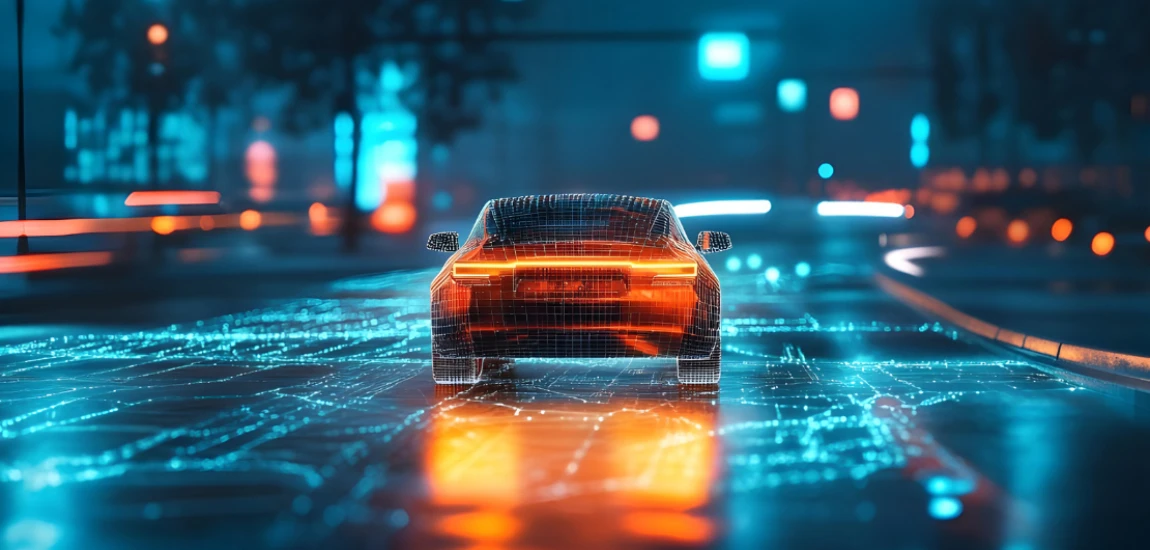
As humanity enters a new era of space exploration, the vision of establishing permanent settlements beyond Earth is becoming increasingly realistic. Missions to the Moon, Mars, and potentially even more distant destinations require transportation systems that are far more advanced than today's launch-and-return missions. Future space exploration will depend on reliable, efficient, and sustainable transportation networks capable of connecting planets, moons, orbital stations, and deep-space research facilities.
Current spacecraft are designed primarily for individual missions, but future interplanetary civilization will require an integrated transportation ecosystem similar to modern aviation and global shipping networks. Artificial intelligence, autonomous spacecraft, reusable launch vehicles, advanced propulsion systems, orbital logistics hubs, and intelligent navigation technologies are expected to form the foundation of these next-generation mobility systems.
Interplanetary Transportation Networks and Deep-Space Mobility Systems represent a comprehensive vision for creating an interconnected space transportation infrastructure. These intelligent systems would enable routine travel between celestial bodies, improve cargo delivery efficiency, support scientific exploration, and facilitate long-term human expansion throughout the solar system.
Although many of these concepts remain under active research and development, rapid progress in aerospace engineering, robotics, AI, and propulsion technologies continues to bring them closer to reality. The future of humanity may depend on building transportation systems capable of supporting life and commerce far beyond Earth.
Understanding Interplanetary Transportation Networks

Evolution from Space Missions to Space Infrastructure
Traditional space exploration has focused on isolated missions with clearly defined objectives. Future exploration will require continuous transportation systems capable of supporting thousands of missions over many decades.
Interplanetary Transportation Networks envision a permanent transportation infrastructure connecting Earth with orbital stations, lunar bases, Mars colonies, asteroid mining operations, and scientific research facilities. Rather than relying solely on individual launches, reusable spacecraft, orbital transfer vehicles, and automated logistics platforms would create a reliable transportation ecosystem that functions continuously.
These networks would operate much like international transportation systems on Earth, allowing passengers, cargo, scientific equipment, and essential supplies to move efficiently between destinations. Intelligent scheduling systems would coordinate launches, docking procedures, maintenance operations, and emergency responses, creating a seamless mobility experience across space.
AI-Powered Navigation and Route Optimization
Artificial intelligence will play a critical role in managing the complexity of interplanetary transportation. Future spacecraft may continuously analyze orbital mechanics, fuel efficiency, gravitational influences, solar activity, and mission priorities to determine optimal travel routes.
AI-driven navigation systems could dynamically adjust trajectories, avoid hazards, and improve mission safety without requiring constant intervention from Earth-based control centers. This level of autonomy becomes increasingly important as communication delays grow during deep-space travel.
Building Reliable Space Logistics Systems
Transportation networks depend on effective logistics management. Future space logistics platforms may coordinate cargo transfers, refueling operations, spacecraft maintenance, inventory management, and emergency resource allocation.
Integrated logistics systems improve efficiency while reducing operational costs and mission risks.
Advanced Propulsion Technologies for Deep-Space Mobility

Beyond Conventional Rocket Engines
Chemical rockets have enabled humanity's first ventures into space, but their efficiency limits long-duration exploration. Future deep-space transportation will likely rely on advanced propulsion technologies capable of producing greater efficiency and higher travel speeds.
Researchers are exploring nuclear thermal propulsion, nuclear electric propulsion, ion engines, plasma propulsion, solar sails, and other innovative concepts that could significantly reduce travel times between planets.
Improved propulsion systems are essential for expanding human activity throughout the solar system.
Autonomous Propulsion Management
Future spacecraft may incorporate intelligent propulsion control systems capable of monitoring engine performance, fuel consumption, structural integrity, and environmental conditions in real time.
Artificial intelligence could optimize engine operation throughout missions, improving reliability and maximizing energy efficiency while adapting to changing mission requirements.
Sustainable Energy for Space Transportation
Long-duration missions require dependable energy sources. Advanced solar arrays, compact nuclear reactors, energy storage technologies, and future power-generation concepts may support continuous spacecraft operations.
Reliable energy systems are fundamental to sustainable deep-space mobility.
Autonomous Spacecraft and Intelligent Mobility Systems

Self-Governing Deep-Space Vehicles
Communication delays make autonomous spacecraft essential for future interplanetary travel. Intelligent onboard systems can manage navigation, resource allocation, diagnostics, maintenance, and scientific operations independently.
These autonomous capabilities reduce operational risks while increasing mission flexibility and efficiency.
Predictive Maintenance and Self-Repair
Long-distance missions require spacecraft capable of identifying technical issues before they become critical. AI-driven diagnostic systems continuously monitor onboard equipment and structural components.
Combined with robotic maintenance technologies, future spacecraft may perform inspections, repairs, and system optimization without direct human intervention.
Self-maintaining spacecraft improve mission longevity and reliability.
Intelligent Fleet Coordination
Future transportation networks may consist of multiple autonomous spacecraft operating collaboratively. AI systems could coordinate departures, arrivals, cargo transfers, emergency assistance, and maintenance scheduling across entire fleets.
Fleet intelligence improves transportation capacity and operational resilience.
Building Interplanetary Infrastructure

Orbital Stations and Transportation Hubs
Permanent orbital stations may serve as central transportation hubs where spacecraft dock, refuel, exchange cargo, and undergo maintenance before continuing their journeys.
These facilities would function similarly to airports and seaports on Earth, supporting efficient movement throughout the solar system.
Transportation hubs strengthen network connectivity and reduce mission complexity.
Lunar and Martian Logistics Centers
Future colonies on the Moon and Mars will require sophisticated logistics infrastructure capable of supporting human populations and industrial operations.
Automated warehouses, resource processing facilities, manufacturing centers, and transportation terminals could create self-sustaining supply chains for long-term exploration.
Localized infrastructure reduces dependence on Earth-based support.
Space Resource Utilization
Extracting water, metals, and other resources from asteroids, the Moon, and Mars may significantly reduce transportation costs.
In-space resource utilization enables local production of fuel, construction materials, and life-support supplies, making future transportation systems more sustainable.


Gilbert Ott, the man behind "God Save the Points," specializes in travel deals and luxury travel. He provides expert advice on utilizing rewards and finding travel discounts.
Gilbert Ott
Prev Post
Next Post