
AI-Orchestrated Fusion Energy Systems and the Future of Limitless Clean Power Generation
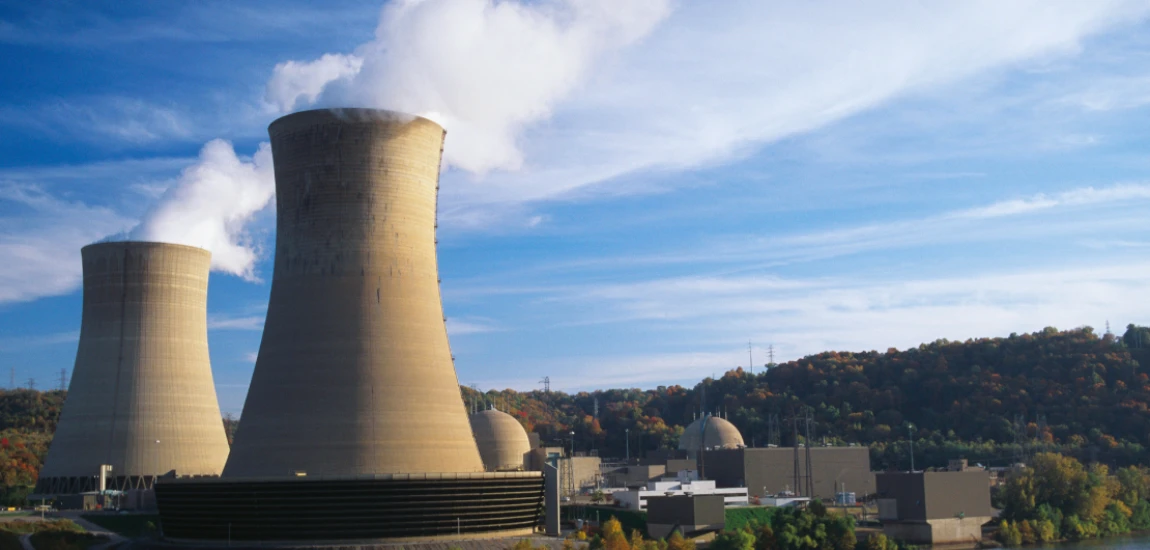
The global demand for clean, reliable, and virtually limitless energy has never been greater. As climate change accelerates and traditional fossil fuel resources continue to decline, humanity is urgently seeking alternatives that can power civilization sustainably. Among all emerging energy technologies, nuclear fusion stands out as the most promising long-term solution.
Fusion energy replicates the same process that powers the sun and stars—combining light atomic nuclei to release massive amounts of energy. Unlike nuclear fission, fusion produces no long-lived radioactive waste, emits no greenhouse gases during operation, and relies on abundant fuel sources such as hydrogen isotopes. However, achieving controlled and sustained fusion reactions on Earth is extremely complex due to the extreme temperatures, pressures, and plasma instability involved.
This is where artificial intelligence is transforming the field. AI-orchestrated fusion energy systems are emerging as a revolutionary approach to solving the challenges of plasma control, reactor optimization, and real-time energy management. By integrating machine learning, advanced sensors, predictive modeling, and autonomous control systems, researchers are making fusion energy more stable, efficient, and closer to commercial viability.
As global investment in fusion research accelerates, AI-driven control systems are becoming essential for managing the extreme complexity of fusion reactors. These intelligent systems could ultimately unlock the long-awaited promise of limitless clean power generation, fundamentally transforming global energy infrastructure.
Understanding the Foundations of Fusion Energy Systems

What Is Nuclear Fusion?
Nuclear fusion is the process in which two light atomic nuclei combine to form a heavier nucleus, releasing energy in the process. This reaction powers stars, including our sun, and produces enormous amounts of energy with minimal environmental impact.
The most common fuels for fusion reactions are isotopes of hydrogen, such as deuterium and tritium. When these isotopes are heated to extremely high temperatures, they form a plasma state where electrons are separated from nuclei. Under the right conditions, these particles collide and fuse, releasing energy in the form of heat.
Fusion is considered one of the most promising energy sources because it produces no carbon emissions and generates far less radioactive waste compared to traditional nuclear power.
The Challenge of Plasma Control
Despite its potential, fusion energy is extremely difficult to achieve on Earth. The plasma required for fusion must reach temperatures exceeding tens of millions of degrees Celsius, making it impossible to contain using conventional materials.
Instead, scientists use magnetic confinement systems such as tokamaks and stellarators to удерж plasma in place. However, plasma is highly unstable and can quickly lose energy if not carefully controlled.
Maintaining stability requires precise adjustments in magnetic fields, temperature, density, and pressure—an area where traditional control systems struggle to keep up with real-time dynamics.
Why Fusion Matters for the Future
Fusion energy has the potential to revolutionize global power generation. It offers a nearly inexhaustible energy source, as hydrogen isotopes can be extracted from water and lithium.
Unlike fossil fuels, fusion does not contribute to climate change, and unlike fission, it avoids long-lived radioactive waste issues.
If successfully commercialized, fusion could provide clean, safe, and continuous energy for millions of years.
The Role of Artificial Intelligence in Fusion Energy Systems

AI-Driven Plasma Control
Artificial intelligence is transforming how fusion reactors are operated by enabling real-time plasma control. Machine learning algorithms analyze data from thousands of sensors inside the reactor to predict plasma behavior and adjust magnetic fields accordingly.
This dynamic control helps prevent instabilities such as plasma disruptions, which can damage reactor components and interrupt energy production.
AI systems continuously learn from experimental data, improving their ability to maintain stable fusion conditions over time.
Predictive Modeling and Simulation
Before running physical experiments, researchers use AI-powered simulations to model plasma behavior under different conditions. These simulations allow scientists to test reactor configurations, magnetic field designs, and fuel mixtures without risking costly failures.
Advanced neural networks can simulate complex plasma physics faster than traditional computational models, accelerating research and development cycles.
This predictive capability significantly reduces experimentation costs and improves reactor design efficiency.
Autonomous Reactor Optimization
AI systems are increasingly being used to optimize fusion reactor performance autonomously. These systems adjust operational parameters in real time to maximize energy output while minimizing instability risks.
By continuously analyzing performance metrics, AI can identify inefficiencies and recommend or implement corrective actions instantly.
This level of automation is essential for making fusion reactors commercially viable.
Core Technologies Behind AI-Orchestrated Fusion Systems

Magnetic Confinement Systems
Magnetic confinement is the primary method used to contain fusion plasma. Devices such as tokamaks use powerful magnetic fields to hold plasma in a stable configuration.
AI enhances these systems by dynamically adjusting magnetic field strength and geometry based on real-time plasma conditions.
This allows for more precise control and improved reactor stability compared to traditional manual or rule-based systems.
High-Performance Computing and Data Processing
Fusion reactors generate enormous amounts of data from sensors monitoring temperature, pressure, magnetic fields, and particle behavior.
High-performance computing systems process this data in real time, enabling AI algorithms to make rapid decisions.
Cloud-based and distributed computing architectures are increasingly being integrated into fusion research facilities to support large-scale simulations and control systems.
Advanced Sensor Networks
Sensor networks are critical for monitoring plasma behavior inside fusion reactors. These sensors collect data on temperature fluctuations, particle density, magnetic field strength, and energy output.
AI systems rely on this data to detect anomalies and adjust reactor conditions instantly.
As sensor technology improves, the accuracy and responsiveness of fusion control systems will continue to increase.
Applications of Fusion Energy in the Future Energy Ecosystem

Global Clean Energy Supply
Fusion energy has the potential to provide virtually unlimited clean electricity for the entire planet. Unlike renewable sources such as solar and wind, fusion can generate constant baseload power regardless of weather or location.
This makes it a strong candidate for replacing fossil fuels and stabilizing global energy grids.
Countries investing in fusion research aim to achieve energy independence and long-term sustainability.
Industrial and Manufacturing Power
Fusion energy could revolutionize industrial production by providing extremely high energy output for manufacturing processes.
Industries such as steel production, chemical processing, and advanced materials manufacturing could benefit from stable and abundant energy supply.
This would reduce costs and improve efficiency across global supply chains.
Space Exploration and Deep-Space Missions
Fusion energy is also being explored as a potential propulsion system for deep-space missions. Fusion-powered spacecraft could travel faster and farther than conventional chemical rockets.
This could enable human exploration of Mars, outer planets, and even interstellar space in the distant future.
Fusion propulsion systems could dramatically reduce travel times across the solar system.


Derek Baron, also known as "Wandering Earl," offers an authentic look at long-term travel. His blog contains travel stories, tips, and the realities of a nomadic lifestyle.
Derek Baron

Prev Post

Next Post