
Cross-Reality Computing and Seamless Integration of Virtual and Physical Worlds
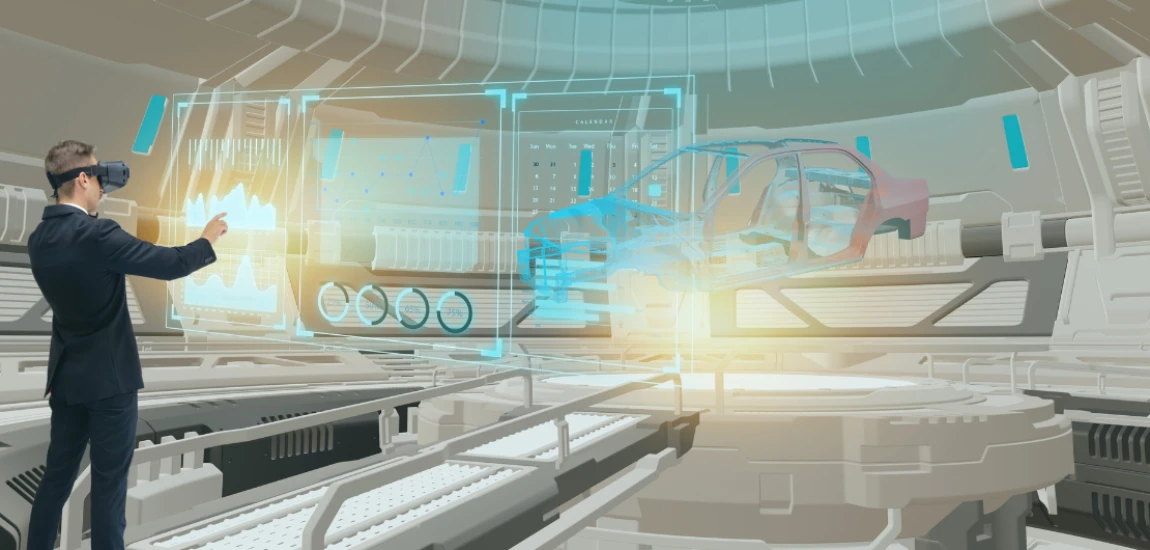
The convergence of the virtual and physical worlds is no longer a futuristic concept—it is happening now through cross-reality (XR) computing. XR combines virtual reality (VR), augmented reality (AR), and mixed reality (MR) to create immersive, interactive experiences where digital and physical spaces overlap seamlessly.
Cross-reality computing leverages advanced sensors, AI, spatial computing, and high-performance graphics to create environments that adapt to user behavior and real-world conditions. Unlike traditional VR or AR applications, XR systems enable real-time interaction between physical objects and digital content, fostering new levels of collaboration, learning, and entertainment.
This technology has far-reaching implications across industries—from immersive education and remote work to healthcare, urban planning, and entertainment. In this blog, we will explore the core principles of cross-reality computing, its technologies, applications, benefits, challenges, and the future potential of seamlessly integrating the virtual and physical worlds.
Understanding Cross-Reality Computing

Defining Cross-Reality and XR Systems
Cross-reality computing is the convergence of multiple realities—physical, virtual, and augmented—into a single interactive ecosystem. XR systems allow users to navigate, interact, and manipulate virtual objects as if they coexist with the physical world.
This integration is achieved through devices like AR glasses, VR headsets, and mixed-reality displays, combined with software platforms that synchronize real-world and virtual data streams. XR enables experiences that are immersive, contextually aware, and responsive to user input in real time.
Key Technologies Enabling XR
Several core technologies underpin cross-reality computing. Spatial mapping and 3D modeling allow digital content to align accurately with physical objects. Advanced sensors and cameras track user movements and environmental changes. AI algorithms optimize object interactions, predict behavior, and enhance realism.
High-performance graphics processing, cloud computing, and edge computing ensure smooth rendering of complex XR environments, while network protocols enable low-latency, multi-user collaboration across vast distances.
Blending Virtual and Physical Worlds
The defining feature of cross-reality computing is the seamless integration of digital and physical experiences. Unlike conventional VR, which isolates users, XR overlays or embeds virtual content into the real world, allowing interaction with physical objects and surroundings.
This capability transforms human-computer interaction, making experiences more intuitive, immersive, and contextually meaningful. It enables applications ranging from virtual training and remote collaboration to immersive entertainment and urban planning simulations.
Core Components of Cross-Reality Computing

Immersive Display Technologies
The foundation of XR lies in immersive display technologies such as AR glasses, VR headsets, and mixed-reality headsets. These devices provide users with spatially accurate visual overlays or fully immersive virtual environments.
Holographic displays, transparent OLEDs, and light-field technology further enhance realism by projecting 3D content that blends seamlessly with the physical world. These technologies allow users to perceive depth, scale, and interaction cues naturally.
Sensors and Environmental Mapping
XR systems rely on an array of sensors—cameras, LiDAR, depth sensors, accelerometers, and gyroscopes—to understand the environment and user behavior. Environmental mapping creates a 3D model of the physical space, enabling digital content to anchor, align, and interact with real-world objects accurately.
This capability is essential for applications like remote collaboration, interactive gaming, and immersive training, where precise alignment between virtual and physical elements is crucial for user immersion and effectiveness.
AI and Real-Time Processing
Artificial intelligence enhances cross-reality computing by enabling predictive analytics, object recognition, and adaptive content rendering. AI algorithms anticipate user actions, optimize rendering, and maintain fluid interactions, ensuring seamless integration between virtual and physical spaces.
Real-time processing, powered by high-performance GPUs and edge computing, ensures that XR experiences are responsive, minimizing lag and maintaining continuity in user interactions.
Applications Across Industries

Education and Training
Cross-reality computing has transformed learning by creating immersive, interactive educational environments. Students can explore virtual laboratories, historical simulations, or anatomical models that blend with the classroom environment.
In professional training, XR enables realistic simulations for healthcare, aviation, manufacturing, and military operations. Trainees can practice high-risk tasks safely while receiving real-time feedback, improving skill retention and performance outcomes.
Healthcare and Therapy
XR applications in healthcare include surgical planning, rehabilitation, mental health therapy, and patient education. Surgeons can overlay digital scans onto physical anatomy for precise procedures, while therapists use XR environments for cognitive and physical rehabilitation.
By combining virtual guidance with physical interaction, XR improves treatment efficacy and patient engagement, enabling more personalized and adaptive healthcare solutions.
Urban Planning and Architecture
Architects and urban planners use XR to visualize building projects, infrastructure, and city layouts in real-world contexts. Digital twins of physical spaces allow planners to simulate traffic flows, energy efficiency, and environmental impact before construction begins.
This capability reduces planning errors, optimizes resource allocation, and facilitates collaborative decision-making between stakeholders in both local and global projects.
Benefits of Cross-Reality Computing

Enhanced Immersion and User Engagement
By merging virtual and physical worlds, XR offers unparalleled immersion and interactivity. Users can engage with digital content intuitively, creating deeper understanding and retention in education, training, and entertainment.
The multisensory nature of XR—visual, auditory, and sometimes haptic feedback—strengthens engagement and emotional connection, making experiences more memorable and impactful.
Improved Collaboration and Remote Work
XR enables real-time collaboration across geographies by allowing participants to interact with shared digital content in physical or virtual environments. Teams can conduct design reviews, meetings, or training sessions as if they were co-located, reducing travel costs and improving productivity.
Shared XR workspaces also enable simultaneous input and dynamic visualization of complex data, supporting better decision-making and innovation.
Innovation and Operational Efficiency
Cross-reality computing accelerates innovation by allowing virtual prototyping, scenario testing, and rapid iteration. Industries such as manufacturing, logistics, and construction benefit from reduced errors, optimized processes, and more efficient workflows.
By integrating real-world constraints into digital simulations, XR systems help organizations predict outcomes, optimize resources, and make informed decisions faster.


Known as "Nomadic Matt," Matthew Kepnes offers practical travel advice with a focus on budget backpacking. His blog aims to help people travel cheaper and longer.
Matthew Kepnes

Prev Post

Next Post