
Tourism Footprint Intelligence – Tracking the Real Environmental and Economic Impact of Travel
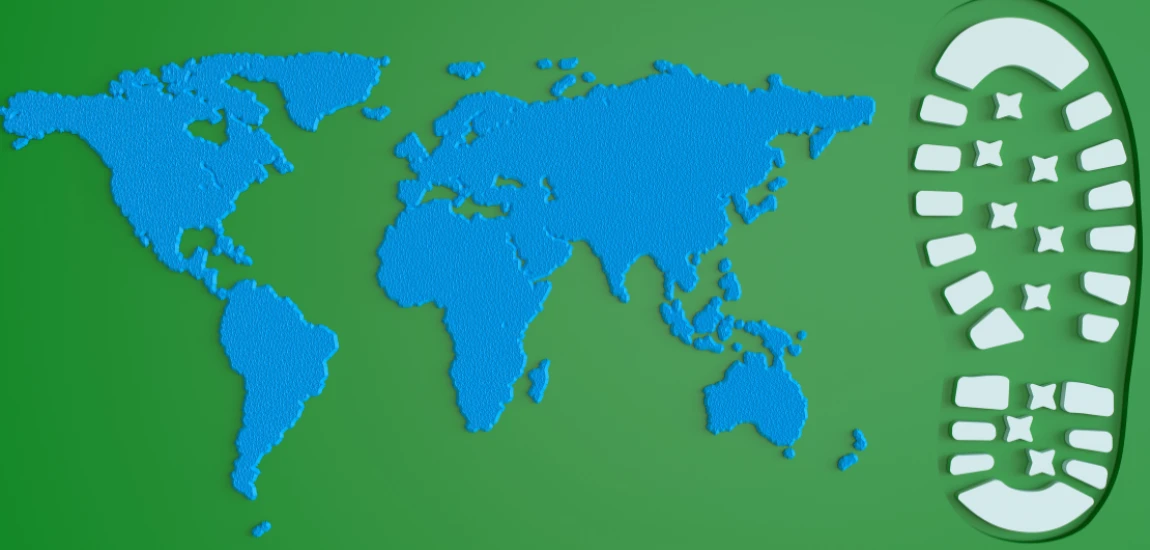
Tourism creates enormous opportunities for destinations. It supports hotels, restaurants, transportation companies, attractions, local shops, guides, artisans, and many other businesses. Travel can create employment, generate tax revenue, encourage infrastructure development, and provide communities with new economic opportunities.
At the same time, tourism has an environmental and economic footprint that is not always easy to see.
A destination may receive millions of visitors and report strong tourism revenue while experiencing rising waste, water consumption, energy demand, transport emissions, ecosystem damage, housing pressure, and economic leakage. Traditional tourism statistics often focus on visitor arrivals, hotel occupancy, spending, and length of stay. These numbers are useful, but they do not always explain the complete impact of tourism.
This is where Tourism Footprint Intelligence becomes increasingly important.
Tourism footprint intelligence uses data, measurement systems, digital technologies, environmental indicators, and economic analysis to understand what tourism actually consumes, produces, supports, and affects. Instead of asking only how many tourists arrived, destinations can ask deeper questions: How much water did tourism use? How much waste did visitors generate? How much carbon was associated with travel? How much money remained within the local economy? Which communities benefited? Which natural resources experienced the greatest pressure?
By connecting environmental and economic information, destination managers can make better decisions.
The goal is not necessarily to reduce tourism. Instead, tourism footprint intelligence helps destinations increase the value of tourism while reducing unnecessary environmental pressure and economic leakage.
Understanding Tourism Footprint Intelligence

Tourism footprint intelligence is a data-driven approach to measuring the wider effects of tourism. It provides destinations with a clearer picture of how travel affects natural resources, infrastructure, businesses, communities, and local economies.
Measuring More Than Visitor Numbers
Visitor arrivals are one of the most common tourism indicators. However, two destinations with the same number of tourists can have completely different impacts.
A destination where visitors stay for several nights, use public transportation, purchase local products, and participate in low-impact experiences may generate greater local economic value with a different environmental footprint than a destination dominated by short visits and resource-intensive activities.
Tourism footprint intelligence therefore looks beyond arrival numbers.
It can examine visitor spending, transportation patterns, energy consumption, water use, waste generation, emissions, accommodation activity, local procurement, employment, and other indicators.
This creates a more complete understanding of tourism performance.
Connecting Environmental and Economic Data
Environmental and economic impacts are often measured separately.
Tourism authorities may track visitor spending while environmental organizations measure carbon emissions or water consumption.
Tourism footprint intelligence connects these areas.
For example, destination managers can compare tourism revenue with resource consumption. They can ask whether a tourism activity produces strong economic benefits while requiring relatively low environmental resources.
This allows destinations to identify tourism activities that create higher value with lower impact.
Why Better Measurement Matters
Without accurate information, tourism planning can rely heavily on assumptions.
Data can reveal where problems are developing before they become serious.
If water consumption increases faster than tourism revenue, managers may need to investigate. If local economic participation is declining despite rising visitor spending, policies may need to change.
Measurement turns tourism sustainability from a general ambition into something that can be monitored and improved.
Tracking the Environmental Footprint of Travel

Travel affects the environment through transportation, accommodation, food, recreation, construction, energy use, water consumption, and waste. Tourism footprint intelligence helps destinations understand these pressures more clearly.
Measuring Carbon and Transportation Impacts
Transportation is an important part of the tourism footprint.
Flights, private vehicles, buses, trains, boats, taxis, and other forms of mobility can generate different levels of emissions.
Destinations can use transportation data to understand how visitors arrive and move around once they reach the destination.
This information can support better mobility planning.
For example, destinations may encourage public transportation, walking, cycling, shared mobility, and lower-emission transportation options where practical.
The objective is not simply to count emissions but to identify opportunities for reducing them.
Monitoring Water and Energy Consumption
Hotels, resorts, restaurants, attractions, and other tourism facilities consume water and energy.
In water-stressed destinations, tourism demand can place significant pressure on local supplies.
Tourism footprint intelligence can compare resource consumption with occupancy, visitor numbers, and business activity.
This makes it possible to identify inefficient facilities and high-pressure periods.
Smart meters, building management systems, and digital monitoring platforms can provide more detailed information about consumption patterns.
Understanding Waste Generation
Tourism also creates waste through food services, packaging, accommodation, events, transportation, and visitor activities.
Waste data can help destinations understand which tourism areas generate the greatest pressure.
Hotels may monitor food waste. Attractions may track visitor-related waste. Tourism districts can measure recycling and disposal volumes.
These insights can support better waste reduction, recycling, reuse, and circular tourism strategies.
Measuring the Economic Footprint of Tourism

Tourism generates economic activity, but not all tourism spending remains within the destination. Measuring the economic footprint helps identify where tourism creates value and where money leaves the local economy.
Understanding Tourism Revenue
Visitor spending can support accommodation, restaurants, attractions, transportation, retail, entertainment, and other services.
However, total visitor spending does not necessarily equal the amount retained locally.
A destination may have high tourism revenue while a significant share goes to external hotel groups, international booking platforms, imported products, or outside suppliers.
Tourism footprint intelligence can help identify these patterns.
Tracking Economic Leakage
Economic leakage occurs when tourism-related money leaves the destination instead of circulating within the local economy.
For example, a hotel may purchase food, furniture, equipment, and services from companies outside the region.
The visitor spends money locally, but only part of that spending supports local businesses and workers.
By tracking supply chains and procurement, destinations can identify opportunities to increase local sourcing.
Measuring Local Economic Benefits
A stronger tourism economy should benefit local communities.
Important indicators can include local employment, wages, locally owned businesses, community investment, local procurement, and household income connected to tourism.
These measurements provide a more meaningful picture of tourism's economic contribution.
The key question becomes not simply "How much money does tourism generate?" but "How much lasting economic value does tourism create locally?"
Using Data and Technology to Track Tourism Footprints

Technology is making it easier for destinations to collect, analyze, and visualize tourism impact data.
Smart Destination Data Systems
Modern destinations can combine information from hotels, transportation networks, attractions, utilities, businesses, environmental sensors, and visitor management platforms.
A centralized tourism intelligence system can bring these data sources together.
Destination managers can then examine relationships between tourism demand and environmental or economic impacts.
For example, they might compare visitor numbers with water consumption, energy demand, traffic levels, waste generation, and local spending.
Artificial Intelligence and Predictive Analytics
Artificial intelligence can help analyze large tourism datasets and identify patterns that may not be obvious through manual analysis.
AI systems can detect unusual resource consumption, predict periods of high environmental pressure, and identify changing visitor behavior.
Predictive analytics can also help destinations test possible scenarios.
Managers could estimate how a new attraction, hotel development, transportation change, or tourism campaign might affect resource demand and economic activity.
This supports more proactive destination management.
Digital Dashboards and Real-Time Monitoring
Tourism footprint dashboards can turn complex data into understandable indicators.
A destination manager could monitor environmental pressure, visitor activity, economic performance, and infrastructure demand through a single platform.
Real-time or frequently updated information can help decision-makers respond more quickly.
The value of technology, however, depends on data quality, privacy protection, appropriate governance, and clear measurement standards.


Ben Schlappig runs "One Mile at a Time," focusing on aviation and frequent flying. He offers insights on maximizing travel points, airline reviews, and industry news.
Ben Schlappig

Prev Post

Next Post