
Intelligent Travel Accessibility Systems – Making Journeys Accessible for Diverse Travelers
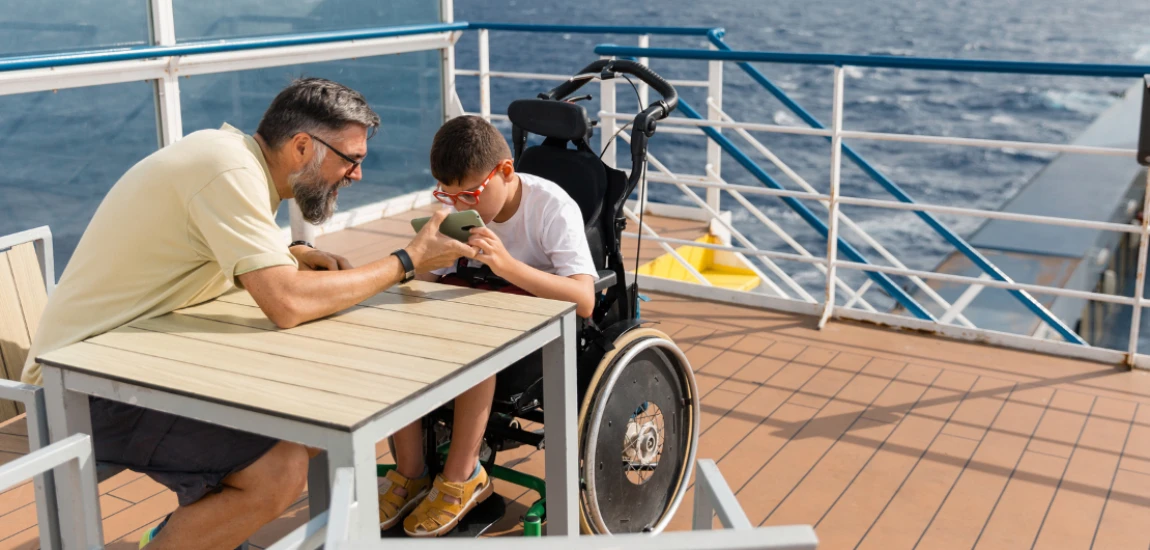
Travel should allow people to explore new destinations with confidence, independence, and comfort. Yet many travelers encounter barriers that make journeys unnecessarily difficult. These barriers can appear at airports, train stations, hotels, attractions, restaurants, public transportation systems, streets, and digital travel platforms.
Accessibility is not limited to wheelchair access. Travelers can have different mobility, sensory, cognitive, communication, or other access requirements. Some travelers may need step-free routes, accessible transportation, quiet spaces, clear signage, captioned information, accessible bathrooms, assistance services, or easy-to-understand instructions.
Traditional accessibility planning often focuses on individual facilities. Intelligent Travel Accessibility Systems take a broader approach by connecting accessibility information, infrastructure, transportation, digital technology, tourism services, and traveler needs into a more integrated system.
Smart technology can help travelers identify accessible routes, compare transportation options, understand facility features, request assistance, and receive personalized information. Destination managers can also use data to identify accessibility gaps and improve tourism infrastructure.
The objective is not simply to create accessible attractions. It is to create an accessible travel ecosystem in which travelers can move from one stage of their journey to another without unnecessary barriers.
For destinations, intelligent accessibility can also improve visitor satisfaction, expand tourism participation, support inclusive tourism, and encourage businesses to adopt universal design principles.
Understanding Intelligent Travel Accessibility Systems

Intelligent Travel Accessibility Systems are connected approaches that use technology, accessibility data, inclusive infrastructure, and personalized services to improve travel experiences for people with diverse access requirements.
Instead of treating accessibility as an isolated feature, these systems consider the complete journey.
Connecting Accessibility Across the Travel Journey
A traveler may encounter many stages during one trip.
They might search for information online, travel to an airport, check in, use transportation, enter a hotel, visit attractions, eat at restaurants, and navigate unfamiliar streets.
If only one part of the journey is accessible, the traveler can still face major difficulties.
Intelligent accessibility systems connect these stages.
For example, a traveler can search for an accessible hotel and then receive information about accessible transportation between the airport and accommodation. The system can also identify step-free routes to nearby attractions.
This creates continuity throughout the journey.
Understanding Diverse Accessibility Needs
Accessibility requirements vary considerably.
A traveler using a wheelchair may need information about ramps, elevators, door widths, accessible bathrooms, and transportation vehicles. A traveler with hearing-related access needs may require captions, visual announcements, or text-based communication.
Travelers with visual access needs may benefit from audio descriptions, tactile information, screen-reader-compatible websites, and clear navigation.
People with cognitive or sensory needs may benefit from predictable routes, quiet environments, simple instructions, and reduced information overload.
Intelligent travel accessibility should therefore avoid assuming that one solution works for everyone.
Moving Toward Universal Travel Design
Universal design aims to make environments and services usable by as many people as possible without requiring separate solutions.
Accessible entrances, readable signage, step-free transportation, clear digital information, and flexible communication can benefit many travelers.
Parents with strollers, older travelers, people carrying luggage, and travelers temporarily recovering from injuries may also benefit from accessible infrastructure.
This makes accessibility a broader tourism quality issue rather than a niche requirement.
Using Smart Technology to Improve Travel Accessibility

Technology can significantly improve the way travelers discover and use accessible tourism services.
Digital systems can collect and organize information that would otherwise be difficult to find.
Creating Real-Time Accessibility Information
Accessibility information is most useful when it is accurate and current.
An intelligent travel platform could provide information about elevator availability, accessible entrances, transportation disruptions, temporary construction, accessible parking, or route changes.
Real-time information can help travelers adjust plans before they encounter a barrier.
For example, if an elevator at a transit station is temporarily unavailable, an accessibility system could suggest an alternative station or route.
This can reduce uncertainty and improve travel confidence.
Developing Accessible Navigation Tools
Navigation is one of the most important elements of an independent travel experience.
Standard maps may show the shortest route without considering accessibility.
An intelligent accessibility map can consider factors such as stairs, steep slopes, curb cuts, elevators, accessible entrances, pedestrian crossings, and surface conditions.
Travelers can select preferences such as:
Step-free routes
Wheelchair-friendly paths
Reduced walking distances
Accessible public transportation
Low-complexity routes
Quiet routes
Accessible facilities
The system can then provide a route that better matches the traveler's needs.
Using Artificial Intelligence Responsibly
Artificial intelligence can help organize large amounts of accessibility information and personalize travel recommendations.
AI-powered systems could identify patterns in accessibility data and help travelers find relevant facilities more efficiently.
However, accessibility information should not be generated solely from assumptions.
Reliable systems should use verified data, clearly communicate uncertainty, and allow travelers to report inaccurate information.
Human review and community feedback remain important.
Designing Accessible Transportation Networks

Transportation is a central component of accessible tourism. Even an accessible hotel or attraction can become difficult to reach if transportation systems are not inclusive.
Intelligent Travel Accessibility Systems can connect transportation information with traveler requirements.
Improving Public Transportation Access
Accessible buses, trains, stations, airports, and terminals can make independent travel easier.
Accessibility features can include ramps, elevators, low-floor vehicles, designated seating, accessible toilets, visual announcements, audio announcements, tactile indicators, and clear signage.
Digital systems can help travelers identify which transportation options contain the features they require.
Rather than simply showing a bus route, an accessibility platform can explain whether a particular vehicle or station meets a traveler's requirements.
Creating Accessible Route Planning
Route planning should consider more than distance and travel time.
An accessible route may need to avoid stairs, steep streets, narrow pathways, or inaccessible stations.
Intelligent route planning can combine geographic information with accessibility characteristics.
Travelers can therefore choose routes based on their personal requirements.
This can be particularly valuable in destinations with complex streets, historic architecture, hills, or inconsistent infrastructure.
Coordinating Assistance Services
Some travelers may require assistance during specific stages of a journey.
Airports, train stations, hotels, and attractions may offer assistance services that need to be requested in advance.
Connected systems can make this process easier.
Travelers could provide their accessibility requirements once and, where appropriate, communicate them to participating service providers.
This reduces repetitive communication and can make assistance planning more efficient.


Dave Lee runs "GoBackpacking," a blog that blends travel stories with how-to guides. He aims to inspire backpackers and offer them practical advice.
Dave Lee

Prev Post

Next Post