
Synthetic Reality Risks: Preparing for a World Where Seeing Is No Longer Believing
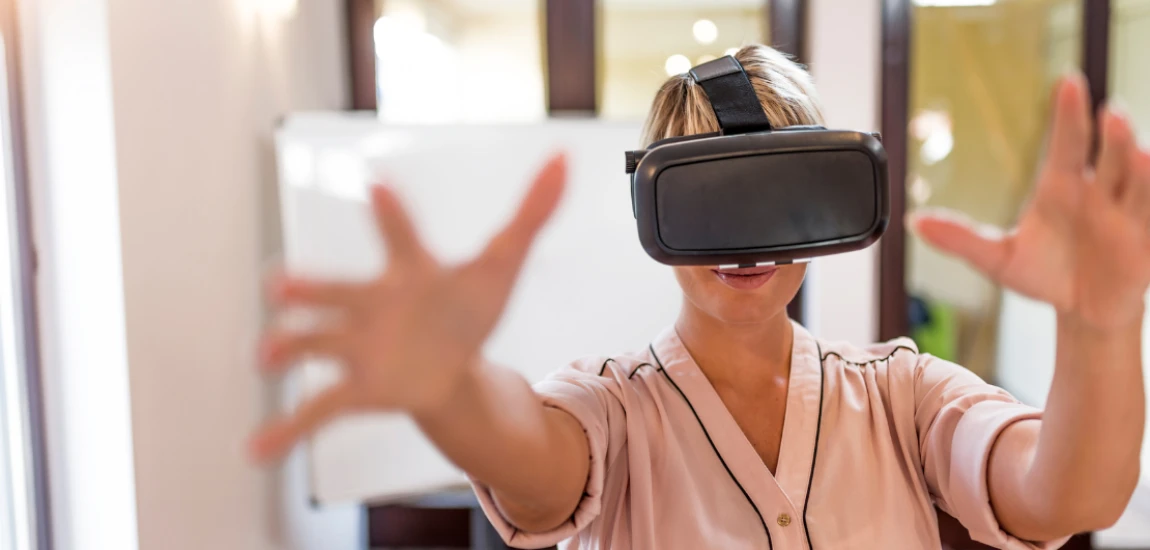
For centuries, visual evidence has been one of humanity’s strongest anchors to truth. Photographs, videos, and eyewitness footage have shaped history, journalism, justice, and collective memory. But that foundation is cracking. Advances in artificial intelligence have given rise to synthetic realities—AI-generated content that convincingly imitates the real world. Images, voices, videos, and entire environments can now be fabricated with alarming precision.
Synthetic reality risks go beyond misinformation. They challenge trust itself. When anything can be faked, certainty erodes. People begin to doubt not just media, but each other. This is not a distant future—it is unfolding now across politics, entertainment, finance, and everyday social interactions.
This article explores the growing risks of synthetic reality, how it alters human psychology and social systems, and what individuals and institutions can do to prepare for a world where seeing is no longer believing.
What Synthetic Reality Really Means

Synthetic reality refers to digitally generated or manipulated content that appears real but is entirely or partially artificial. Unlike traditional media editing, synthetic reality is powered by AI systems capable of learning, predicting, and generating human-like outputs at scale.
From digital editing to generative simulation
Earlier forms of manipulation required technical skill and were often detectable. Today’s AI-generated content is produced by models trained on massive datasets of real images, videos, and audio, allowing them to simulate reality with uncanny accuracy.
The collapse of visual certainty
Synthetic reality blurs the boundary between authentic and artificial. A video no longer guarantees that an event happened. A voice recording no longer proves someone spoke. This collapse fundamentally alters how humans evaluate evidence.
Synthetic environments beyond media
The concept extends beyond images and videos. Virtual influencers, AI-generated news anchors, and simulated social interactions are becoming normalized, further embedding synthetic elements into daily life.
Synthetic reality is not a single technology—it is an ecosystem that redefines what “real” means in the digital age.
The Psychological Impact of Synthetic Reality Risks

The human brain evolved to trust sensory input. Synthetic reality exploits this deeply ingrained instinct.
Cognitive overload and distrust
When people cannot reliably distinguish real from fake, skepticism becomes the default. Over time, this erodes trust not only in media, but in institutions, relationships, and shared narratives.
Emotional manipulation at scale
Synthetic media is emotionally persuasive. AI-generated videos can trigger fear, anger, or empathy with precision. Emotional manipulation becomes scalable, automated, and highly targeted.
The rise of reality fatigue
Constant exposure to questionable media leads to disengagement. People may stop caring whether something is true, replacing critical thinking with emotional reaction or apathy.
These psychological effects make synthetic reality risks more dangerous than traditional misinformation—they reshape how people think and feel about truth itself.
Real-World Risks Across Society and Industry

Synthetic reality risks are already affecting multiple sectors.
Politics and public trust
Deepfake videos and AI-generated speeches can influence elections, spark unrest, or discredit legitimate leaders. Even the possibility of deepfakes allows real evidence to be dismissed as fake.
Financial fraud and identity theft
AI-generated voices and videos are used to impersonate executives, authorize fraudulent transactions, and bypass security systems. Trust-based verification is increasingly unreliable.
Journalism and historical record
News organizations face a crisis of verification. Archival footage, eyewitness videos, and breaking news visuals can no longer be assumed authentic without technical validation.
As synthetic reality spreads, institutions built on trust must fundamentally redesign verification and accountability systems.
Why “Seeing Is Believing” No Longer Works

The phrase “seeing is believing” reflects a worldview where visual proof equals truth. Synthetic reality breaks that equation.
Visual media as persuasion, not evidence
AI-generated visuals are optimized for realism, not accuracy. They persuade emotionally rather than inform factually.
The weaponization of doubt
Synthetic reality creates plausible deniability. Real footage can be dismissed as fake, while fake footage can be defended as real. Truth becomes negotiable.
Trust shifting from content to context
In the future, trust will depend less on the media itself and more on metadata, source credibility, and verification chains.
This shift represents a profound epistemological change: truth is no longer self-evident—it must be validated.
Ethical and Governance Challenges of Synthetic Reality

Synthetic reality raises urgent ethical and regulatory questions.
Consent and identity misuse
People’s likenesses, voices, and expressions can be replicated without permission. Existing laws struggle to address identity theft at the level of representation.
Accountability in synthetic creation
When harmful synthetic content spreads, responsibility is unclear. Is it the creator, the platform, or the algorithm?
Regulation versus innovation tension
Governments must balance preventing harm with protecting creativity and innovation. Overregulation risks censorship; underregulation invites chaos.
Ethical frameworks must evolve alongside technology to protect human dignity and autonomy.


Shivya Nath authors "The Shooting Star," a blog that covers responsible and off-the-beaten-path travel. She writes about sustainable tourism and community-based experiences.
Shivya Nath

Prev Post

Next Post