
Space Robotics Technologies and the Future of Autonomous Extraterrestrial Exploration
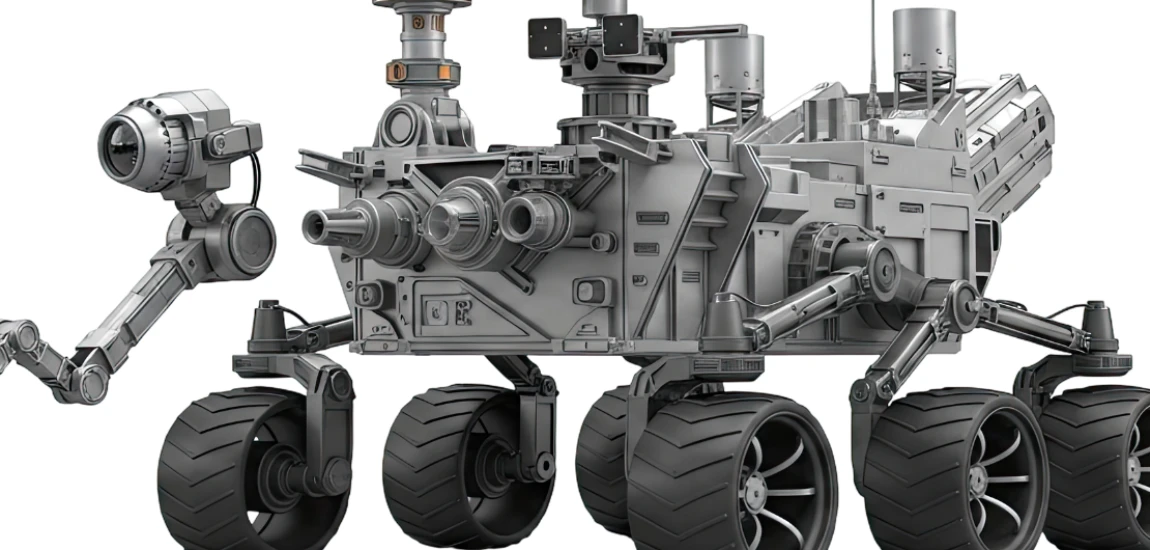
Space exploration has always pushed the boundaries of science, engineering, and human imagination. From the first artificial satellites to robotic missions exploring Mars and distant asteroids, technological innovation has enabled humanity to better understand the universe. As future missions become more ambitious, autonomous robotic systems are taking on increasingly important roles because many destinations are too dangerous, distant, or expensive for continuous human involvement. These intelligent machines are capable of performing scientific experiments, navigating unfamiliar terrain, collecting valuable data, and supporting future human exploration beyond Earth.
Space robotics combines artificial intelligence, machine learning, autonomous navigation, computer vision, advanced sensors, robotic manipulation, and satellite communication to create highly capable exploration systems. Unlike traditional robotic platforms that depend heavily on commands from Earth, modern space robots can analyze their surroundings, avoid obstacles, prioritize scientific objectives, and make independent decisions when communication delays prevent immediate human control. This level of autonomy is essential for deep-space missions where signals may take several minutes or even hours to travel between Earth and spacecraft.
As international space agencies and private aerospace companies continue expanding their exploration programs, space robotics technologies are becoming fundamental to future lunar bases, Mars missions, asteroid mining, planetary science, and deep-space exploration. Continued advances in artificial intelligence, robotics, energy systems, and communication networks will allow autonomous robotic explorers to accomplish increasingly complex missions while improving scientific discovery, operational efficiency, and mission safety.
Understanding Space Robotics Technologies

What Are Space Robotics Technologies?
Space robotics technologies refer to intelligent robotic systems specifically designed to operate in the harsh environments of outer space. These robotic platforms include planetary rovers, robotic spacecraft, orbital servicing robots, autonomous landers, robotic arms, and exploration drones capable of functioning with minimal human intervention. Equipped with sophisticated sensors, artificial intelligence, and precision engineering, these systems perform scientific research, infrastructure maintenance, sample collection, and environmental analysis across planets, moons, asteroids, and orbital environments. Their ability to operate independently makes them essential for missions where direct human presence is impractical or impossible.
Core Components of Autonomous Space Robots
Modern space robots integrate multiple advanced technologies that enable safe and reliable operation in challenging extraterrestrial environments. Artificial intelligence supports autonomous decision-making, while machine learning helps improve navigation and mission performance over time. Computer vision systems identify terrain features, obstacles, geological formations, and scientific targets. High-precision sensors measure environmental conditions including temperature, radiation, atmospheric composition, and surface characteristics. Robotic arms, mobility systems, and advanced communication technologies allow space robots to collect samples, conduct experiments, repair spacecraft, and transmit valuable scientific data back to Earth.
Why Robotics Is Essential for Future Space Exploration
Autonomous robotic systems significantly reduce the risks and costs associated with space exploration. Many destinations expose equipment to extreme temperatures, intense radiation, reduced gravity, and hazardous terrain that would threaten human safety. Robotic explorers can operate continuously for extended periods without requiring life support systems, making long-duration missions more practical and cost-effective. Their ability to investigate remote regions, gather scientific information, and prepare environments for future human exploration makes space robotics one of the most important technologies supporting the next generation of extraterrestrial discovery.
Technologies Powering Autonomous Extraterrestrial Exploration

Artificial Intelligence and Autonomous Decision-Making
Artificial intelligence serves as the central intelligence system for autonomous space robots. AI algorithms analyze environmental conditions, identify scientific opportunities, recognize hazards, and determine optimal mission strategies without waiting for instructions from Earth. Machine learning continuously improves navigation, object recognition, and operational efficiency by learning from previous mission experiences. Because communication delays can be significant during deep-space exploration, autonomous decision-making enables robotic explorers to respond immediately to unexpected situations while maximizing scientific productivity throughout the mission.
Computer Vision, Sensors, and Navigation Systems
Space robots rely on advanced computer vision systems and precision sensors to understand unfamiliar extraterrestrial environments. High-resolution cameras, LiDAR, radar, infrared imaging, spectrometers, and environmental sensors collect detailed information about terrain, geological formations, atmospheric conditions, and nearby obstacles. Autonomous navigation software processes this information to safely guide robotic vehicles across rocky landscapes, steep slopes, and unpredictable planetary surfaces. These technologies enable accurate movement, scientific investigation, and efficient mission planning even in environments where GPS and conventional navigation systems are unavailable.
Robotic Manipulation and Advanced Communication Technologies
Robotic arms and specialized manipulation systems allow space robots to perform complex scientific tasks such as drilling into planetary surfaces, collecting rock and soil samples, deploying research instruments, and repairing spacecraft components. Advanced communication technologies transmit scientific findings, images, engineering data, and mission updates between robotic explorers and Earth-based control centers. Combined with onboard processing and intelligent automation, these communication systems support collaborative exploration while ensuring that valuable scientific discoveries are shared efficiently with researchers around the world.
Applications of Space Robotics Technologies in Modern Space Exploration

Planetary Exploration and Scientific Research
Space robotics technologies are transforming planetary exploration by allowing scientists to study distant worlds without exposing astronauts to dangerous environments. Autonomous robotic rovers and landers can travel across the surfaces of planets and moons, collecting soil samples, analyzing rocks, measuring atmospheric conditions, and searching for evidence of water or past life. Artificial intelligence enables these robots to identify scientifically valuable locations, avoid hazardous terrain, and prioritize research activities based on mission objectives. By operating continuously for months or even years, robotic explorers generate vast amounts of scientific data that improve our understanding of planetary evolution, geology, and the potential habitability of extraterrestrial environments. Their ability to work independently significantly increases the efficiency and success of long-duration exploration missions.
Satellite Maintenance, Space Stations, and Orbital Operations
Space robotics plays an increasingly important role in maintaining satellites, supporting space stations, and performing complex orbital operations. Robotic arms and autonomous servicing spacecraft can inspect satellites, repair damaged components, refuel spacecraft, and extend the operational life of expensive orbital assets. These capabilities reduce the need for risky human spacewalks while lowering mission costs. On space stations, robotic systems assist astronauts by transporting equipment, conducting scientific experiments, and performing routine maintenance tasks. As Earth's orbital environment becomes more crowded, autonomous robotic systems are also being developed to monitor satellites, remove space debris, and support safe traffic management, helping ensure the long-term sustainability of space operations.
Lunar Bases, Mars Missions, and Deep-Space Exploration
Future exploration programs depend heavily on autonomous robotics to prepare extraterrestrial environments before human arrival. Robotic systems can construct habitats, install scientific instruments, generate power infrastructure, and identify valuable natural resources on the Moon and Mars. These intelligent machines will also inspect equipment, transport supplies, and perform maintenance tasks in harsh environments where human activity remains limited. Deep-space robotic probes continue exploring asteroids, comets, and distant planetary systems, collecting scientific information that would be difficult to obtain through human missions alone. As space agencies pursue long-term exploration objectives, autonomous robotics will become an essential foundation for sustainable human presence beyond Earth.
Benefits and Challenges of Autonomous Space Robotics

Advantages of Intelligent Robotic Exploration
Autonomous space robotics offers numerous advantages that make extraterrestrial exploration safer, more efficient, and more affordable. Robots can operate in environments with extreme temperatures, intense radiation, low gravity, and hazardous terrain without requiring life-support systems. Their ability to work continuously allows missions to collect larger amounts of scientific data over extended periods. Artificial intelligence improves navigation, obstacle avoidance, and autonomous decision-making, reducing dependence on constant human supervision. Robotic missions are also significantly less expensive than crewed missions, enabling governments and private organizations to explore more destinations while minimizing operational risks. These advantages make robotic exploration one of the most valuable tools for expanding scientific knowledge throughout the solar system.
Technical, Environmental, and Operational Challenges
Despite rapid technological progress, autonomous space robotics continues to face several important challenges. Communication delays between Earth and distant spacecraft limit real-time human control, making reliable onboard decision-making essential. Harsh space environments expose robotic systems to radiation, dust, temperature extremes, and mechanical stress that can damage sensitive equipment. Limited power availability, especially during long-duration missions, requires highly efficient energy management and advanced battery technologies. Engineers must also develop durable hardware capable of surviving years of continuous operation without maintenance. Addressing these challenges remains critical for improving mission reliability and expanding future exploration capabilities.
Future Trends and Emerging Opportunities
The future of space robotics technologies will be driven by advances in artificial intelligence, machine learning, quantum communication, advanced propulsion systems, and next-generation robotic engineering. Future autonomous robots are expected to collaborate in coordinated teams, share scientific information in real time, and perform increasingly complex exploration tasks with minimal human intervention. Swarm robotics may allow multiple robotic explorers to map planetary surfaces, search for valuable resources, and construct infrastructure simultaneously. Emerging opportunities include asteroid mining, autonomous space manufacturing, interplanetary cargo transportation, and robotic support for permanent lunar and Martian settlements. As innovation continues, intelligent robotic systems will remain at the forefront of humanity's efforts to explore, understand, and eventually inhabit the broader universe.


Gary Arndt operates "Everything Everywhere," a blog focusing on worldwide travel. An award-winning photographer, Gary shares stunning visuals alongside his travel tales.
Gary Arndt

Prev Post
Next Post