
Real-Time Global Simulation Engines and Planet-Scale Digital Twins: Revolutionizing Our Understanding of Earth
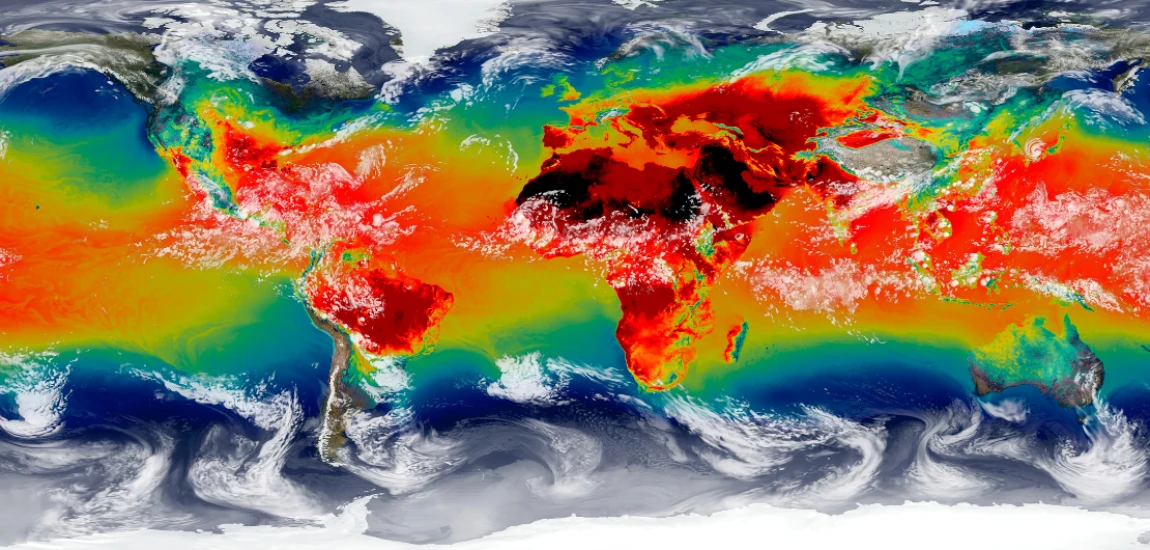
As the complexity of the modern world grows, the ability to model, predict, and manage global systems has become more critical than ever. Real-time global simulation engines and planet-scale digital twins represent cutting-edge technologies that provide dynamic, interactive, and comprehensive digital replicas of Earth. These platforms integrate vast datasets from satellites, IoT sensors, climate models, and human activity to simulate planetary systems in real time.
Digital twins of entire cities, countries, and even the planet enable scientists, policymakers, and industry leaders to visualize scenarios, predict outcomes, and optimize resource allocation. From monitoring climate change and natural disasters to urban planning and global logistics, these technologies offer unparalleled insights into complex interdependent systems.
This blog will delve into the core concepts, underlying technologies, real-world applications, benefits, challenges, and future potential of real-time global simulation engines and planet-scale digital twins. By the end, readers will understand how these systems are shaping the future of planetary-scale decision-making and predictive modeling.
Understanding Real-Time Global Simulation Engines

Core Concept and Functionality
Real-time global simulation engines are computational platforms capable of modeling complex, interconnected systems on a planetary scale. These engines process enormous amounts of data from diverse sources—including climate sensors, transportation networks, economic indicators, and satellite imagery—to simulate interactions and predict outcomes.
Unlike conventional simulations that are often static or limited in scope, real-time engines continuously update based on live data. This allows decision-makers to respond immediately to environmental changes, infrastructure failures, or emerging crises.
Integration with Digital Twins
Real-time simulation engines serve as the computational backbone for planet-scale digital twins. They translate raw data into actionable insights, enabling the digital twin to mirror the current state of physical systems accurately.
The integration ensures that models remain up-to-date, reflecting dynamic processes such as weather fluctuations, traffic patterns, energy usage, or ecological changes. This makes global simulations both predictive and reactive, providing a realistic, actionable view of the Earth’s systems.
Modeling Complexity and Interconnected Systems
These engines can model complex interdependencies between natural and human systems. For example, they can simulate how urban expansion affects regional water cycles, carbon emissions, and energy grids. By accounting for feedback loops and cascading effects, real-time simulation engines provide a holistic perspective that is invaluable for planning and policy.
Planet-Scale Digital Twins Explained

Definition and Core Capabilities
A planet-scale digital twin is a virtual replica of Earth that incorporates physical, environmental, economic, and social data. These models not only replicate the state of the planet at a given moment but also enable scenario testing and predictive analysis.
By integrating multiple layers of data—from geospatial maps and climate records to transportation flows and population movements—planet-scale digital twins can simulate real-world conditions with remarkable accuracy.
Data Sources and Real-Time Updates
The success of a digital twin depends on high-quality data. Satellites provide imagery and climate data, IoT sensors monitor infrastructure and environmental conditions, and social data streams track human activity. Machine learning algorithms harmonize these diverse datasets and feed them into simulation engines for real-time analysis.
Continuous updates allow the digital twin to evolve alongside the physical world, ensuring relevance for policy planning, disaster response, and resource management.
Interactive Visualization and Scenario Planning
Planet-scale digital twins are not merely passive data repositories—they enable interactive visualization and experimentation. Governments and organizations can test “what-if” scenarios, such as the effects of sea-level rise, large-scale migration, or energy grid failures, and see the immediate projected outcomes.
This predictive capacity helps in risk mitigation, informed decision-making, and optimizing solutions for sustainability and resilience.
Applications Across Industries

Urban Planning and Smart Cities
City planners leverage digital twins to simulate urban growth, optimize traffic flow, and plan public services. By modeling building placement, transportation networks, and energy consumption, planners can reduce congestion, enhance sustainability, and improve quality of life.
Real-time feedback allows for adaptive infrastructure management. For instance, traffic lights, public transportation routes, and emergency services can be dynamically adjusted based on current city conditions.
Environmental Monitoring and Climate Action
Planet-scale digital twins are crucial in monitoring climate change and environmental health. They model atmospheric patterns, ocean currents, and deforestation impacts, helping policymakers predict natural disasters, assess carbon footprint, and implement sustainable strategies.
These digital replicas also support climate mitigation efforts by simulating carbon reduction strategies, renewable energy deployment, and ecosystem restoration projects on a global scale.
Disaster Management and Emergency Response
Real-time global simulations enable proactive disaster management. By analyzing real-time weather data, earthquake activity, and infrastructure vulnerability, digital twins can predict the impact of hurricanes, floods, or fires.
Emergency responders can optimize evacuation routes, resource deployment, and aid distribution. This reduces response time and increases the effectiveness of interventions, potentially saving lives and minimizing damage.
Benefits of Real-Time Global Simulation Engines

Enhanced Decision-Making and Risk Mitigation
Simulation engines provide decision-makers with precise, data-driven insights. By modeling outcomes before implementing policies, governments and organizations can avoid costly mistakes and optimize societal interventions.
Real-time updates allow rapid responses to emergencies, ensuring proactive rather than reactive decision-making.
Efficiency and Resource Optimization
By simulating scenarios across multiple sectors, digital twins help allocate resources effectively. Energy, water, and transportation networks can be optimized to reduce waste, minimize costs, and improve resilience.
Efficiency gains extend to environmental management, urban infrastructure, and global supply chains, creating more sustainable systems.
Innovation and Predictive Capabilities
These systems foster innovation by providing a testbed for experimentation. Planners and engineers can model complex interventions, test hypothetical policies, and observe projected outcomes before implementation.
Predictive capabilities also enhance long-term planning for climate action, infrastructure expansion, and global logistics, supporting sustainable development goals.


Anil Polat, behind the blog "FoxNomad," combines technology and travel. A computer security engineer by profession, he focuses on the tech aspects of travel.
Anil Polat
Prev Post

Next Post