
Quantum Satellite Swarm Systems and Autonomous Space Communication Coordination Networks
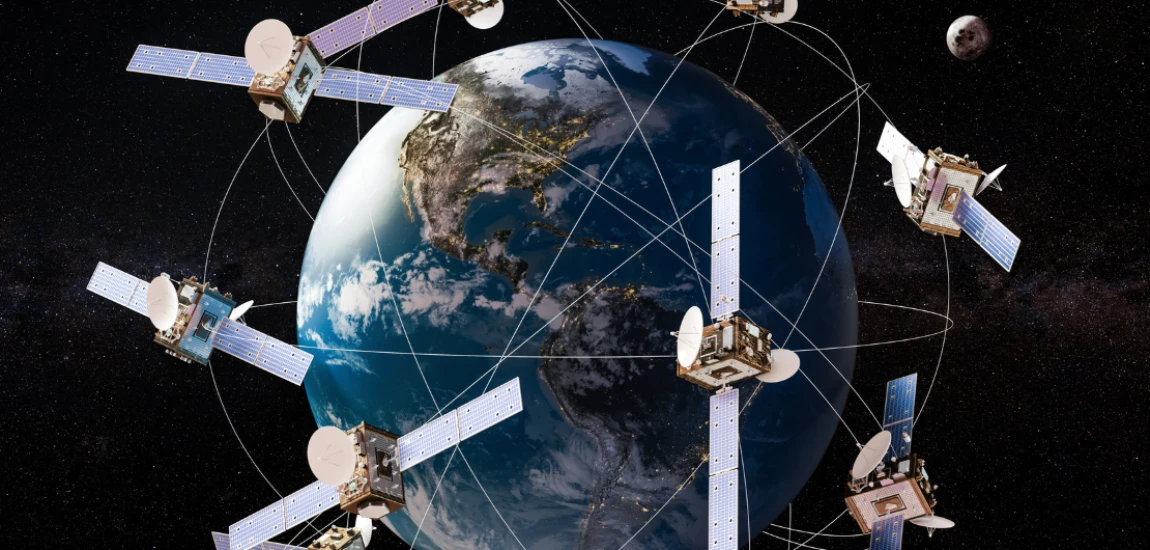
The rapid expansion of space technologies is transforming how humanity communicates, navigates, conducts scientific research, and manages global infrastructure. Traditional satellite networks have played a crucial role in enabling worldwide communications, weather forecasting, Earth observation, and navigation services. However, as the demand for faster, more secure, and more resilient communication systems continues to grow, next-generation technologies are emerging to redefine the future of space-based connectivity.
Among the most promising innovations are Quantum Satellite Swarm Systems and Autonomous Space Communication Coordination Networks. These advanced architectures combine quantum communication technologies, distributed satellite constellations, artificial intelligence, autonomous decision-making systems, and inter-satellite networking to create highly efficient communication ecosystems in orbit.
Unlike conventional satellite systems that often operate independently or through centralized control structures, quantum satellite swarms function as intelligent collaborative networks. These satellites can coordinate autonomously, optimize communication pathways, adapt to changing orbital conditions, and provide secure data transmission through quantum encryption mechanisms.
As nations, commercial space companies, and scientific organizations continue expanding their activities beyond Earth, the development of intelligent communication infrastructures will become increasingly important. Quantum satellite swarm systems may serve as the foundation for future global communications, lunar operations, deep-space missions, and interplanetary exploration networks.
Foundations of Quantum Satellite Swarm Systems

Understanding Satellite Swarm Architectures
Satellite swarms represent a major evolution in space system design. Instead of relying on a small number of large satellites, swarm architectures deploy numerous smaller satellites that work together as a coordinated network.
Each satellite within the swarm contributes to overall mission objectives while sharing information with neighboring spacecraft. This distributed approach improves system resilience, flexibility, and scalability. If one satellite experiences a failure, the rest of the network can continue operating with minimal disruption.
Swarm systems also provide greater coverage and adaptability compared to traditional satellite constellations. Their ability to dynamically reconfigure communication routes and operational priorities makes them highly suitable for future space applications.
The Role of Quantum Technologies
Quantum technologies introduce entirely new capabilities to space communication systems. Quantum communication leverages the principles of quantum mechanics to enable highly secure data transmission methods.
Quantum encryption techniques, particularly quantum key distribution, can significantly enhance communication security by making unauthorized interception extremely difficult. Any attempt to observe or manipulate quantum communication channels can be detected immediately.
In satellite swarm environments, quantum communication technologies may facilitate secure coordination among spacecraft while protecting sensitive information transmitted between orbital assets and ground stations.
Evolution Beyond Traditional Satellite Networks
Traditional satellite systems often depend on centralized control mechanisms and predefined communication pathways. As orbital environments become more crowded and mission requirements more complex, these approaches face increasing limitations.
Quantum satellite swarm systems introduce decentralized intelligence and autonomous decision-making capabilities. By distributing computational resources and communication responsibilities across multiple spacecraft, these systems achieve greater efficiency and operational flexibility.
This evolution supports a future where satellite networks operate more like intelligent ecosystems rather than isolated communication nodes.
Architecture of Autonomous Space Communication Coordination Networks

Distributed Orbital Intelligence Frameworks
Autonomous space communication networks rely on distributed intelligence frameworks that enable satellites to make decisions independently while maintaining coordinated operations.
Artificial intelligence systems embedded within satellites continuously analyze orbital conditions, communication demands, and network performance. These systems identify optimal routing strategies and adjust operations in real time.
Distributed intelligence reduces reliance on ground-based control centers while enabling faster responses to changing conditions in space.
Inter-Satellite Communication Infrastructure
Efficient communication between satellites is essential for swarm operations. Future networks may utilize advanced optical communication links, laser-based transmission systems, and quantum communication channels.
These technologies provide high-speed, low-latency connections that support real-time information exchange across the swarm. Inter-satellite links also improve network redundancy and enhance overall system resilience.
As communication technologies continue advancing, satellite swarms may achieve unprecedented levels of connectivity and coordination.
Autonomous Network Management Systems
Managing large-scale satellite swarms requires sophisticated network management capabilities. Autonomous systems monitor network performance, allocate communication resources, and resolve operational challenges without direct human intervention.
Machine learning algorithms continuously optimize communication pathways and adapt to evolving mission requirements. This self-managing approach improves efficiency while reducing operational complexity.
Autonomous network management is likely to become a critical component of future space communication infrastructures.
Advanced Technologies Driving Quantum Satellite Networks

Quantum Communication and Encryption
Quantum communication is one of the defining technologies of next-generation satellite systems. Quantum encryption provides unparalleled security for data transmission across global and interplanetary communication networks.
By leveraging quantum mechanical properties, these systems can establish highly secure communication channels resistant to many conventional cyber threats. This capability is especially important for government, defense, scientific, and commercial applications.
Future quantum satellite networks may form the backbone of secure global communication infrastructures.
Artificial Intelligence and Autonomous Operations
Artificial intelligence enables satellite swarms to function with minimal human oversight. AI algorithms process large volumes of operational data, identify patterns, and make decisions that enhance network performance.
These systems can predict communication bottlenecks, optimize orbital positioning, and coordinate resource allocation among satellites. Their adaptive capabilities ensure efficient operation even in highly dynamic environments.
As AI technologies continue evolving, autonomous satellite systems will become increasingly capable and sophisticated.
Advanced Space Computing Platforms
Modern satellite swarms generate enormous amounts of data that require efficient processing. Advanced onboard computing platforms support real-time analytics, autonomous decision-making, and communication optimization.
Future systems may incorporate quantum computing technologies capable of solving complex optimization problems more efficiently than classical computers. These capabilities could significantly improve swarm coordination and communication performance.
Enhanced computing power will play a key role in supporting large-scale autonomous space networks.
Applications Across Earth Orbit and Deep Space Missions

Global Communication Services
One of the most significant applications of quantum satellite swarms is global communication. These systems can provide reliable internet connectivity, secure communications, and data transmission services across the planet.
Unlike traditional infrastructure-dependent networks, satellite swarms offer coverage in remote regions, oceans, and underserved communities. Their distributed architecture enhances resilience and service availability.
Future communication ecosystems may increasingly rely on intelligent satellite networks to meet growing global connectivity demands.
Space Exploration and Lunar Infrastructure
As human activities expand beyond Earth, robust communication networks become essential. Lunar bases, orbital stations, and exploration missions require reliable communication systems capable of operating across vast distances.
Quantum satellite swarms may support lunar communication networks by providing continuous connectivity between Earth, lunar facilities, and spacecraft operating in cislunar space.
These capabilities will be critical for enabling sustainable space exploration initiatives.
Interplanetary Communication Networks
Future missions to Mars and other destinations will require communication architectures capable of managing long-distance transmissions efficiently.
Autonomous satellite coordination networks may serve as relay systems that facilitate communication across interplanetary distances. AI-driven optimization techniques can help manage delays and ensure reliable information exchange.
Such networks may eventually form the foundation of an interplanetary communication infrastructure connecting multiple worlds.


Derek Baron, also known as "Wandering Earl," offers an authentic look at long-term travel. His blog contains travel stories, tips, and the realities of a nomadic lifestyle.
Derek Baron

Prev Post

Next Post