
Programmable Molecular Robotics and the Evolution of Precision Automation
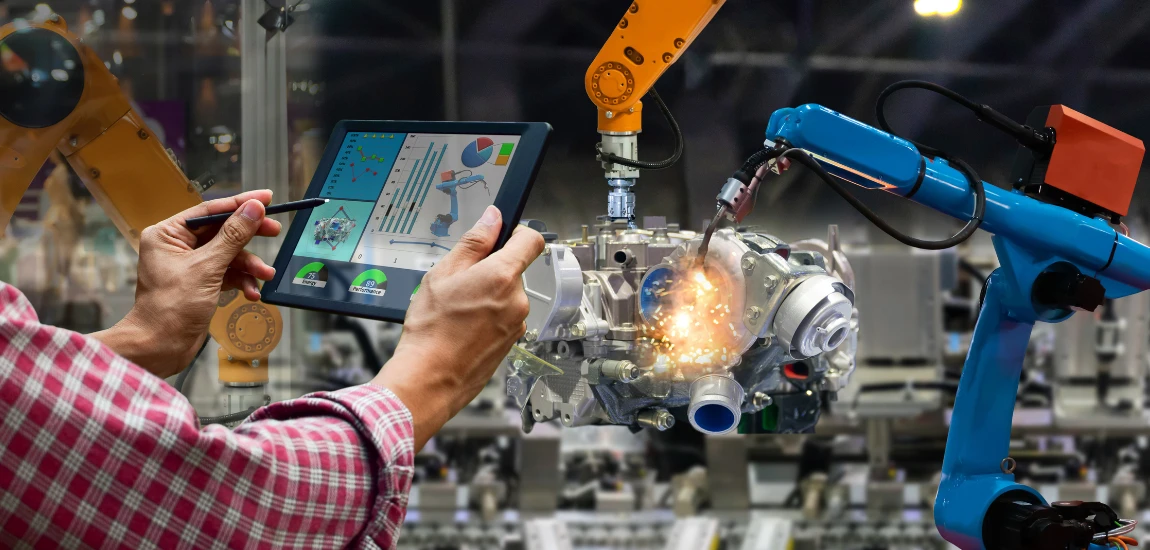
Automation has traditionally been associated with industrial robots, robotic arms, autonomous vehicles, and intelligent machines operating at the human or industrial scale. However, the future of automation may move far beyond machines that can be seen with the human eye. Scientists and engineers are increasingly exploring technologies capable of performing controlled actions at the molecular level.
This emerging field is known as programmable molecular robotics. It combines nanotechnology, molecular engineering, chemistry, artificial intelligence, synthetic biology, materials science, and robotics to create tiny systems capable of responding to instructions and performing precise tasks.
Molecular robots are not simply miniature versions of traditional robots. At the nanoscale, the rules of physics and chemistry are different. Instead of motors, gears, and mechanical arms, molecular machines may rely on chemical reactions, molecular recognition, DNA structures, light, electrical signals, or changes in environmental conditions.
The concept of programmable molecular robotics is important because it could redefine precision automation. A molecular machine may be designed to recognize a specific molecule, transport a chemical compound, assemble a structure, release a payload, or change its behavior in response to a signal.
This could have major implications for medicine, materials manufacturing, environmental monitoring, energy systems, biotechnology, and advanced computing. As researchers gain greater control over molecular structures, the boundary between chemistry, biology, and robotics is becoming increasingly blurred.
The future of automation may therefore not be limited to machines operating factories. It could involve billions of programmable molecular systems working together to perform precise tasks inside materials, biological environments, and advanced manufacturing systems.
What Is Programmable Molecular Robotics?

The Concept of Molecular Machines
Programmable molecular robotics refers to the design of molecular-scale systems that can perform controlled functions according to predefined instructions or environmental signals.
These systems may be built from DNA, proteins, synthetic molecules, polymers, nanoparticles, or other engineered materials. Their functions can include movement, recognition, assembly, sensing, and chemical transformation.
Unlike conventional robots, molecular robots do not necessarily have a centralized processor or traditional mechanical components. Their behavior may emerge from carefully designed molecular interactions.
For example, a molecular machine could be programmed to remain inactive until it encounters a specific chemical signal. Once that signal is detected, the molecular system could change shape, release a compound, or initiate another chemical reaction.
Programming Behavior at the Molecular Scale
Programming molecular robots involves designing the rules that control their behavior. Scientists may use chemical triggers, molecular binding, DNA sequences, light, temperature, electrical fields, or other stimuli.
The molecular robot can be designed to respond only when specific conditions are met. This allows highly precise control over molecular processes.
The concept is similar to software programming, but the instructions are encoded into molecular structures and chemical interactions rather than traditional computer code.
Precision Beyond Traditional Automation
Traditional automation systems often operate within physical environments where sensors, motors, and computers coordinate activities. Molecular robotics extends this concept into environments where conventional machines cannot operate effectively.
A molecular robot may be able to navigate microscopic environments, interact with individual molecules, or perform chemical transformations with extraordinary precision.
This opens the door to a new form of automation in which processes can be controlled at the level of individual molecules.
The Science Behind Molecular Robotics

DNA and Molecular Self-Assembly
DNA is one of the most promising materials for molecular robotics because its chemical structure allows scientists to design predictable interactions.
Researchers can create DNA structures that fold into specific shapes and respond to molecular signals. These structures can act as containers, switches, sensors, and mechanical components.
DNA-based molecular machines can be designed to open, close, move, or release substances under specific conditions.
The ability to create self-assembling structures is especially important. Instead of building every molecular component manually, scientists can design molecules that naturally organize themselves into useful forms.
Chemical Energy and Molecular Movement
Molecular robots require energy to perform tasks. At the nanoscale, energy may come from chemical reactions, light, electrical signals, or changes in the surrounding environment.
Some molecular machines use chemical energy to change shape or move between different states. These transitions can be carefully controlled to create mechanical behavior.
The challenge is designing systems that can perform useful actions repeatedly and reliably. Scientists are studying how to improve molecular motors, energy efficiency, and operational stability.
Synthetic Biology and Programmable Systems
Synthetic biology is also contributing to molecular robotics. Biological systems naturally contain complex molecular machines capable of movement, sensing, communication, and self-repair.
Researchers can study these natural systems and redesign biological components for specific purposes.
The combination of synthetic biology and molecular robotics could eventually create programmable systems capable of operating inside living organisms or biological environments.
Applications of Programmable Molecular Robotics

Precision Medicine and Targeted Therapeutics
One of the most promising applications of molecular robotics is healthcare. Molecular machines could potentially be designed to identify specific biological signals and deliver therapeutic compounds precisely where they are needed.
Instead of distributing medicine throughout the entire body, a molecular robot could theoretically recognize a particular cell type or biological condition and release a treatment locally.
This approach could improve precision and reduce unwanted effects. However, significant research is still required to ensure that molecular systems are safe, controllable, and reliable inside living organisms.
Molecular Manufacturing
Programmable molecular robotics could transform manufacturing by enabling materials to be assembled at the molecular level.
Molecular machines could organize atoms and molecules into specific structures, potentially creating advanced materials with customized properties.
This could lead to new forms of manufacturing in which products are assembled through controlled molecular processes rather than traditional mechanical methods.
The technology could support the creation of stronger materials, advanced electronics, specialized coatings, and highly efficient energy systems.
Environmental Monitoring and Remediation
Molecular robots could also be used to detect pollutants and environmental changes.
A programmable molecular sensor could identify specific toxins, heavy metals, or chemical contaminants. Other molecular systems could potentially help break down harmful compounds.
This could create highly precise environmental monitoring technologies capable of detecting contamination at extremely small concentrations.
Future molecular robotics systems may operate in water, soil, industrial environments, or biological ecosystems.
The Role of Artificial Intelligence in Molecular Robotics

AI-Driven Molecular Design
The design of molecular machines is extremely complex. Scientists must evaluate molecular structures, chemical interactions, energy requirements, and environmental conditions.
Artificial intelligence can help accelerate this process. Machine learning systems can analyze enormous databases of molecular structures and identify patterns associated with useful behavior.
Generative AI could potentially propose new molecular designs based on desired functions.
For example, researchers might specify that they want a molecular machine capable of recognizing a particular chemical and releasing a compound under a specific condition. AI could explore possible molecular configurations and identify promising candidates.
Intelligent Coordination of Molecular Systems
Future molecular robotics systems may involve many molecular machines operating together.
AI could help coordinate these systems by analyzing environmental data and adjusting operational conditions.
For example, one molecular robot might detect a chemical signal while another performs a response. A third system could monitor the outcome.
This could create molecular-scale networks capable of performing complex sequences of actions.
Digital Twins and Molecular Simulation
Before molecular robots are physically created, researchers can use advanced simulations to study their behavior.
AI-powered molecular simulations can model interactions, predict stability, and evaluate potential designs.
Digital representations of molecular machines could help scientists test different operating conditions and identify potential failures before conducting physical experiments.
This could reduce development time and accelerate innovation.


Ben Schlappig runs "One Mile at a Time," focusing on aviation and frequent flying. He offers insights on maximizing travel points, airline reviews, and industry news.
Ben Schlappig
Prev Post

Next Post