
Post-Silicon Computing Platforms and Next-Generation Processor Design
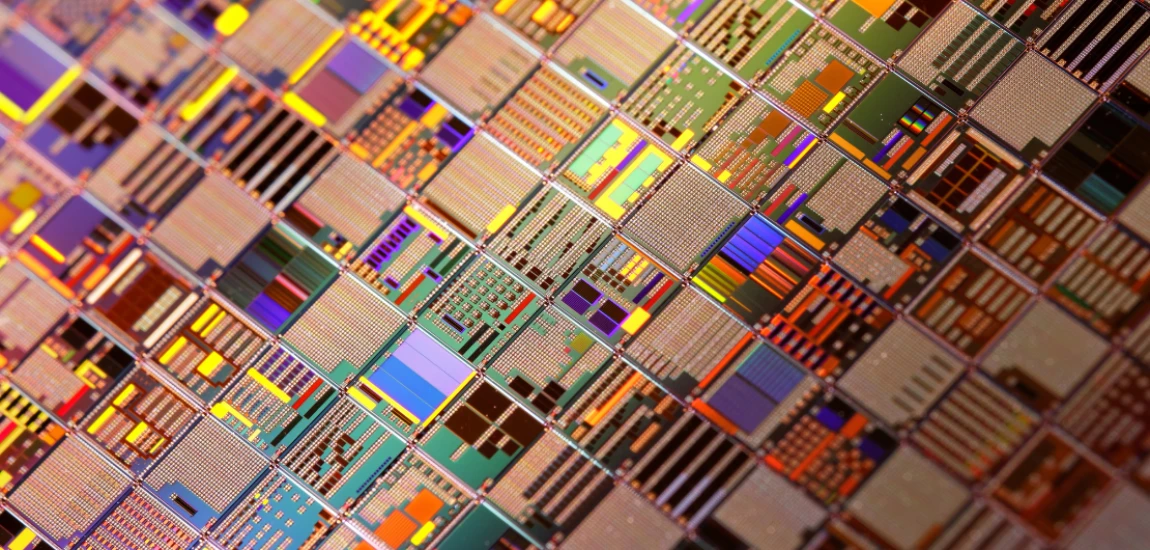
For more than half a century, silicon has been the foundation of modern computing. From personal computers and smartphones to cloud data centers and artificial intelligence systems, silicon-based processors have powered the digital revolution. Continuous improvements in semiconductor manufacturing have enabled remarkable increases in computational performance, following the trend commonly known as Moore's Law. However, as transistor dimensions approach atomic scales, traditional silicon technologies are facing significant physical and economic limitations.
The demand for more powerful computing systems continues to grow due to artificial intelligence, big data analytics, autonomous systems, scientific simulations, advanced robotics, and emerging digital ecosystems. These applications require computational capabilities far beyond what conventional silicon chips can efficiently deliver. As a result, researchers and technology companies are exploring Post-Silicon Computing Platforms and Next-Generation Processor Design to overcome existing constraints and unlock new levels of performance.
Post-silicon computing refers to technologies that move beyond traditional silicon-based architectures by incorporating alternative materials, novel processing methods, advanced computational models, and revolutionary hardware designs. These innovations include quantum computing, neuromorphic processors, photonic chips, carbon nanotube electronics, spintronic systems, and molecular computing technologies.
The transition toward post-silicon computing represents a fundamental shift in how information is processed, stored, and transmitted. These next-generation platforms have the potential to transform industries, accelerate scientific discovery, and redefine the future of intelligent machines. Understanding the technologies driving this transformation provides valuable insight into the next era of computing innovation.
The Limitations of Traditional Silicon Computing

The End of Moore's Law
For decades, Moore's Law accurately predicted the doubling of transistor density on integrated circuits approximately every two years. This trend fueled exponential growth in computational power and enabled rapid technological advancement.
However, as transistor sizes approach atomic dimensions, further miniaturization becomes increasingly difficult. Quantum effects, heat generation, manufacturing complexity, and rising costs have slowed traditional scaling improvements.
These limitations are forcing the industry to explore alternative pathways for maintaining performance growth and computational efficiency.
Energy Consumption Challenges
Modern processors consume significant amounts of energy, particularly in large-scale data centers and AI training environments. As computational workloads continue to increase, energy efficiency has become a critical concern.
Traditional silicon architectures often require substantial electrical power and cooling infrastructure. These requirements increase operational costs and environmental impacts.
Future computing systems must deliver greater performance while consuming less energy, making alternative technologies increasingly attractive.
Growing Computational Demands
Emerging applications such as artificial intelligence, machine learning, digital twins, autonomous vehicles, and scientific simulations require massive computational resources.
Many of these workloads involve highly parallel processing tasks that conventional processor architectures struggle to execute efficiently. New computational paradigms are needed to address these growing demands.
Post-silicon technologies offer potential solutions by introducing fundamentally different approaches to information processing.
Quantum Computing and Revolutionary Processing Models

Understanding Quantum Computing
Quantum computing represents one of the most transformative post-silicon technologies currently under development. Unlike classical computers that process information using bits, quantum systems utilize quantum bits or qubits.
Qubits can exist in multiple states simultaneously through a phenomenon known as superposition. They can also become interconnected through quantum entanglement, enabling highly complex computations.
These properties allow quantum computers to solve certain classes of problems significantly faster than traditional systems.
Applications of Quantum Processors
Quantum processors have the potential to revolutionize fields such as cryptography, materials science, pharmaceutical research, logistics optimization, and financial modeling.
Researchers can simulate molecular interactions with unprecedented accuracy, accelerating drug discovery and advanced material development.
Optimization problems that would take conventional computers years to solve may be completed within minutes using future quantum systems.
Challenges Facing Quantum Platforms
Despite their promise, quantum computers remain in relatively early stages of development. Maintaining stable quantum states requires extremely controlled environments and advanced error-correction techniques.
Researchers continue to improve qubit quality, scalability, and operational reliability. Significant progress has been made, but widespread commercial deployment remains a long-term goal.
Nevertheless, quantum computing is widely regarded as a cornerstone of future post-silicon computing ecosystems.
Neuromorphic Computing and Brain-Inspired Architectures

Mimicking the Human Brain
Neuromorphic computing seeks to replicate the structure and functionality of biological neural systems. Traditional processors separate memory and computation, while the brain integrates these functions efficiently.
Neuromorphic processors use artificial neurons and synapses that communicate through event-driven mechanisms similar to biological networks.
This architecture enables highly efficient information processing and adaptive learning capabilities.
Energy-Efficient Intelligence
One of the most compelling advantages of neuromorphic systems is their exceptional energy efficiency. The human brain performs complex cognitive tasks while consuming relatively little power.
By emulating biological principles, neuromorphic processors can execute AI workloads more efficiently than conventional architectures.
These capabilities make them particularly attractive for edge computing, autonomous systems, and intelligent devices.
Adaptive Learning and Real-Time Processing
Neuromorphic platforms support continuous learning and adaptation without requiring extensive retraining. This enables systems to respond dynamically to changing environments and conditions.
Applications include robotics, smart sensors, autonomous vehicles, and intelligent infrastructure systems.
As AI becomes increasingly integrated into everyday technologies, neuromorphic computing may play a central role in future processor design.
Photonic Computing and Light-Based Processing

Moving Beyond Electrical Signals
Traditional processors rely on electrons to transmit information. Photonic computing replaces electrical signals with light, enabling significantly faster data transmission and reduced energy consumption.
Photons travel at the speed of light and generate less heat than electrons, making them attractive for high-performance computing applications.
Photonic technologies offer new possibilities for overcoming communication bottlenecks within advanced computing systems.
Highonic processors can perform certain operations with remarkable speed and efficiency. These capabilities are particularly valuable for artificial intelligence, telecommunications, and scientific computing workloads.
Light-based systems support parallel processing and high-bandwidth communication, enhancing overall system performance.
Researchers continue developing integrated photonic circuits capable of supporting practical commercial applications.
-based systems support parallel processing and high-bandwidth communication, enhancing overall system performance.
Researchers continue developing integrated photonic circuits capable of supporting practical commercial applications.
Integration with Future Architectures
Photonic computing is unlikely to completely replace electronic systems in the near future. Instead, hybrid architectures combining electronic and photonic components may become increasingly common.
Such systems leverage the strengths of both technologies to achieve optimal performance and efficiency.
The integration of photonics represents a significant step toward next-generation computing platforms.
Integration with Future Architectures
Photonic computing is unlikely to completely replace electronic systems in the near future. Instead, hybrid architectures combining electronic and photonic components may become increasingly common.
Such systems leverage the strengths of both technologies to achieve optimal performance and efficiency.
The integration of photonics represents a significant step toward next-generation computing platforms.


Dave Lee runs "GoBackpacking," a blog that blends travel stories with how-to guides. He aims to inspire backpackers and offer them practical advice.
Dave Lee

Prev Post

Next Post