
Molecular Manufacturing Technologies and Atomic-Scale Precision Production Ecosystems
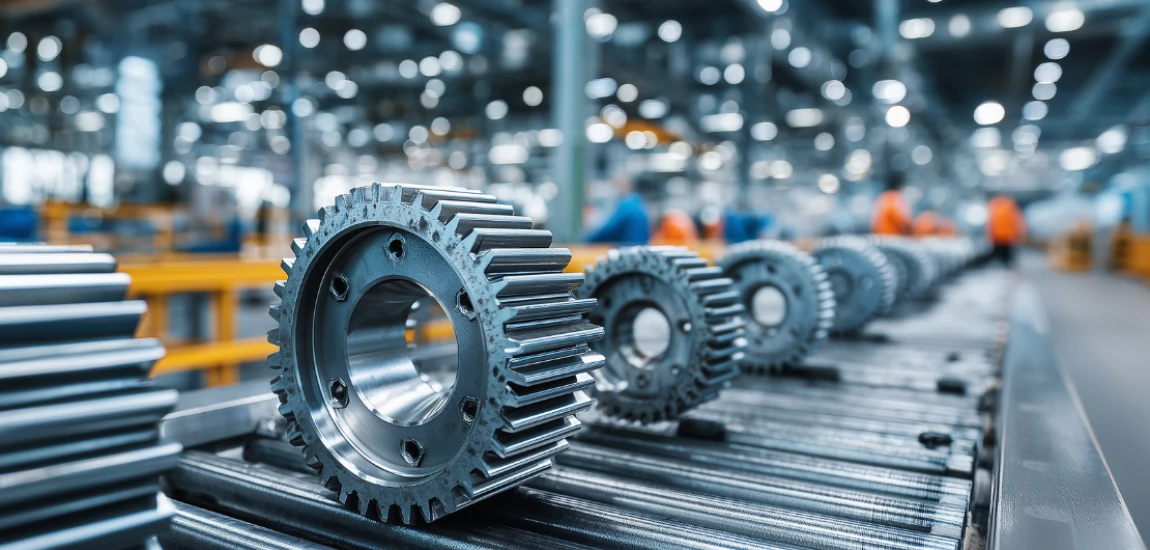
Manufacturing has evolved dramatically throughout human history, from handcrafted tools and mechanical factories to automated production lines and advanced robotics. Today, a new frontier is emerging that could revolutionize the way products are designed, built, and distributed: molecular manufacturing technologies. Unlike conventional manufacturing, which shapes and assembles materials at the macroscopic level, molecular manufacturing focuses on manipulating matter at the molecular and atomic scale with extraordinary precision.
The concept of molecular manufacturing is rooted in nanotechnology and advanced materials science. It envisions systems capable of positioning individual atoms and molecules to construct complex structures from the bottom up. Such capabilities could enable the creation of products with near-perfect precision, minimal waste, and unprecedented functionality. From medical devices and electronics to aerospace components and sustainable materials, the applications are vast and transformative.
Atomic-scale precision production ecosystems extend this vision by integrating molecular assembly systems, artificial intelligence, robotics, computational modeling, and advanced fabrication technologies into interconnected manufacturing networks. These ecosystems could dramatically increase efficiency while reducing environmental impact and resource consumption.
As industries seek greater customization, sustainability, and performance, molecular manufacturing technologies are becoming a focal point of scientific research and technological innovation. Their development may ultimately redefine industrial production and establish the foundation for a new era of precision engineering.
Foundations of Molecular Manufacturing Technologies

Understanding Molecular Manufacturing
Molecular manufacturing refers to the controlled construction of products by arranging molecules and atoms into specific configurations. Rather than cutting, molding, or machining materials into desired shapes, molecular manufacturing builds structures atom by atom or molecule by molecule.
This approach allows engineers to create materials with highly optimized properties, including exceptional strength, conductivity, durability, and functionality. Since every atomic interaction can be precisely controlled, the resulting products may outperform traditionally manufactured alternatives in many ways.
The concept is often compared to biological systems, where nature assembles complex molecules and structures through highly organized molecular processes.
Origins in Nanotechnology
The foundation of molecular manufacturing lies in nanotechnology, a field dedicated to manipulating matter at the nanoscale. Advances in scanning probe microscopy, nanoscale fabrication, and molecular engineering have demonstrated that atomic-level manipulation is increasingly achievable.
Researchers have developed techniques capable of moving individual atoms, creating molecular circuits, and designing nanostructures with remarkable precision. These breakthroughs have moved molecular manufacturing from theoretical speculation toward practical implementation.
The continued convergence of nanotechnology and computing is accelerating progress toward scalable molecular production systems.
Core Principles of Atomic Precision
Atomic-scale manufacturing relies on several fundamental principles. These include precise molecular positioning, controlled chemical reactions, self-assembly mechanisms, and nanoscale quality control.
Each atom contributes to the final structure, making precision essential. Even minor deviations can significantly affect performance at such small scales.
Advanced computational modeling and AI-driven design tools help ensure accuracy throughout the manufacturing process.
Key Technologies Enabling Atomic-Scale Production

Molecular Assemblers and Nanomachines
Molecular assemblers are among the most discussed concepts in molecular manufacturing. These hypothetical or emerging devices would manipulate individual molecules to build larger structures according to predefined instructions.
Nanomachines perform specialized tasks such as transporting molecules, catalyzing reactions, or assembling nanoscale components.
Together, these systems could automate production processes at a scale previously unimaginable.
Advanced Nanofabrication Techniques
Current nanofabrication methods provide important stepping stones toward molecular manufacturing. Techniques such as electron-beam lithography, atomic layer deposition, and focused ion beam processing allow engineers to create structures with nanometer-scale precision.
These technologies are already being used in semiconductor manufacturing, advanced optics, and medical devices.
Continued improvements are pushing fabrication capabilities closer to true molecular-scale production.
Artificial Intelligence and Computational Design
AI plays a crucial role in molecular manufacturing by analyzing molecular interactions and optimizing production processes.
Machine learning algorithms can simulate billions of atomic configurations, identifying the most efficient structures for specific applications.
AI-driven design significantly reduces development time while improving performance and manufacturability.
Atomic-Scale Precision Production Ecosystems

Integrated Manufacturing Networks
Future molecular manufacturing systems will likely operate within interconnected production ecosystems rather than isolated facilities.
These ecosystems will combine molecular fabrication units, robotic systems, AI platforms, and cloud-based design environments into coordinated networks.
Such integration enables efficient collaboration between different production stages.
Digital Twins and Virtual Manufacturing
Digital twin technology allows manufacturers to create virtual models of products and production processes before physical fabrication begins.
At the molecular level, digital twins can simulate atomic interactions, predict structural behavior, and optimize assembly sequences.
This reduces costly errors and improves production efficiency.
Autonomous Production Platforms
Advanced production ecosystems will increasingly rely on autonomous systems capable of self-monitoring and self-optimization.
AI-driven manufacturing platforms can adjust operating parameters, detect defects, and improve workflows in real time.
Autonomous production enhances scalability while maintaining atomic-level precision.
Applications of Molecular Manufacturing Technologies

Healthcare and Biomedical Engineering
Healthcare is expected to be one of the most significant beneficiaries of molecular manufacturing.
Researchers envision custom-designed pharmaceuticals, nanoscale medical devices, targeted drug delivery systems, and artificial tissues manufactured with molecular precision.
These innovations could dramatically improve treatment effectiveness and patient outcomes.
Electronics and Computing Systems
Modern electronics require increasingly smaller and more efficient components. Molecular manufacturing offers the potential to create ultra-dense circuits, advanced memory systems, and highly efficient processors.
Atomic-level precision could overcome many limitations of conventional semiconductor manufacturing.
This may drive the next generation of computing technologies.
Aerospace and Advanced Materials
The aerospace industry demands materials that are lightweight, strong, and resistant to extreme conditions.
Molecular manufacturing could produce materials engineered at the atomic level to maximize strength-to-weight ratios and thermal performance.
Such materials would improve spacecraft, aircraft, and advanced transportation systems.


Kate McCulley, the voice behind "Adventurous Kate," provides travel advice tailored for women. Her blog encourages safe and adventurous travel for female readers.
Kate McCulley

Prev Post

Next Post