
Immersive Metaverse Intelligence Systems and Virtual Interaction Optimization Frameworks
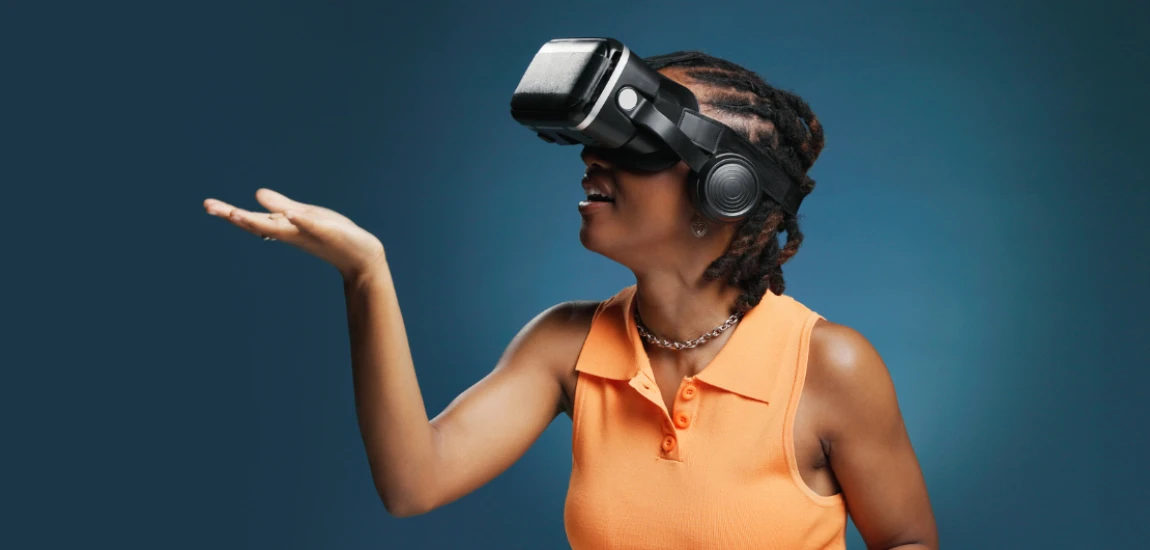
Immersive metaverse intelligence systems are redefining digital reality by merging artificial intelligence with immersive technologies such as virtual reality, augmented reality, mixed reality, and spatial computing. These systems do not merely simulate environments—they actively learn from user behavior, adapt in real time, and optimize interactions to create highly personalized virtual experiences. When paired with virtual interaction optimization frameworks, they become even more powerful, enabling seamless communication, ultra-realistic simulations, and adaptive engagement across digital ecosystems. This convergence is driving a major transformation across industries such as gaming, education, remote collaboration, healthcare training, virtual commerce, and entertainment. As the demand for immersive digital experiences grows, these systems are becoming essential for building intelligent, responsive, and scalable metaverse ecosystems.
Understanding Immersive Metaverse Intelligence Systems

What Are Immersive Metaverse Systems
Immersive metaverse intelligence systems are advanced AI-driven digital environments designed to create fully interactive and persistent virtual worlds. These systems combine 3D environments, real-time rendering engines, and artificial intelligence to simulate experiences that feel physically and emotionally realistic to users.
Unlike traditional virtual platforms, these systems continuously evolve based on user interaction. They track movement, engagement patterns, and behavioral data to dynamically adjust environments. This makes the metaverse feel less like a static digital space and more like a living, responsive ecosystem. Users can interact with virtual objects, AI-powered characters, and other participants in real time, creating a highly engaging experience.
Core Components of Metaverse Intelligence
These systems rely on multiple interconnected technologies working together. 3D rendering engines generate immersive environments, while AI models control behavior, decision-making, and environmental adaptation. Machine learning systems analyze user actions to refine experiences over time.
Additionally, spatial computing plays a crucial role in mapping physical movements into virtual spaces. Cloud infrastructure and edge computing ensure real-time processing, while digital twins replicate real-world systems inside the metaverse. Together, these components form a highly synchronized intelligent virtual ecosystem capable of scaling across millions of users.
Importance in Digital Transformation
Immersive metaverse intelligence systems are a major driver of digital transformation because they redefine how humans interact with technology. Instead of passive consumption, users actively participate in digital environments.
Businesses use these systems for virtual training, product visualization, customer engagement, and remote collaboration. Governments and educational institutions are also adopting metaverse platforms for simulations and interactive learning environments. This shift is creating new economic models centered around virtual experiences and digital assets.
Virtual Interaction Optimization Frameworks Explained

What Are Interaction Optimization Frameworks
Virtual interaction optimization frameworks are AI-powered systems designed to enhance the quality, efficiency, and responsiveness of interactions within metaverse environments. These frameworks continuously analyze user behavior, engagement patterns, and system performance to improve virtual experiences in real time.
They act as the intelligence layer of the metaverse, ensuring that interactions between users, AI agents, and digital environments are smooth, intuitive, and highly responsive. By eliminating delays, improving communication flow, and adapting content dynamically, these frameworks significantly enhance immersion.
Role of AI in Interaction Optimization
Artificial intelligence is the core engine behind interaction optimization. AI models interpret user actions such as movement, gaze direction, voice input, and emotional cues to predict intent and adjust the environment accordingly.
For example, if a user appears confused in a virtual learning environment, AI can automatically simplify instructions or provide additional visual guidance. In gaming or social platforms, AI can adjust difficulty levels, conversation tone, or environmental complexity based on user engagement patterns. This creates a highly adaptive and personalized experience.
Enhancing User Experience in Virtual Spaces
User experience is improved through latency reduction, intelligent rendering, and adaptive interface design. These frameworks ensure that virtual environments respond instantly to user input, reducing lag and improving immersion.
They also optimize bandwidth usage by prioritizing critical data streams, ensuring smooth performance even in large-scale virtual environments. Additionally, personalization engines tailor experiences based on user preferences, making every interaction unique and meaningful.
Key Technologies Behind Metaverse Intelligence Systems

Artificial Intelligence and Machine Learning
AI and machine learning are the cognitive foundation of immersive metaverse systems. These technologies enable predictive behavior modeling, adaptive environment generation, and intelligent decision-making.
Machine learning algorithms continuously analyze massive datasets generated by user interactions. Over time, the system becomes more intelligent, improving accuracy in predicting user intent and optimizing virtual experiences. Deep learning also enables advanced features such as facial recognition, gesture tracking, and emotional analysis.
Virtual Reality and Augmented Reality
VR and AR technologies provide the sensory layer of the metaverse. VR creates fully immersive environments where users can explore digital worlds, while AR overlays digital elements onto real-world surroundings.
These technologies are enhanced by haptic feedback systems, spatial audio, and motion tracking, which collectively create a sense of physical presence in virtual environments. This makes interactions more realistic and engaging.
Spatial Computing and Real-Time Rendering
Spatial computing allows systems to understand physical space and translate it into digital environments. It enables accurate mapping of user movement, object positioning, and environmental interaction.
Real-time rendering ensures that virtual worlds update instantly based on user actions. High-performance graphics engines and GPU acceleration are used to maintain visual realism without lag. Together, these technologies form the backbone of immersive digital experiences.
Applications of Immersive Metaverse Intelligence Systems

Virtual Workspaces and Remote Collaboration
Metaverse-powered virtual workspaces allow teams to collaborate in fully immersive environments that replicate real offices. Users can interact using avatars, share 3D models, and participate in meetings as if they were physically present.
These environments improve communication, reduce geographical barriers, and enhance productivity. Companies also use them for training simulations, project visualization, and global team coordination.
Gaming and Interactive Entertainment
The gaming industry is one of the biggest adopters of metaverse intelligence systems. Games now feature dynamic environments, AI-driven characters, and adaptive storylines that respond to player behavior.
This creates deeply immersive experiences where no two gameplay sessions are the same. Players interact with intelligent worlds that evolve based on their decisions.
Education and Virtual Learning
In education, immersive systems enable experiential learning through virtual classrooms and simulations. Students can explore historical events, conduct virtual experiments, or interact with 3D models of complex systems.
This improves engagement, retention, and understanding compared to traditional learning methods. It also makes education more accessible globally.


Anil Polat, behind the blog "FoxNomad," combines technology and travel. A computer security engineer by profession, he focuses on the tech aspects of travel.
Anil Polat

Prev Post

Next Post