
Holographic Computing Interfaces and the Next Generation of Immersive Digital Interaction
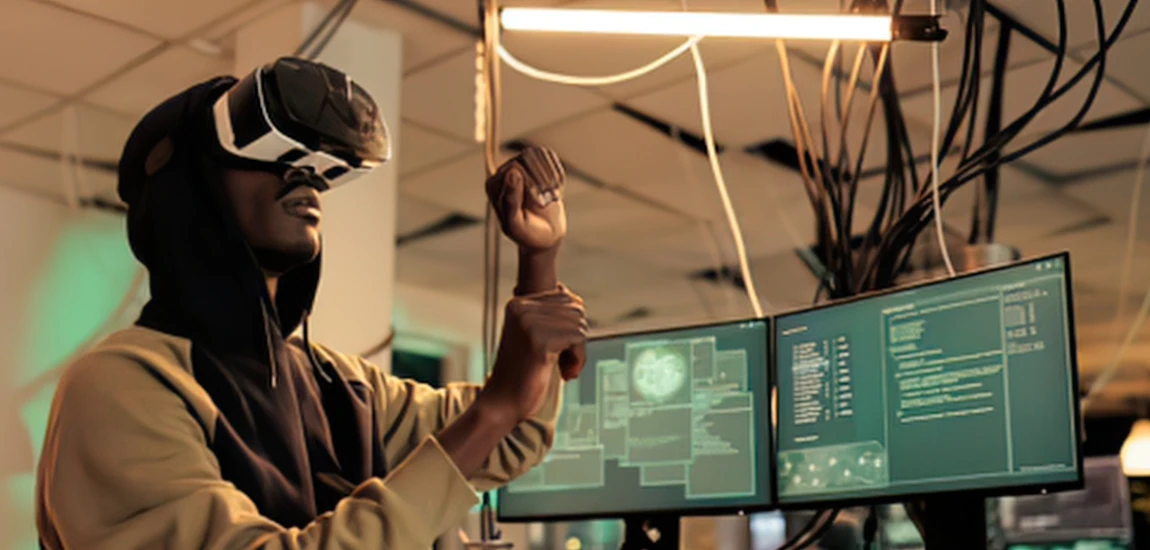
The way people interact with computers has evolved dramatically over the past few decades. Traditional keyboards and computer mice were followed by touchscreens, voice assistants, and gesture-based controls, making digital experiences faster and more intuitive. Today, another major technological shift is emerging through holographic computing interfaces, which allow users to interact with digital information in three-dimensional space rather than on flat screens. This innovation is opening new possibilities for communication, collaboration, education, healthcare, engineering, and entertainment.
Holographic computing combines advanced display technologies, artificial intelligence, augmented reality (AR), mixed reality (MR), computer vision, and spatial computing to create immersive digital environments. Instead of viewing information on a monitor, users can manipulate virtual objects using natural hand movements, eye tracking, voice commands, and spatial gestures. These intelligent interfaces provide a more realistic and engaging experience while improving productivity and decision-making.
As businesses and consumers increasingly adopt immersive technologies, holographic computing is becoming an important part of digital transformation strategies. Industries ranging from healthcare and manufacturing to architecture and education are exploring holographic interfaces to improve collaboration, visualization, and remote communication. Continued advancements in AI, high-speed connectivity, and display technologies are expected to make holographic computing more accessible, bringing a future where digital and physical worlds seamlessly work together.
Understanding Holographic Computing Interfaces

What Are Holographic Computing Interfaces?
Holographic computing interfaces are advanced digital systems that project or display interactive three-dimensional virtual content within a user's physical environment. Unlike conventional computer displays, these interfaces allow users to see and interact with digital objects from multiple angles, creating a more immersive and natural experience. By combining spatial computing with intelligent software, holographic systems make digital interaction feel more realistic and intuitive across various professional and personal applications.
Key Technologies Behind Holographic Computing
Several advanced technologies work together to enable holographic computing. Artificial intelligence helps interpret user behavior and improve interaction accuracy, while computer vision tracks hand movements, facial expressions, and surrounding environments. Augmented reality and mixed reality integrate virtual objects into real-world spaces, and high-resolution 3D display technologies create lifelike holographic visuals. Together, these innovations provide highly interactive experiences that extend beyond traditional screen-based computing.
How Holographic Interfaces Improve User Interaction
Unlike traditional interfaces that require keyboards, mice, or touchscreens, holographic computing allows users to manipulate virtual content using natural gestures, eye movements, and voice commands. This hands-free interaction creates a more engaging and efficient workflow while reducing physical barriers between users and digital information. The ability to view complex data in three dimensions also improves understanding, collaboration, and decision-making in industries that rely on detailed visualization.
Core Technologies Driving Immersive Digital Interaction

Artificial Intelligence and Spatial Computing
Artificial intelligence is the foundation of intelligent holographic computing systems. AI continuously analyzes user behavior, recognizes gestures, interprets voice commands, and adapts digital experiences based on individual preferences. Spatial computing enables digital objects to exist naturally within physical environments by understanding room layouts, object positions, and user movements. Together, these technologies create seamless interactions that feel intuitive, responsive, and highly personalized.
Augmented Reality, Mixed Reality, and 3D Visualization
Augmented reality enhances real-world environments by adding digital content, while mixed reality allows physical and virtual objects to interact with one another in real time. Holographic computing combines these technologies with advanced 3D visualization to create immersive environments where users can inspect, modify, and collaborate on virtual models. This capability improves communication, design accuracy, and user engagement across industries including healthcare, engineering, education, and architecture.
High-Speed Connectivity and Intelligent Sensors
Modern holographic systems rely on high-speed communication networks, cloud computing, and intelligent sensors to deliver responsive experiences. Cameras, depth sensors, motion detectors, and eye-tracking technologies continuously collect environmental information and transmit it for real-time processing. Fast connectivity ensures smooth rendering of holographic content with minimal delay, enabling users to collaborate remotely and interact with complex digital environments as if they were physically present.
Applications of Holographic Computing Interfaces Across Industries

Healthcare and Medical Visualization
Holographic computing is transforming healthcare by giving doctors, surgeons, and medical students the ability to visualize complex anatomical structures in three dimensions. Instead of relying only on two-dimensional scans, healthcare professionals can examine holographic models of organs, bones, and blood vessels from every angle before performing medical procedures. This improves surgical planning, reduces the risk of complications, and enhances medical education through realistic simulations. Holographic technology also supports remote consultations, allowing specialists from different locations to collaborate on patient care using shared 3D medical models. As artificial intelligence continues to improve image processing and diagnostics, holographic interfaces will play an even greater role in personalized healthcare and precision medicine.
Education, Engineering, and Product Design
Educational institutions are adopting holographic computing to create interactive learning experiences that improve student engagement and understanding. Instead of reading about scientific concepts, students can explore virtual molecules, historical artifacts, or engineering models in three-dimensional space. In engineering and product design, professionals use holographic interfaces to visualize prototypes, test product functionality, and identify design improvements before manufacturing begins. Architects can present building models that clients can virtually explore, while industrial designers can collaborate with global teams in immersive digital environments. These capabilities reduce design errors, accelerate development cycles, and encourage more effective collaboration across multiple disciplines.
Retail, Entertainment, and Business Collaboration
Businesses are using holographic computing to create engaging customer experiences and improve workplace collaboration. Retailers can showcase virtual products that customers can inspect from every angle without requiring physical inventory. Entertainment companies are developing immersive gaming, live performances, and interactive storytelling experiences using holographic technology. In corporate environments, employees located in different countries can participate in virtual meetings where life-sized holographic presentations replace traditional video conferencing. This immersive collaboration improves communication, supports creative teamwork, and reduces travel expenses while enabling organizations to work more efficiently in increasingly digital workplaces.
Benefits and Challenges of Holographic Computing Interfaces

Advantages of Immersive Digital Interaction
Holographic computing provides a more natural and engaging way to interact with digital information. Users can manipulate virtual objects using gestures, voice commands, and eye movements, reducing dependence on conventional input devices. Three-dimensional visualization improves understanding of complex information, making decision-making faster and more accurate in fields such as medicine, engineering, education, and manufacturing. Holographic interfaces also enhance remote collaboration by creating realistic shared environments where teams can interact with digital content together, regardless of physical location. These advantages improve productivity, creativity, and user satisfaction across a wide range of professional and personal applications.
Current Challenges and Technical Limitations
Although holographic computing has significant potential, several challenges must be addressed before widespread adoption becomes possible. High-performance hardware, specialized display systems, and advanced sensors remain expensive for many organizations and consumers. Processing realistic holographic graphics requires substantial computing power, while maintaining smooth performance demands high-speed network connectivity and low-latency data transmission. Developers must also improve battery life for wearable devices, reduce system size, and create standardized software platforms that ensure compatibility across different applications. Privacy and cybersecurity concerns related to user data and spatial mapping must also be carefully managed.
Future Trends and Emerging Opportunities
The future of holographic computing will be driven by continuous advances in artificial intelligence, spatial computing, mixed reality, cloud computing, and next-generation communication technologies. Future holographic interfaces are expected to become lighter, more affordable, and capable of displaying highly realistic digital content with minimal hardware requirements. Businesses will increasingly adopt immersive collaboration tools, while educators, healthcare providers, and manufacturers will integrate holographic systems into everyday operations. As digital and physical environments become more interconnected, holographic computing interfaces will play a central role in shaping the next generation of immersive digital interaction, enabling smarter communication, more effective collaboration, and richer user experiences across nearly every industry.


Operating "The Blonde Abroad," Kiersten Rich specializes in solo female travel. Her blog provides destination guides, packing tips, and travel resources.
Kiersten Rich
Prev Post

Next Post