
Autonomous AI Agents and Multi-Agent Collaboration Systems: The Future of Intelligent Automation
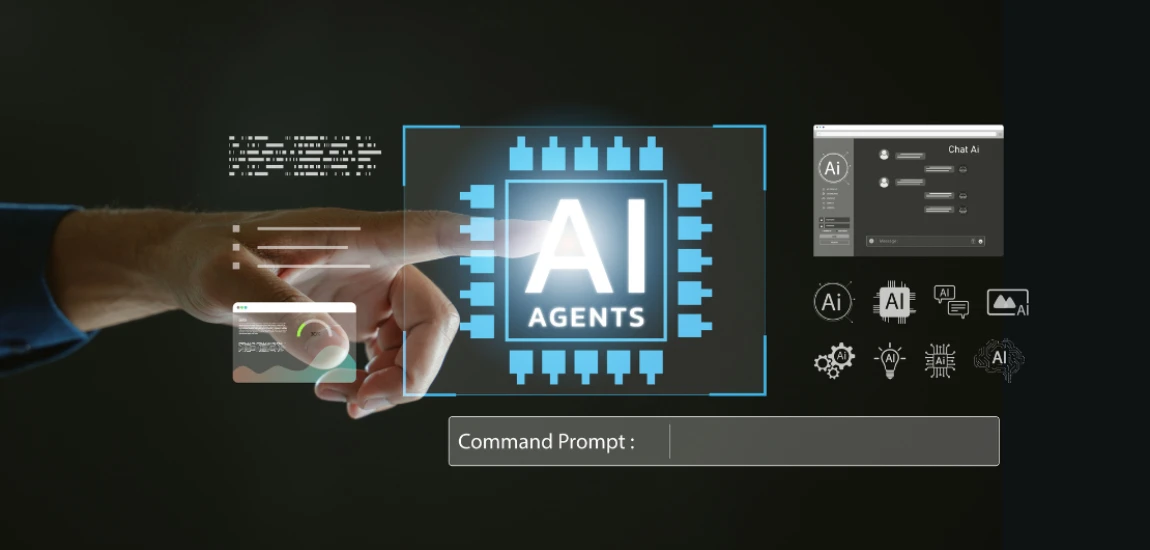
Artificial Intelligence is rapidly evolving beyond simple automation into highly intelligent, independent systems capable of decision-making, collaboration, and adaptation. One of the most transformative developments in this space is the emergence of autonomous AI agents and multi-agent collaboration systems. These systems represent a shift from isolated AI tools to interconnected ecosystems where multiple intelligent entities work together to achieve complex goals.
Autonomous AI agents are designed to operate independently, making decisions based on data, environment, and predefined objectives. When multiple such agents collaborate, they form multi-agent systems capable of solving problems that are too complex for a single AI model. From smart cities and financial systems to healthcare and robotics, these technologies are redefining how tasks are executed and optimized.
This blog dives deep into the mechanics, applications, benefits, and future of autonomous AI agents and collaborative systems, offering valuable insights for businesses, developers, and tech enthusiasts.
Understanding Autonomous AI Agents

What Are Autonomous AI Agents?
Autonomous AI agents are intelligent software entities capable of performing tasks without continuous human intervention. They perceive their environment, process information, and take actions to achieve specific objectives. Unlike traditional software, these agents can learn, adapt, and improve over time using machine learning and reinforcement learning techniques.
These agents are widely used in virtual assistants, recommendation engines, autonomous vehicles, and robotics. Their ability to operate independently makes them essential in scenarios requiring real-time decision-making and scalability.
Key Characteristics of Autonomous Agents
Autonomous AI agents possess several defining traits that distinguish them from conventional systems. They exhibit autonomy, meaning they can function without direct control. They also demonstrate reactivity by responding to environmental changes and proactiveness by taking initiative to achieve goals.
Additionally, these agents often incorporate learning capabilities, enabling them to evolve based on experience. This combination of features allows them to handle complex tasks efficiently and intelligently.
Types of Autonomous AI Agents
There are various types of autonomous agents, including reactive agents, deliberative agents, and hybrid agents. Reactive agents respond immediately to environmental stimuli, while deliberative agents use internal models to plan actions. Hybrid agents combine both approaches for enhanced functionality.
Each type serves different purposes depending on the complexity of the task, making autonomous AI agents versatile tools across industries.
What Are Multi-Agent Collaboration Systems?

Definition and Core Concept
Multi-agent systems consist of multiple autonomous AI agents that interact and collaborate to achieve shared or individual goals. These systems mimic real-world teamwork, where multiple participants coordinate their actions for better outcomes.
In such systems, agents communicate, negotiate, and sometimes compete with each other. This dynamic interaction allows them to solve complex problems more effectively than a single agent could.
How Agents Communicate and Coordinate
Communication is the backbone of multi-agent collaboration systems. Agents exchange information using protocols and messaging systems to coordinate actions. This may include sharing data, assigning tasks, or negotiating outcomes.
Coordination mechanisms ensure that agents work efficiently without conflicts. Techniques such as distributed planning, consensus algorithms, and task allocation strategies play a crucial role in maintaining system harmony.
Real-World Examples of Multi-Agent Systems
Multi-agent systems are widely used in applications such as traffic management, supply chain optimization, and financial trading. For instance, in smart cities, multiple agents manage traffic signals, public transport, and energy consumption simultaneously.
These systems are also used in gaming, simulations, and robotics, where collaboration between agents leads to more realistic and efficient outcomes.
Key Technologies Behind Autonomous and Multi-Agent Systems

Machine Learning and Reinforcement Learning
Machine learning is the foundation of autonomous AI agents, enabling them to learn from data and improve performance. Reinforcement learning, in particular, allows agents to learn through trial and error by receiving rewards or penalties.
This approach is especially useful in dynamic environments where predefined rules are insufficient. Agents continuously adapt their strategies to achieve optimal results.
Natural Language Processing and Communication
Natural Language Processing (NLP) enables agents to understand and generate human language, facilitating communication between agents and humans. This is crucial in applications such as virtual assistants and customer support systems.
In multi-agent systems, NLP can also enhance inter-agent communication, making interactions more intuitive and efficient.
Distributed Computing and Edge AI
Distributed computing allows multiple agents to operate across different systems while sharing data and resources. This enhances scalability and resilience. Edge AI further improves performance by processing data closer to the source, reducing latency and improving real-time decision-making.
Together, these technologies create a robust infrastructure for deploying autonomous and collaborative AI systems.
Applications Across Industries

Healthcare and Medical Systems
In healthcare, autonomous AI agents assist in diagnostics, patient monitoring, and treatment planning. Multi-agent systems can coordinate between different departments, ensuring efficient patient care and resource allocation.
For example, agents can monitor patient vitals, alert doctors in emergencies, and optimize hospital workflows simultaneously.
Finance and Trading Systems
In the financial sector, multi-agent systems are used for algorithmic trading, fraud detection, and risk management. Autonomous agents analyze market trends, execute trades, and adjust strategies in real time.
This leads to faster decision-making and improved financial performance while minimizing risks.
Smart Cities and Transportation
Smart cities rely heavily on multi-agent systems to manage infrastructure. Autonomous agents control traffic lights, monitor environmental conditions, and optimize energy usage.
In transportation, self-driving vehicles act as autonomous agents that communicate with each other to avoid collisions and improve traffic flow.
Benefits of Autonomous AI and Multi-Agent Collaboration

Enhanced Efficiency and Productivity
One of the biggest advantages of autonomous AI agents is their ability to perform tasks faster and more accurately than humans. Multi-agent collaboration further enhances efficiency by distributing tasks among multiple agents.
This leads to improved productivity and reduced operational costs for businesses.
Scalability and Flexibility
Multi-agent systems are highly scalable, allowing organizations to add or remove agents as needed. This flexibility makes them suitable for dynamic environments where requirements change frequently.
Businesses can adapt quickly to new challenges without overhauling their entire system.
Improved Decision-Making
With access to vast amounts of data and advanced analytics, autonomous agents can make informed decisions in real time. Collaboration between agents ensures that decisions are well-coordinated and optimized for the best outcomes.
This is particularly valuable in industries where timely decisions are critical.
Challenges and Limitations

Complexity in Design and Implementation
Designing multi-agent systems is inherently complex due to the need for coordination, communication, and conflict resolution. Ensuring that all agents work harmoniously requires advanced algorithms and careful planning.
This complexity can increase development time and costs.
Security and Ethical Concerns
Autonomous AI systems raise significant security and ethical issues. Unauthorized access or malicious agents can disrupt operations and compromise data. Additionally, ethical concerns arise regarding decision-making and accountability.
Organizations must implement robust security measures and ethical guidelines to address these challenges.
Interoperability and Standardization
Lack of standardization can hinder the integration of multi-agent systems across different platforms. Ensuring interoperability between agents developed by different organizations remains a major challenge.
Standard protocols and frameworks are needed to enable seamless collaboration.


Shivya Nath authors "The Shooting Star," a blog that covers responsible and off-the-beaten-path travel. She writes about sustainable tourism and community-based experiences.
Shivya Nath

Prev Post

Next Post