
Artificial General Intelligence Architectures and the Path Toward Human-Level Machine Intelligence

Artificial intelligence has already transformed industries through technologies such as machine learning, natural language processing, computer vision, and intelligent automation. Most existing AI systems, however, are designed to perform specific tasks such as language translation, image recognition, medical diagnosis, or recommendation systems. While these specialized models have achieved remarkable success, they cannot easily transfer knowledge between unrelated tasks or demonstrate the broad reasoning abilities that humans naturally possess. This limitation has inspired researchers to pursue Artificial General Intelligence (AGI), a new generation of AI capable of learning, adapting, and solving problems across a wide variety of domains.
Artificial General Intelligence architectures combine multiple branches of artificial intelligence, including deep learning, reinforcement learning, cognitive computing, symbolic reasoning, memory systems, and autonomous decision-making. Instead of relying solely on pre-programmed instructions, AGI systems aim to understand concepts, apply previous knowledge to unfamiliar situations, and continuously improve through experience. Such capabilities would allow intelligent machines to perform scientific research, develop innovative solutions, collaborate naturally with humans, and adapt to changing environments with minimal supervision.
Although AGI remains an active area of research rather than an achieved technology, rapid advances in computing power, large-scale AI models, neuroscience, robotics, and cognitive science continue bringing researchers closer to this ambitious goal. As development progresses, Artificial General Intelligence architectures may fundamentally reshape healthcare, education, manufacturing, scientific discovery, and many other sectors while raising important questions about ethics, governance, safety, and responsible innovation.
Understanding Artificial General Intelligence Architectures

What Is Artificial General Intelligence?
Artificial General Intelligence refers to intelligent computer systems capable of performing a wide variety of intellectual tasks with human-like flexibility. Unlike narrow AI, which is designed for specific applications, AGI aims to understand new situations, learn independently, reason logically, solve unfamiliar problems, and transfer knowledge across different domains. An AGI system would not simply follow predefined instructions but would continuously develop new skills through experience and interaction with its environment. This adaptability represents one of the defining characteristics that distinguishes human intelligence from today's specialized AI technologies.
Core Components of AGI Architectures
Developing Artificial General Intelligence requires integrating several advanced technologies into a unified architecture. Deep neural networks enable pattern recognition and perception, while symbolic reasoning supports logical thinking and structured problem-solving. Reinforcement learning allows systems to improve through trial and error, and long-term memory modules help retain and retrieve knowledge over time. Cognitive computing techniques simulate aspects of human reasoning, decision-making, and learning, while advanced planning systems coordinate complex tasks. Together, these components aim to create intelligent systems capable of flexible reasoning across diverse real-world situations.
Why Human-Level Machine Intelligence Matters
Human-level machine intelligence has the potential to solve complex challenges that exceed the capabilities of current AI systems. AGI could accelerate scientific discovery, improve healthcare diagnostics, optimize industrial processes, support personalized education, and assist governments in making data-driven decisions. By understanding unfamiliar problems and adapting to changing circumstances, AGI systems could collaborate with humans more effectively while increasing productivity across numerous industries. At the same time, researchers emphasize the importance of ensuring that these powerful technologies are developed responsibly, transparently, and with appropriate safeguards.
Technologies Driving the Development of AGI

Deep Learning, Machine Learning, and Neural Networks
Deep learning provides much of the computational foundation for modern artificial intelligence and remains a central component of AGI research. Neural networks process enormous datasets to recognize patterns, classify information, and generate intelligent predictions. Machine learning algorithms continuously improve performance by learning from experience rather than relying entirely on manually programmed rules. As computing resources and training techniques advance, increasingly sophisticated neural architectures are enabling AI systems to perform more complex reasoning, language understanding, and decision-making tasks that move closer to the broader objectives of Artificial General Intelligence.
Reinforcement Learning and Cognitive Computing
Reinforcement learning allows intelligent systems to develop effective strategies by interacting with their environment and receiving feedback based on their actions. Instead of memorizing solutions, AGI systems learn through continuous experimentation and adaptation. Cognitive computing complements this approach by simulating aspects of human thought processes, including reasoning, planning, attention, memory, and contextual understanding. Together, these technologies enable AI systems to become more flexible, adaptive, and capable of solving unfamiliar problems across multiple domains.
Knowledge Representation and Autonomous Reasoning
One of the greatest challenges in AGI research is enabling machines to understand knowledge in ways similar to humans. Knowledge representation systems organize information into structured formats that support reasoning, inference, and decision-making. Autonomous reasoning algorithms analyze relationships between concepts, evaluate possible solutions, and draw logical conclusions even when information is incomplete. These capabilities help AGI architectures move beyond simple pattern recognition toward deeper understanding, allowing intelligent systems to make informed decisions across increasingly complex and dynamic environments.
Applications of Artificial General Intelligence Across Future Industries

Healthcare, Scientific Research, and Drug Discovery
Artificial General Intelligence has the potential to revolutionize healthcare by analyzing vast amounts of medical information, identifying complex disease patterns, and supporting highly personalized treatment plans. Unlike today's specialized AI systems, AGI could integrate knowledge from genetics, medical imaging, laboratory reports, clinical history, and pharmaceutical research to provide more comprehensive diagnoses and treatment recommendations. Researchers may also use AGI to accelerate drug discovery by simulating biological interactions, predicting molecular behavior, and identifying promising drug candidates in significantly less time than conventional methods. In scientific research, AGI could analyze multidisciplinary data, generate innovative hypotheses, and assist scientists in solving complex global challenges related to medicine, energy, climate science, and advanced materials.
Education, Business, and Industrial Automation
The education sector could benefit greatly from AGI through intelligent tutoring systems that adapt lessons according to each student's learning style, knowledge level, and academic progress. These highly personalized educational experiences may improve student engagement while helping educators focus on higher-value teaching activities. In business, AGI could enhance strategic planning, financial forecasting, customer service, and supply chain optimization by analyzing enormous volumes of structured and unstructured data. Manufacturing industries may use AGI to coordinate autonomous production systems, predict equipment failures, optimize resource allocation, and continuously improve operational efficiency. These capabilities could significantly increase productivity while reducing costs across a wide range of industries.
Robotics, Space Exploration, and Smart Infrastructure
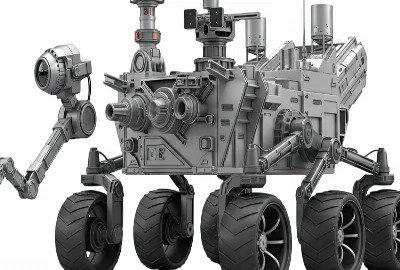
Artificial General Intelligence is expected to transform advanced robotics by enabling machines to perform complex physical and cognitive tasks with minimal human supervision. Intelligent robots equipped with AGI could safely operate in hazardous environments, assist disaster response teams, maintain critical infrastructure, and collaborate naturally with human workers. Space exploration may also benefit from AGI-powered robotic systems capable of autonomous navigation, scientific research, habitat construction, and long-duration extraterrestrial missions where communication delays make real-time human control impractical. Smart cities and intelligent infrastructure could further utilize AGI to optimize transportation networks, energy management, public safety, and urban planning through continuous analysis of real-time environmental and operational data.
Benefits and Challenges of Human-Level Machine Intelligence

Advantages of Artificial General Intelligence
Artificial General Intelligence offers the possibility of solving problems that extend beyond the capabilities of today's narrow AI systems. Its ability to transfer knowledge between different domains allows it to address unfamiliar situations without requiring extensive retraining. AGI could significantly accelerate scientific innovation, improve healthcare outcomes, strengthen cybersecurity, optimize industrial production, and support more informed decision-making in governments and businesses. By automating complex cognitive tasks while collaborating effectively with human experts, AGI has the potential to increase productivity, improve efficiency, and contribute to solutions for many global challenges, including environmental sustainability and resource management.
Ethical, Technical, and Safety Challenges
Despite its enormous potential, AGI also presents significant technical and ethical challenges. Ensuring that highly intelligent systems remain safe, transparent, and aligned with human values is one of the most important priorities for researchers. Developing reliable reasoning, long-term memory, common-sense understanding, and adaptable learning remains technically difficult. Ethical concerns include privacy protection, accountability, bias, workforce transformation, and the responsible use of autonomous decision-making systems. Governments, research institutions, and technology companies must collaborate to establish clear governance frameworks, safety standards, and regulatory policies that encourage innovation while minimizing potential risks associated with increasingly capable AI systems.
Future Trends and Emerging Opportunities
The future of Artificial General Intelligence will likely involve continued integration of deep learning, symbolic reasoning, neuroscience-inspired computing, reinforcement learning, and advanced cognitive architectures. Researchers are exploring hybrid AI models capable of combining logical reasoning with data-driven learning to improve flexibility and generalization. Advances in quantum computing, neuromorphic processors, and distributed AI systems may further accelerate AGI development. As these technologies mature, AGI could become a valuable partner in scientific discovery, healthcare, education, environmental restoration, advanced manufacturing, and space exploration. Although true human-level machine intelligence remains a long-term objective, ongoing research continues to bring the field closer to creating more adaptable, intelligent, and collaborative AI systems that can support humanity across countless domains.


Shivya Nath authors "The Shooting Star," a blog that covers responsible and off-the-beaten-path travel. She writes about sustainable tourism and community-based experiences.
Shivya Nath
Prev Post
Next Post