
AI-Powered Space Robotics and the Evolution of Autonomous Planetary Exploration
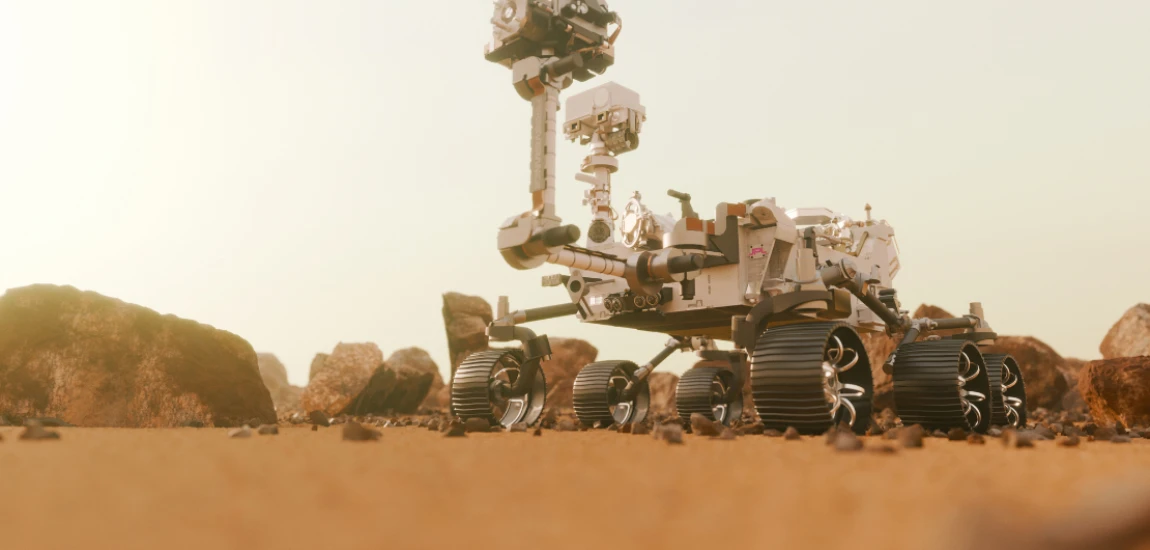
Humanity has explored only a small portion of the Solar System. Robotic spacecraft have visited planets, moons, asteroids, and comets, but most missions still depend heavily on instructions sent from Earth. Because of enormous distances, communication delays, limited bandwidth, and unpredictable environments, traditional remote control is becoming increasingly difficult as missions travel farther into space.
This is where AI-powered space robotics could transform planetary exploration.
Artificial intelligence can allow robotic explorers to interpret their surroundings, make decisions, identify scientific targets, plan routes, manage energy, and respond to unexpected situations. Instead of functioning as machines that simply follow commands, future planetary robots could become increasingly autonomous scientific partners.
A rover exploring Mars could identify an unusual rock and decide to investigate it. A robotic spacecraft near an asteroid could adjust its trajectory based on real-time observations. A swarm of small robots could cooperate to map the surface of a distant moon.
The future of space exploration may therefore depend on machines that can think, adapt, learn, and operate independently.
AI-powered space robotics combines autonomous navigation, machine learning, computer vision, robotic manipulation, advanced sensors, edge computing, and planetary science. Together, these technologies could enable a new generation of missions capable of exploring environments that are too distant, dangerous, or difficult for continuous human control.
The Rise of AI-Powered Space Robotics

From Remote-Controlled Machines to Autonomous Explorers
Early robotic space missions depended heavily on commands created by teams on Earth. Engineers had to analyze data, plan movements, and send instructions across enormous distances.
This approach works for relatively simple operations, but it becomes increasingly challenging as missions travel farther away.
AI allows robots to make certain decisions independently. A planetary rover can analyze images, identify obstacles, and determine a safe path without waiting for a new command from Earth.
This autonomy is particularly important when communication delays can last many minutes or even longer.
Robots That Understand Their Environments
Future space robots will increasingly use computer vision, lidar, radar, spectroscopy, and other sensors to understand their surroundings.
AI systems can combine information from multiple sensors to create an environmental model.
A robot may recognize cliffs, loose soil, rocks, slopes, or potential scientific targets.
This allows the machine to respond dynamically rather than following a rigid sequence of instructions.
Why Autonomy Is Essential for Deep-Space Missions
The farther a spacecraft travels, the more difficult real-time control becomes.
A mission operating near a distant moon or asteroid may need to make immediate decisions.
Autonomous systems can continue operating even when communication with Earth is interrupted.
This makes AI-powered robotics essential for the future of deep-space exploration.
Autonomous Navigation Across Alien Worlds

Intelligent Rovers and Planetary Mobility
Planetary surfaces are unpredictable. Rovers may encounter rocks, sand, steep slopes, craters, and terrain that was not fully visible from orbit.
AI-powered navigation systems can analyze the environment and plan movement in real time.
Instead of following a fixed route, an autonomous rover can select alternative paths when obstacles appear.
This improves mission flexibility and reduces the risk of getting stuck.
Machine Learning for Terrain Analysis
Machine learning can help robotic explorers recognize patterns in planetary landscapes.
A rover may identify geological formations, mineral deposits, ice, or unusual surface structures.
AI can compare visual and sensor data with previously studied environments to improve its understanding.
Over time, the robot may become more capable of distinguishing scientifically valuable locations from ordinary terrain.
Autonomous Route Planning
A space robot must balance exploration goals with energy, time, communication opportunities, and safety.
AI can evaluate multiple routes and select the most efficient option.
If a rover has limited power, it may choose a shorter route to a high-value scientific target.
Autonomous planning allows missions to make better use of limited resources.
AI-Driven Robotic Science and Discovery

Robots That Select Scientific Targets
One of the most exciting possibilities is the development of robots capable of identifying and prioritizing scientific discoveries.
A rover may detect a mineral pattern or geological structure that appears unusual.
Instead of simply recording the observation, AI could determine that the location deserves further investigation.
The robot could collect additional images, conduct measurements, or use scientific instruments to gather more data.
This could dramatically increase the efficiency of planetary missions.
Intelligent Robotic Manipulation
Future space robots may perform increasingly complex physical tasks.
Robotic arms could collect samples, drill into surfaces, move objects, or construct scientific instruments.
AI can help robots understand the position and properties of objects.
This is particularly important because planetary environments are often uncertain.
A robot may need to adjust its grip depending on whether a rock is heavy, loose, fragile, or partially buried.
Autonomous Sample Collection
Sample collection is one of the most valuable activities in planetary exploration.
AI can help identify promising samples based on chemical, geological, or visual information.
Robots may eventually make independent decisions about which materials to collect.
This could increase the scientific value of missions while reducing the need for constant human intervention.
Swarm Robotics and Collaborative Planetary Exploration

Networks of Small Robotic Explorers
Instead of sending one large rover, future missions may deploy groups of smaller robots.
These robots could explore different areas simultaneously.
A swarm of machines may include specialized units for mapping, drilling, communication, imaging, and sample collection.
If one robot fails, the others could continue operating.
This could create more resilient exploration systems.
Robots Working Together
AI can allow robotic systems to coordinate their activities.
One robot may identify a scientific target while another travels to investigate it.
A third robot could act as a communication relay.
By sharing information, robots can work together as a distributed exploration network.
Exploring Difficult Environments
Swarm robotics may be particularly valuable in environments that are difficult for traditional rovers.
Small robots could explore caves, lava tubes, steep terrain, or areas beneath ice.
Some could fly, crawl, roll, or climb.
This diversity could allow robotic exploration to reach places that conventional vehicles cannot.


Gilbert Ott, the man behind "God Save the Points," specializes in travel deals and luxury travel. He provides expert advice on utilizing rewards and finding travel discounts.
Gilbert Ott
Prev Post

Next Post