
AI-Orchestrated Autonomous Factories and the Future of Self-Optimizing Manufacturing
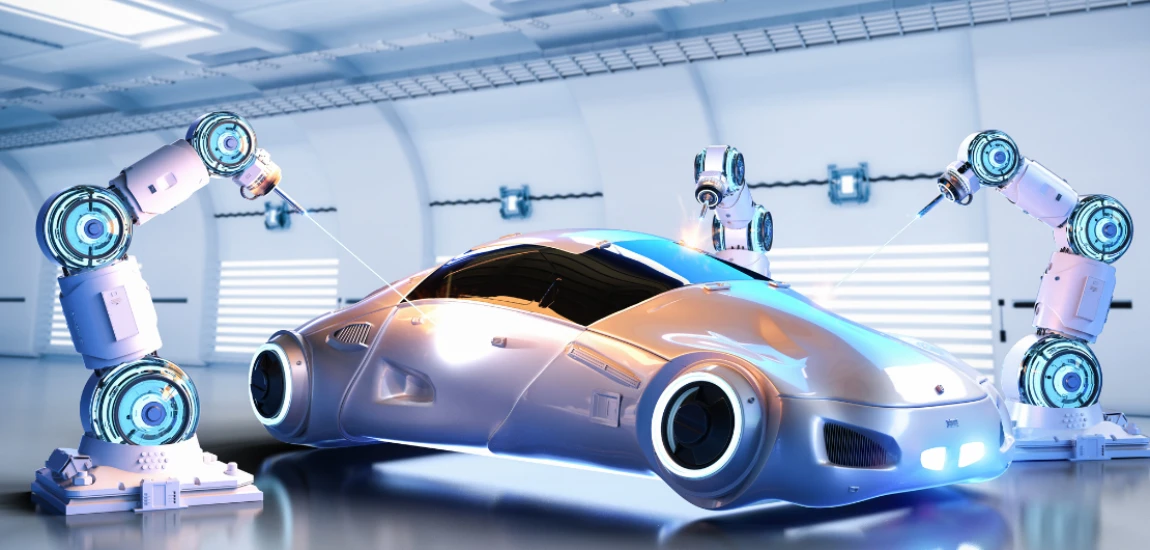
The manufacturing industry has undergone remarkable transformation over the past century. From manual assembly lines to robotics and industrial automation, every technological advancement has increased productivity, improved product quality, and reduced production costs. Today, manufacturing is entering another revolutionary phase with the emergence of AI-Orchestrated Autonomous Factories, where artificial intelligence coordinates every aspect of production to create highly efficient, self-optimizing manufacturing systems.
Unlike conventional automated factories that rely on predefined programming, autonomous factories use artificial intelligence, machine learning, industrial Internet of Things (IIoT) devices, robotics, cloud computing, edge computing, and real-time analytics to continuously monitor and optimize production processes. These intelligent systems can analyze massive volumes of operational data, identify inefficiencies, predict equipment failures, and automatically adjust manufacturing workflows without constant human intervention.
The potential impact of AI-orchestrated autonomous factories extends across multiple industries, including automotive, aerospace, electronics, pharmaceuticals, food processing, and consumer goods manufacturing. Companies can reduce operational costs, improve product consistency, enhance worker safety, minimize waste, and respond more quickly to changing customer demands. At the same time, intelligent manufacturing supports sustainability by improving energy efficiency and optimizing the use of raw materials.
As artificial intelligence technologies continue to advance, self-optimizing manufacturing systems are expected to become the foundation of Industry 5.0, where humans and intelligent machines collaborate more effectively than ever before. This article explores how AI-orchestrated autonomous factories operate, the technologies driving their development, and their growing role in shaping the future of global manufacturing.
Understanding AI-Orchestrated Autonomous Factories

What Are AI-Orchestrated Autonomous Factories?
AI-Orchestrated Autonomous Factories are advanced manufacturing facilities where artificial intelligence manages, coordinates, and continuously improves production operations with minimal human intervention. Instead of depending solely on fixed automation systems, these factories use intelligent software that can observe production conditions, analyze operational data, make informed decisions, and optimize manufacturing processes in real time.
Every stage of production is connected through a digital ecosystem that includes industrial robots, automated machinery, sensors, quality inspection systems, inventory management platforms, and logistics networks. Artificial intelligence serves as the central decision-making engine, ensuring that all components work together efficiently to maximize productivity and minimize waste.
Unlike traditional factories where production schedules and machine settings require manual adjustments, autonomous factories can automatically modify workflows based on changing demand, equipment performance, material availability, or environmental conditions. This adaptability enables manufacturers to respond more quickly to market changes while maintaining consistent product quality.
As digital transformation continues across industrial sectors, AI-orchestrated autonomous factories are becoming a key component of smart manufacturing strategies aimed at improving competitiveness and long-term operational resilience.
The Technologies That Power Autonomous Manufacturing
The success of autonomous factories depends on the integration of several advanced technologies working together seamlessly. Artificial intelligence forms the core of the system by analyzing production data, recognizing operational patterns, and making intelligent decisions that improve efficiency.
Industrial Internet of Things (IIoT) devices continuously collect real-time information from machines, production lines, warehouses, and environmental monitoring systems. These connected sensors provide detailed visibility into every aspect of factory operations.
Machine learning algorithms process this data to identify trends, predict equipment failures, optimize production schedules, and improve product quality. Industrial robots perform repetitive tasks with exceptional precision while collaborating safely with human workers through advanced sensing technologies.
Edge computing enables rapid processing of operational data directly within the factory, reducing delays associated with cloud communication. Cloud computing complements these local systems by supporting large-scale analytics, long-term data storage, and enterprise-wide optimization.
Digital twins further enhance autonomous manufacturing by creating virtual replicas of physical production systems. Engineers can simulate process improvements, evaluate operational changes, and test new manufacturing strategies before implementing them in the real factory.
Together, these technologies create highly intelligent production environments capable of learning, adapting, and continuously improving performance.
How AI Coordinates Every Manufacturing Process
Artificial intelligence acts as the central orchestrator within autonomous factories by connecting every stage of manufacturing into a unified decision-making system. Rather than optimizing individual machines independently, AI analyzes the entire production ecosystem to ensure maximum efficiency across all operations.
When customer demand changes, AI automatically adjusts production schedules, allocates resources, updates inventory requirements, and coordinates robotic systems to maintain smooth manufacturing workflows. If equipment begins showing early signs of wear, predictive maintenance algorithms schedule repairs before breakdowns occur, preventing costly downtime.
Quality control systems powered by computer vision inspect products continuously throughout production. AI detects defects immediately, allowing corrective actions before additional faulty products are manufactured. Supply chain management systems also benefit from AI by forecasting material requirements and optimizing supplier coordination.
This continuous cycle of monitoring, analysis, prediction, and optimization allows autonomous factories to improve performance without requiring constant human supervision. As more operational data becomes available, AI models learn from experience and become increasingly effective at managing complex manufacturing environments.
The Rise of Self-Optimizing Manufacturing Systems

Moving Beyond Traditional Factory Automation
For many years, factory automation focused primarily on replacing manual labor with programmable machines capable of performing repetitive tasks. While these systems significantly improved productivity, they often lacked flexibility and required human engineers to update production settings whenever conditions changed.
Self-optimizing manufacturing introduces a fundamentally different approach. Instead of simply following predefined instructions, AI-powered production systems continuously analyze operational data and adjust manufacturing processes automatically. This enables factories to respond intelligently to equipment performance, customer demand, supply chain disruptions, and production quality without waiting for manual intervention.
For example, if a production line experiences reduced efficiency, artificial intelligence can identify the root cause, recommend corrective actions, or automatically reconfigure machine settings to restore optimal performance. If customer demand shifts toward a different product, manufacturing schedules can be updated dynamically while minimizing production delays.
This ability to adapt continuously makes self-optimizing factories far more resilient and efficient than traditional automated manufacturing systems.
Real-Time Data as the Foundation of Intelligent Manufacturing
Modern autonomous factories generate enormous amounts of operational data through thousands of connected sensors installed throughout production facilities. These sensors monitor equipment performance, energy consumption, production speed, environmental conditions, inventory levels, and product quality every second.
Artificial intelligence transforms this raw information into actionable insights by identifying hidden patterns and detecting operational anomalies before they affect production. Managers receive accurate, real-time visibility into every aspect of factory performance, allowing faster and better-informed decision-making.
Real-time analytics also improve collaboration between manufacturing departments. Production planning, maintenance, logistics, procurement, and quality assurance systems share information continuously, creating a synchronized manufacturing ecosystem where every operational decision is supported by current data.
As sensor technologies continue improving, real-time manufacturing intelligence will become increasingly detailed, enabling factories to optimize operations with even greater precision.
Building Smarter, More Adaptive Production Environments
The future of manufacturing depends on creating production systems capable of learning and adapting to constantly changing conditions. AI-Orchestrated Autonomous Factories achieve this by combining machine learning, predictive analytics, robotics, and digital twins into highly flexible manufacturing environments.
Instead of treating every production cycle identically, intelligent systems evaluate performance continuously and adjust operations based on real-world conditions. Machines automatically optimize energy consumption, production speed, maintenance schedules, and quality control parameters while minimizing waste and downtime.
Adaptive manufacturing also supports greater product customization. Factories can efficiently produce smaller batches of personalized products without sacrificing productivity or increasing operational complexity. This flexibility enables manufacturers to respond quickly to evolving customer preferences and competitive market demands.
As Industry 5.0 continues developing, self-optimizing manufacturing systems will become increasingly intelligent, collaborative, and sustainable, enabling organizations to achieve higher productivity while maintaining exceptional quality and operational efficiency.
Applications of AI-Orchestrated Autonomous Factories Across Industries

Transforming Automotive and Aerospace Manufacturing
The automotive and aerospace industries are among the earliest adopters of AI-orchestrated autonomous factories because they require exceptional precision, efficiency, and quality control. Manufacturing vehicles and aircraft involves thousands of interconnected components, making intelligent automation essential for maintaining consistency and reducing production errors.
Artificial intelligence coordinates robotic assembly lines, monitors equipment performance, and analyzes production data in real time to ensure every manufacturing stage operates efficiently. Computer vision systems inspect components for microscopic defects, allowing problems to be identified immediately before products move further down the production line.
Predictive maintenance is another valuable application. AI continuously monitors machinery such as robotic arms, welding equipment, and conveyor systems to detect early signs of wear. Instead of waiting for equipment failures, maintenance teams receive alerts before breakdowns occur, reducing downtime and extending machine lifespan.
Autonomous factories also support greater production flexibility. Manufacturers can quickly switch between different vehicle models or aircraft components without lengthy manual reconfiguration. AI automatically adjusts production schedules, inventory management, and machine settings to accommodate changing customer demand.
As electric vehicles, autonomous transportation, and advanced aerospace technologies continue evolving, AI-driven manufacturing systems will become increasingly important for supporting innovation while maintaining high production standards.
Improving Electronics, Pharmaceutical, and Consumer Goods Production
Electronics manufacturing requires extraordinary accuracy because even the smallest defect can affect product performance. AI-orchestrated autonomous factories improve production by coordinating robotic assembly, automated testing, and quality inspection with remarkable precision.
Computer vision systems inspect circuit boards, microchips, and electronic components at extremely high speeds while identifying defects that are nearly impossible for human inspectors to detect consistently. Machine learning algorithms analyze production trends and continuously improve manufacturing accuracy based on previous inspection results.
The pharmaceutical industry also benefits significantly from intelligent manufacturing. AI manages ingredient mixing, packaging, labeling, sterilization, and quality assurance while ensuring strict compliance with regulatory standards. Real-time monitoring helps maintain consistent product quality and reduces the risk of manufacturing errors that could affect patient safety.
Consumer goods manufacturers use autonomous factories to produce household appliances, packaged foods, cosmetics, and personal care products more efficiently. Artificial intelligence optimizes production schedules, inventory levels, and packaging operations while responding rapidly to changing market demand.
These capabilities enable manufacturers across multiple industries to increase productivity, reduce waste, improve product consistency, and deliver higher-quality products to customers.
Supporting Smart Supply Chains and Logistics
Manufacturing extends beyond factory floors to include complex supply chains responsible for sourcing raw materials, managing inventory, coordinating transportation, and delivering finished products. AI-orchestrated autonomous factories integrate seamlessly with intelligent logistics systems to optimize these operations.
Artificial intelligence forecasts future demand using historical sales data, seasonal trends, market conditions, and customer behavior. Based on these predictions, procurement systems automatically adjust material orders to maintain optimal inventory levels while avoiding shortages or excessive stock.
Warehouse automation also benefits from AI-driven robotics that organize inventory, retrieve products, and prepare shipments with minimal human intervention. Smart logistics platforms optimize transportation routes, reduce delivery times, and improve fuel efficiency by analyzing traffic conditions, weather forecasts, and distribution schedules.
Digital twins further strengthen supply chain management by simulating potential disruptions before they occur. Manufacturers can evaluate alternative suppliers, transportation routes, or production schedules to maintain business continuity during unexpected events.
As global supply chains become increasingly interconnected, AI-orchestrated autonomous factories provide the intelligence needed to create faster, more resilient, and highly efficient manufacturing ecosystems.
Benefits and Advantages of Self-Optimizing Manufacturing

Increasing Productivity and Operational Efficiency
One of the most significant advantages of AI-orchestrated autonomous factories is their ability to maximize productivity while minimizing operational inefficiencies. Traditional manufacturing systems often rely on manual supervision and scheduled adjustments, which can slow production and create unnecessary downtime.
Self-optimizing manufacturing systems continuously analyze factory performance and automatically adjust operations to maintain peak efficiency. Artificial intelligence identifies bottlenecks, balances workloads across production lines, and optimizes machine utilization without requiring constant human oversight.
Predictive maintenance further improves productivity by identifying equipment issues before failures occur. Instead of shutting down entire production lines unexpectedly, maintenance activities can be scheduled during planned operational breaks, reducing costly interruptions.
AI also optimizes energy consumption by adjusting machine operation according to production requirements. This improves resource utilization while lowering operational expenses and supporting long-term sustainability goals.
Through continuous learning and data-driven decision-making, autonomous factories achieve higher output, lower production costs, and improved overall manufacturing performance.
Enhancing Product Quality and Workplace Safety
Maintaining consistent product quality is essential for customer satisfaction and regulatory compliance. AI-powered quality inspection systems use advanced computer vision and machine learning algorithms to examine products throughout every stage of production.
Unlike manual inspections that may vary between operators, intelligent inspection systems deliver highly consistent results while detecting even microscopic defects. Early identification of production issues reduces waste, prevents defective products from reaching customers, and protects brand reputation.
Workplace safety also improves significantly within autonomous factories. AI continuously monitors equipment, environmental conditions, and worker activities to identify potential hazards before accidents occur. Smart sensors detect abnormal machine behavior, overheating equipment, gas leaks, or unsafe operating conditions, enabling rapid corrective action.
Collaborative robots equipped with intelligent sensing systems can safely work alongside human employees by automatically slowing down or stopping when people enter their operating area. This combination of automation and safety technology creates healthier working environments while reducing occupational risks.
As manufacturing becomes increasingly automated, artificial intelligence will continue strengthening both product quality and employee protection.
Driving Sustainability and Long-Term Industrial Growth
Sustainability has become a major priority for manufacturers worldwide, and AI-orchestrated autonomous factories contribute significantly to environmentally responsible production. Intelligent manufacturing systems optimize raw material usage, reduce production waste, and minimize unnecessary energy consumption through continuous process improvement.
Artificial intelligence analyzes manufacturing operations to identify opportunities for reducing carbon emissions and improving resource efficiency. Production schedules can be optimized to maximize renewable energy utilization while minimizing electricity demand during peak periods.
Predictive maintenance extends equipment lifespan, reducing the need for frequent replacements and lowering electronic waste. Smart inventory management prevents excessive material purchasing while minimizing product obsolescence and warehouse waste.
Beyond environmental benefits, self-optimizing manufacturing strengthens long-term business competitiveness. Companies gain greater flexibility to respond to market changes, introduce customized products, and scale production efficiently without major infrastructure investments.
As Industry 5.0 continues evolving, AI-orchestrated autonomous factories will serve as the foundation for intelligent, sustainable, and resilient manufacturing ecosystems. Their ability to combine artificial intelligence, automation, robotics, and real-time analytics positions them as one of the most transformative innovations shaping the future of global industrial production.


Ben Schlappig runs "One Mile at a Time," focusing on aviation and frequent flying. He offers insights on maximizing travel points, airline reviews, and industry news.
Ben Schlappig

Prev Post
Next Post