
AI-Enabled Space Exploration Systems and Autonomous Interplanetary Robotics
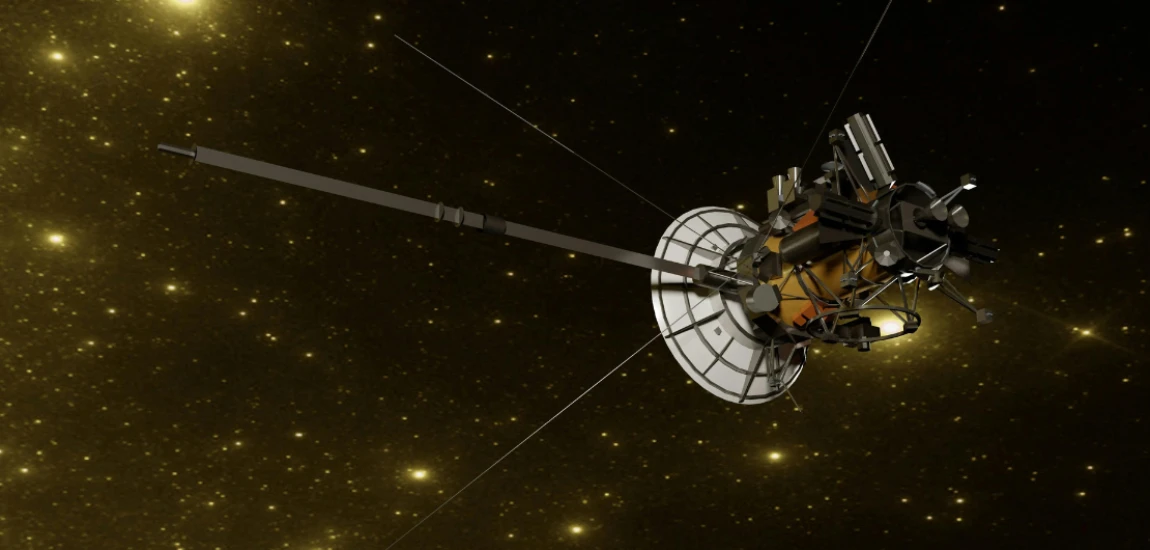
Humanity’s exploration of space has always been driven by innovation, curiosity, and technological advancement. From early satellites to lunar landings and Mars rovers, each milestone has pushed the boundaries of what is possible. However, as missions extend deeper into space, traditional control methods from Earth become increasingly limited due to communication delays, harsh environments, and the complexity of interplanetary operations.
This is where AI-enabled space exploration systems and autonomous interplanetary robotics are revolutionizing the field. These advanced systems leverage artificial intelligence, machine learning, and robotics to enable spacecraft and rovers to make decisions independently, adapt to unpredictable environments, and carry out scientific missions without constant human intervention.
Autonomous systems are no longer just supportive tools—they are becoming the primary operators in deep space exploration. From navigating alien terrain to analyzing geological samples in real time, AI-driven robots are expanding humanity’s reach across the solar system.
In this blog, we will explore the architecture, capabilities, applications, challenges, and future potential of AI-powered space exploration systems and interplanetary robotics in detail.
Foundations of AI-Enabled Space Exploration Systems

Evolution of Space Automation Technologies
Space exploration has evolved from fully manual mission control systems to semi-autonomous spacecraft and now to fully autonomous AI-driven systems. Early missions required constant communication between Earth-based teams and spacecraft, but this approach becomes impractical for deep space missions where signals can take minutes or even hours to travel.
Modern AI-enabled systems address this limitation by embedding intelligence directly into spacecraft and robotic systems. These systems can analyze data locally, make decisions in real time, and adapt to unforeseen conditions without waiting for instructions from Earth.
This evolution represents a major shift from reactive mission control to proactive and self-directed exploration systems.
Core AI Technologies in Space Systems
AI-enabled space exploration relies on several key technologies including machine learning, computer vision, reinforcement learning, and autonomous navigation systems.
Machine learning algorithms help spacecraft identify patterns in environmental data, while computer vision allows robotic systems to interpret images from planetary surfaces.
Reinforcement learning enables robots to improve performance over time by learning from previous actions and outcomes.
Autonomy Levels in Space Robotics
Space robotics operates at different levels of autonomy, ranging from basic automated functions to full decision-making independence.
High-level autonomous systems can perform complex tasks such as landing, terrain navigation, obstacle avoidance, and scientific sampling without human input.
Architecture of Autonomous Interplanetary Robotics

Onboard Intelligent Processing Units
Autonomous interplanetary robots are equipped with high-performance onboard computing systems that allow them to process data locally.
These systems are optimized for low power consumption and high efficiency, enabling continuous operation in harsh space conditions.
Onboard AI reduces reliance on Earth-based computing and minimizes delays caused by long-distance communication.
Sensor Fusion and Environmental Awareness
Robotic explorers use multiple sensors including cameras, spectrometers, radar systems, and thermal detectors.
Sensor fusion combines data from these sources to create a comprehensive understanding of the environment.
This enables robots to detect hazards, identify geological features, and make navigation decisions in real time.
Autonomous Control and Decision Systems
At the core of interplanetary robotics is an autonomous control system that processes incoming data and determines actions.
These systems use decision trees, neural networks, and predictive models to evaluate possible outcomes and select optimal paths.
Applications in Planetary Exploration

Mars Exploration and Rover Autonomy
Mars rovers are among the most advanced examples of autonomous space robotics. They navigate rocky terrain, collect samples, and conduct experiments without constant human control.
AI allows these rovers to choose safe paths, avoid hazards, and prioritize scientific targets.
This autonomy significantly increases mission efficiency and scientific output.
Lunar Surface Operations
Future lunar missions will rely heavily on autonomous robots for construction, resource extraction, and habitat development.
These systems will operate in extreme conditions, including temperature fluctuations and dust storms.
Deep Space Probe Intelligence
Space probes traveling beyond Mars require full autonomy due to communication delays.
AI systems onboard these probes help them adapt to unknown environments and optimize data collection strategies.
AI for Navigation and Hazard Avoidance

Real-Time Terrain Mapping
Autonomous robots create detailed 3D maps of planetary surfaces using LiDAR, stereo imaging, and radar data.
These maps are updated in real time as the robot moves.
Obstacle Detection and Path Planning
AI systems identify obstacles such as rocks, cliffs, and craters.
They then calculate safe navigation paths to avoid damage and ensure mission success.
Adaptive Mobility Systems
Robots can adjust movement strategies based on terrain conditions, such as switching between wheeled, legged, or hybrid locomotion modes.


Dave Lee runs "GoBackpacking," a blog that blends travel stories with how-to guides. He aims to inspire backpackers and offer them practical advice.
Dave Lee

Prev Post

Next Post